Healing with Benevolence: A Letter of Gratitude to Fengyang Daoist TCM Practitioner Chen Qingzhen
Editor's Note: This is a real letter of gratitude written by a patient with cervical discomfort to Fengyang Daoist TCM practitioner Chen Qingzhen. Without ornate embellishment, it simply records a journey from "meeting at a Shenzhen free clinic" to "the Tui Na journey in Xiashan." Published with the patient's consent and lightly edited for clarity. All descriptions of therapeutic effect are authentic excerpts of the patient's own subjective experience and do not constitute any promise of efficacy.
Keywords: Chen Qingzhen · Fengyang Daoist Medicine · Fengyang Tui Na · cervical spondylosis · gratitude letter · healing with benevolence · Dr. Wu Mingjie's free clinic
📌 Story at a Glance
| Item | Details |
|---|---|
| Patient | Ms. Chen |
| Chief Complaints | Cervical discomfort, with chest tightness and high stress |
| How They Met | At Dr. Wu Mingjie's Shenzhen free clinic |
| Referral Process | Dr. Wu made three overseas voice calls, then sent several 60-second WeChat voice messages recommending Tui Na with Dr. Chen |
| Meeting Place | Xiashan |
| Practitioner | Chen Qingzhen (Fengyang Daoist Medicine; inheritor of the Fengyang Daoist medical lineage) |
| Core Technique | Fengyang Tui Na (Fengyang Nine-Line Acupoint Massage) |
| Patient Feedback | Released pressure, unblocked meridians, quickly relieved chest tightness—"a feeling that no amount of medicine could have improved" |
I. The Beginning: One Sentence at the Shenzhen Free Clinic
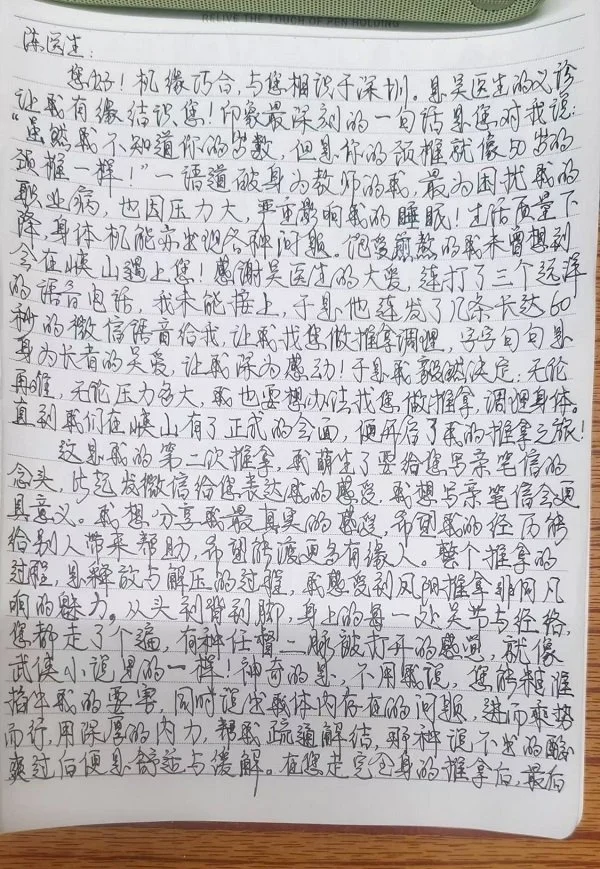
Dear Dr. Chen,
Fate brought us together in Shenzhen. It was Dr. Wu's free clinic that gave me the chance to meet you!
The sentence that left the deepest impression on me was when you said—
"I don't know your age, but your cervical spine looks like that of a 50-year-old!"
Those words made my heart sink. Young in years, yet my neck had aged early. It wasn't meant to scare me—it was a reminder: the body's problems never appear overnight; we simply haven't been paying attention.
II. The Referral: Three Overseas Calls and Several 60-Second Voice Messages
Only later did I learn how much trouble Dr. Wu had gone to, just so I could receive care in time.
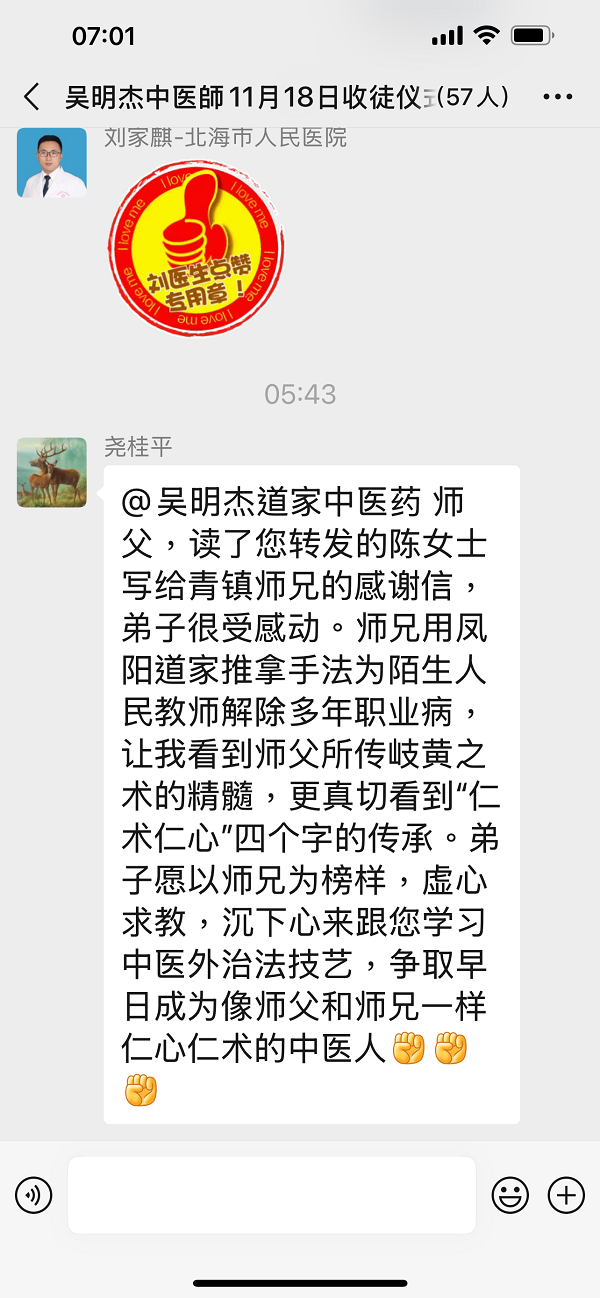
He placed three overseas voice calls in a row, and I missed every one. So he switched to WeChat and sent several voice messages, each 60 seconds long—all to make one thing clear: go find Dr. Chen for Tui Na treatment.
Across an ocean, across time zones, across a patchy connection. A doctor, for a patient he had never met, dialing again and again, leaving message after message.
This wasn't a "referral"—this was someone who couldn't stop worrying.
III. The Xiashan Meeting: My Tui Na Journey Begins
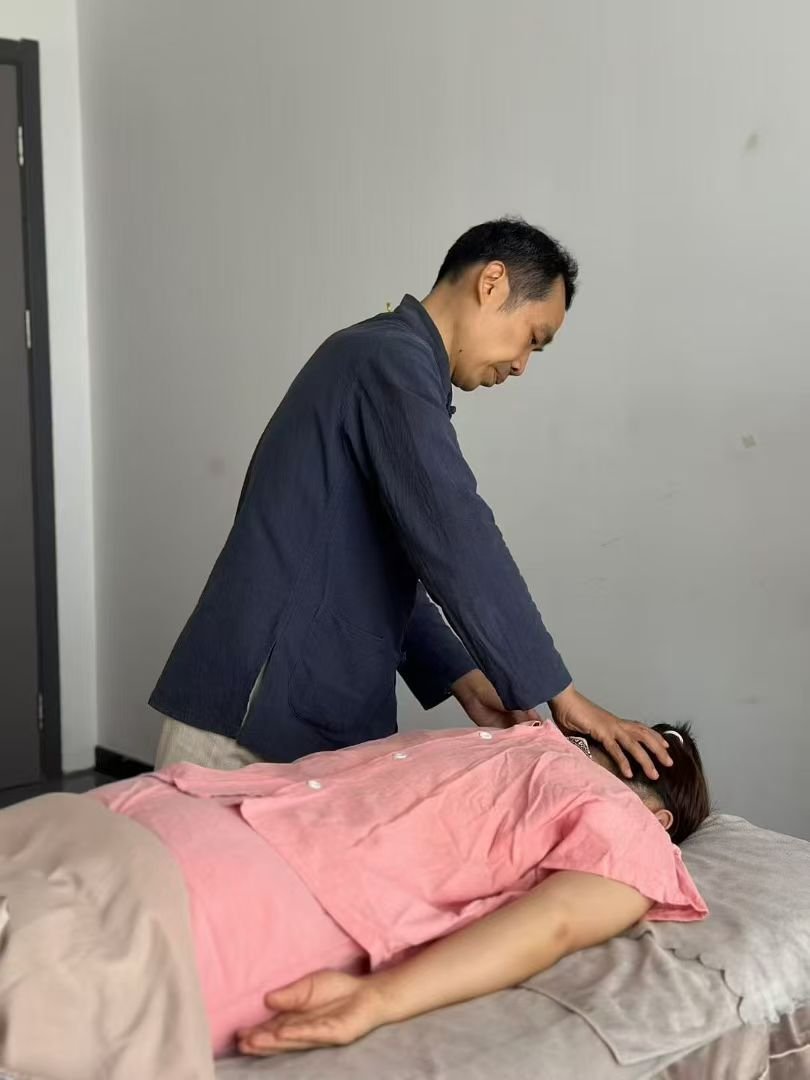
It wasn't until we met formally in Xiashan that my Tui Na journey truly began!
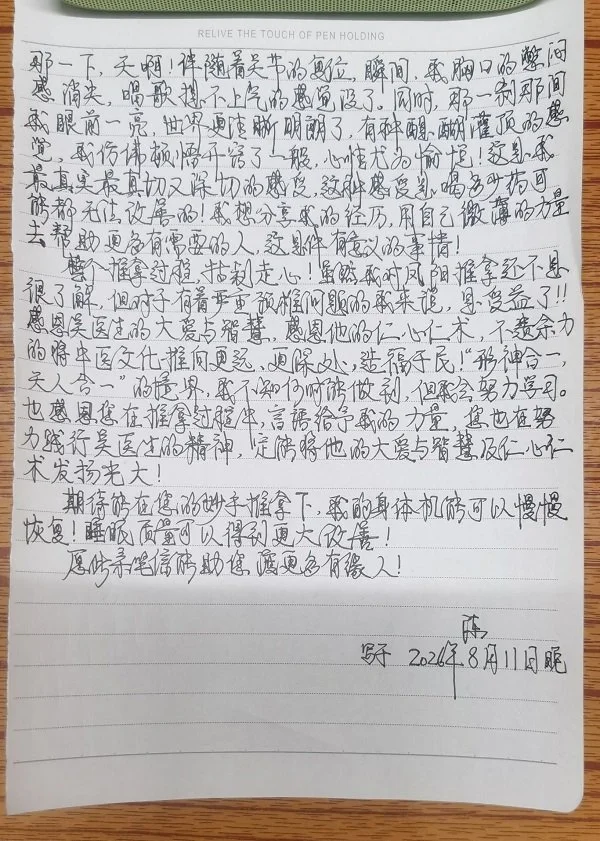
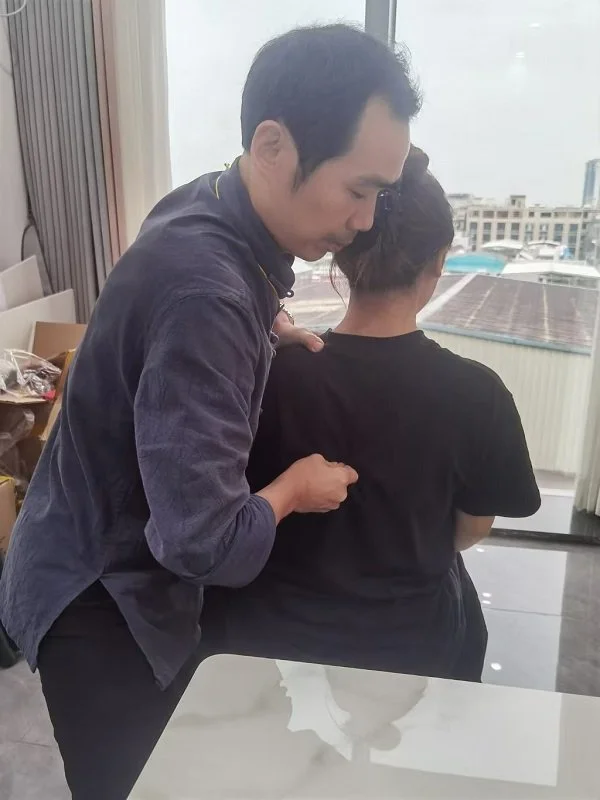
At the first session, you traced along the meridians, locating every point of stagnation and every area of compensation. As the Fengyang Tui Na techniques worked layer by layer, the tightness in my neck and shoulders gradually released, and the heavy pressure sitting on my chest felt as though something gently lifted it away.
That feeling is hard to describe—it wasn't simply "the pain stopped." It was that my whole being, from the inside out, let go.
IV. In the Patient's Own Words: The Most Vivid Feelings
Here are my three most genuine, most vivid, and deepest feelings:
| No. | Feeling |
|---|---|
| ① | Releasing pressure — the long-accumulated tension gradually unloaded during the treatment |
| ② | Unblocking the meridians — once qi and blood flowed, the body felt lighter |
| ③ | Quick relief of chest tightness — the heaviness pressing on my chest soon loosened |
This is a feeling that no amount of medicine could have improved!
I write this without any exaggeration. Medicine is drunk into the body; Tui Na works directly on it. Some kinds of blockage genuinely need a pair of hands to release them.
V. Gratitude: Healing with Benevolence, Love Without Boundaries
Thank you to Dr. Wu for his great love—three overseas calls, numerous long voice messages, holding a stranger's wellbeing in his heart.
Thank you to Dr. Chen for his skilled hands—one sentence revealed the "true age" of my cervical spine, and Fengyang Tui Na unblocked my meridians and lifted my burden.
And thank you to the tradition of Fengyang Daoist Medicine—it shows us that a healer is not merely someone who treats disease, but someone who takes another person's body seriously.
A healer's benevolent heart; love without boundaries.
VI. Editor's Note: About This Letter
There are no words like "miracle doctor" or "guaranteed cure" in this letter—only the sincere words of an ordinary person whose body finally felt lighter.
We publish it not to prove how "miraculous" Tui Na is, but to make two points:
- Cervical problems deserve attention early. Dr. Chen's line "your cervical spine looks like that of a 50-year-old" is a wake-up call for every person hunched over a screen.
- A good healer holds the patient in their heart. From one remark at a Shenzhen free clinic, to three overseas referral calls, to the formal meeting in Xiashan—both ends of this chain are held by the same heart.
May this "benevolent heart" be seen by more people.
Related Reading
- Fengyang Tui Na (Nine-Line Acupoint Therapy): A 1,700-Year Daoist External Healing System
- Dr. Chen Qingzhen: Fengyang Daoist TCM Inheritor, Wellness Philosophy & Three-in-One Practice
- Dr. Wu Mingjie: Academic Thought & Clinical Experience in Fengyang Daoist TCM
- What Are the Fengyang Taiji Eight Forms? (Exclusive IP)
- Huatuo Jiaji Points: The "Hidden Switches" Along the Spine
Wu Mingjie Academy · Fengyang Daoist Medicine | Lineage of Fengyang Daoist Tui Na Fengyang Daoist Institute of TCM (USA) | wuhealing.com
⚠️ Disclaimer & Compliance Notes:
- This article is a patient gratitude letter. Descriptions of therapeutic effect (e.g., "releasing pressure," "unblocking meridians," "quick relief of chest tightness") are authentic excerpts of the patient's own subjective experience, shared as personal experience. They do not constitute any promise of efficacy or a claim of efficacy in the advertising-law sense.
- Constitutions and conditions vary; Tui Na outcomes differ between individuals. Symptoms such as cervical problems and chest tightness must first be examined at a qualified medical institution to rule out acute or serious conditions (including cardiovascular, cerebrovascular, and organic cervical disease) before a qualified TCM practitioner evaluates and treats.
- Fengyang Tui Na is a professional TCM external technique that must be performed by a qualified practitioner—please do not attempt to imitate it.
- This article does not constitute diagnostic or treatment advice. Seek medical attention if you feel unwell.