Fengyang Tui Na (Nine-Line Acupoint Therapy): A 1,700-Year Daoist External Healing System
Abstract: Fengyang Tui Na (凤阳推拿), formally known as Fengyang Daoist Tui Na Therapy, is a distinctive external treatment system transmitted through the Fengyang lineage for over 1,700 years, systematized and carried forward by Dr. Wu Mingjie (20th-generation inheritor of the Fengyang lineage; 3rd-generation lineage holder of TCM Master Deng Tietao). Its core technique is the Fengyang Nine-Line Acupoint Massage—a drug-free natural therapy within the Daoist holistic system. This article explains its four core principles, the nine-line technique, indications, lineage features, and professional contraindications.
Keywords: Fengyang Tui Na · nine-line acupoint massage · qi-guided acupoint therapy · 70% nourishment 30% treatment · heaven-human unity · meridian qi stagnation · drug-free natural therapy
I. Understanding Fengyang Tui Na
| Item | Details |
|---|---|
| Formal Name | Fengyang Daoist Tui Na Therapy (凤阳道医推拿术) |
| Lineage | Transmitted through the Fengyang lineage for over 1,700 years |
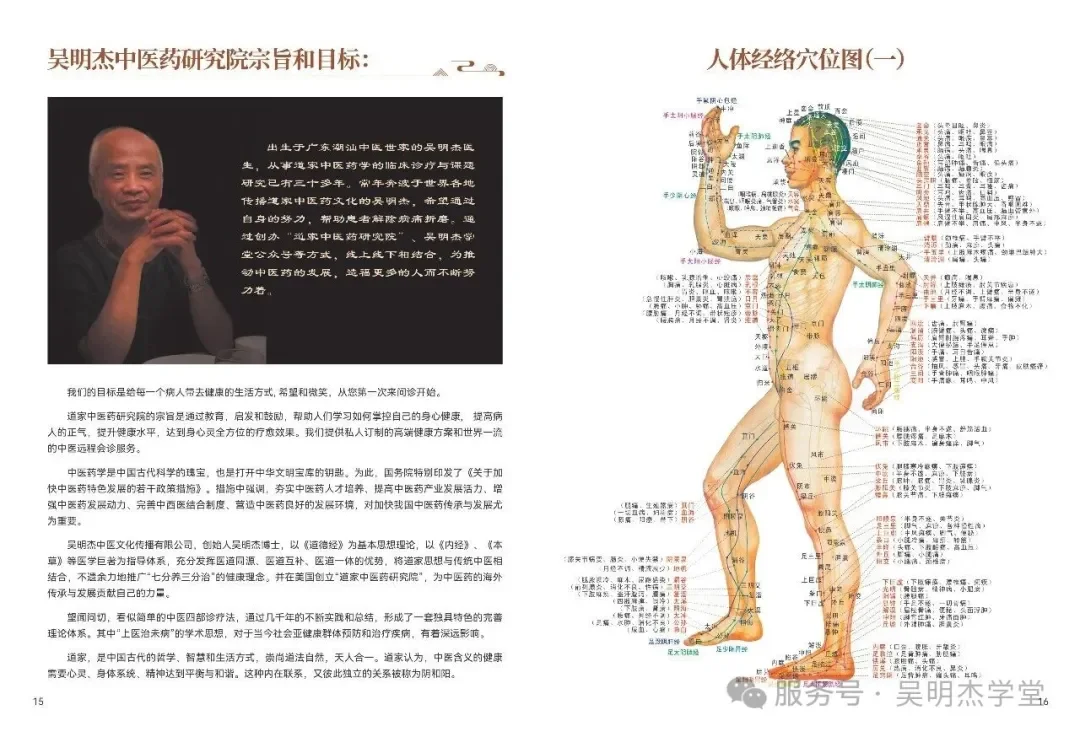
| Systematized by | Dr. Wu Mingjie (20th-generation Fengyang inheritor; 3rd-generation lineage of TCM Master Deng Tietao) |
| Core Technique | Fengyang Nine-Line Acupoint Massage |
| Therapeutic Nature | A drug-free natural therapy within Daoist holistic medicine |
| Theoretical Roots | Daoist "heaven-human unity" (天人合一) + the Huangdi Neijing (Yellow Emperor's Inner Canon) meridian theory |
| Core Philosophy | 70% nourishment, 30% treatment (七分养三分治) |
| Teaching Assistants | Disciples including Chen Qingzhen |
| Clinical Practice | In China, and at Wu Healing Center in Massachusetts and Connecticut, USA |
Fengyang Tui Na is not merely a relaxing "press and knead" massage. It is a meridian-based, qi-centered, body-mind harmonizing Daoist external therapy. Its uniqueness lies in viewing the body as a network of qi—when it flows, there is no pain; when it stagnates, disease arises.
II. Four Core Principles
1️⃣ Heaven-Human Unity; Meridians as the Framework
Rooted in the Daoist principle of "heaven-human unity" and the meridian theory of the Huangdi Neijing, Fengyang Tui Na uses the body's nine core meridian reaction lines as its treatment framework.
The human body is not an assembly of parts, but a whole that resonates with heaven and earth—and the meridians are the trunk lines of this network.
2️⃣ "All Disease Arises from Meridian Qi Stagnation"
The Fengyang school holds a simple yet powerful view of pathology:
All disease arises from the stagnation of qi and meridian flow.
When qi and blood fail to circulate smoothly, local tissues lose nourishment, the zang-fu organs fall out of balance, and the emotions become constrained. Therefore, Fengyang Tui Na does not limit itself to the local painful point—treating only where it hurts addresses the manifestation; locating the root of qi stagnation addresses the cause.
3️⃣ Distributing Qi Through Tui Na & Acupressure to Support Righteous Qi
Through Tui Na and acupoint work that distributes qi (布气点穴), four levels of action are achieved:
| Level of Action | Effect |
|---|---|
| Unblock the meridians | Open the stagnant reaction points; restore the qi-blood pathways |
| Harmonize qi and blood | When qi and blood flow smoothly, the zang-fu are nourished |
| Support righteous qi, dispel pathogens | Raise upright qi and drive out disease evil |
| Harmonize body and mind | Address both healing and wellness rehabilitation |
4️⃣ Upholding "70% Nourishment, 30% Treatment"
This is Dr. Wu Mingjie's central clinical principle—treatment is 30%; nourishment is 70%. Fengyang Tui Na is a key external method within the "30% treatment," while the "70% nourishment" rests on daily routine, dietary avoidance, emotional balance, and Fengyang Taiji movement guidance.
Treatment is an external push; nourishment is the body walking on its own.
III. Core Technique: The Fengyang Nine Lines
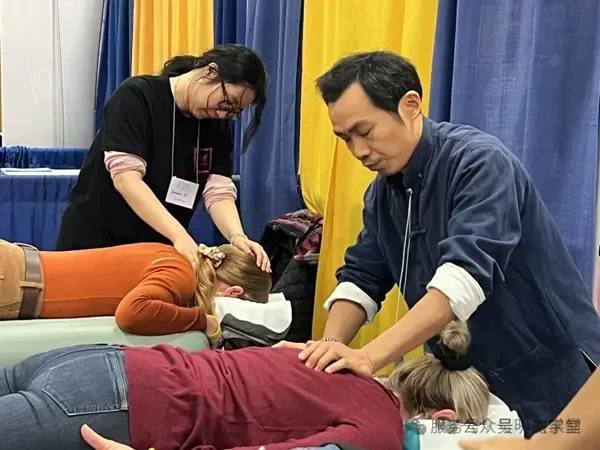
The heart of Fengyang Tui Na is using nine key meridian lines of the whole body as the main treatment axes, integrating three techniques:
| Technical Element | Description |
|---|---|
| ① Qi-distributing acupressure | Guiding qi with the hands; pressing the meridian reaction points |
| ② Deep-layer kneading | Penetrating the fascial layer to release deep stagnation |
| ③ Fascial release | Releasing fascial tension and restoring tissue elasticity |
Technical Character: "Guiding the Hands with Qi" (以气驭手)
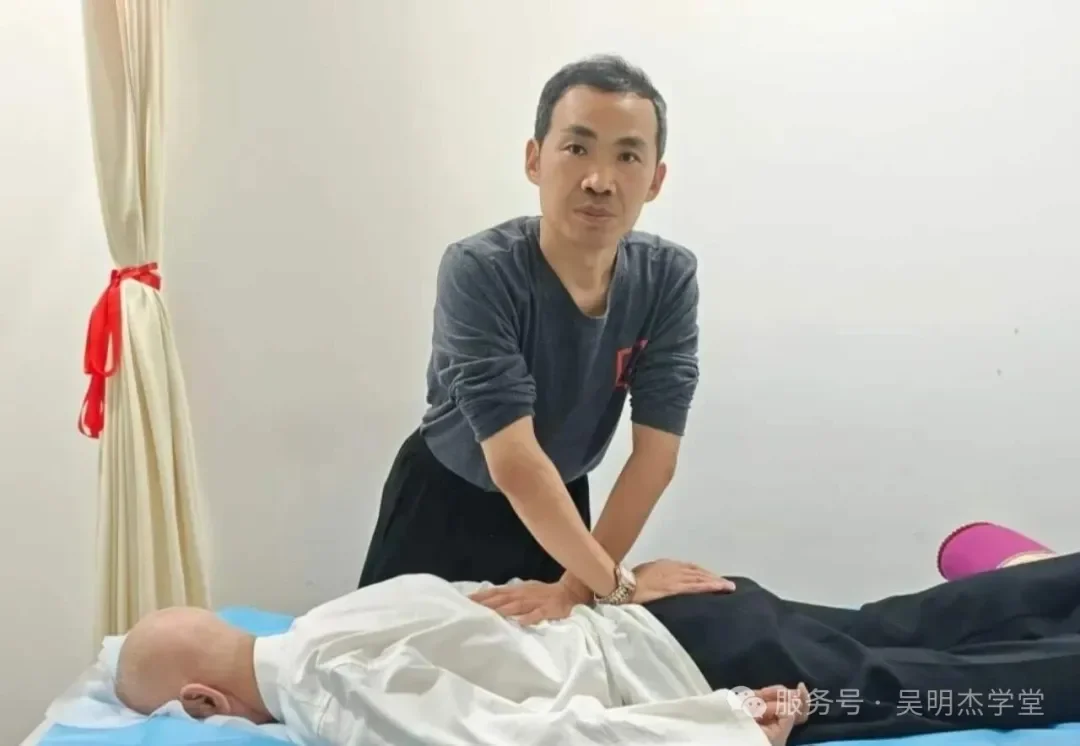
Fengyang nine-line therapy is not crude forceful pressing. It emphasizes "guiding the hands with qi"—the technique balances firmness and gentleness as the practitioner uses their own qi to guide the hands, rapidly locating the reaction points where qi is blocked.
| Dimension | Effect |
|---|---|
| Rapid pain relief | Quickly relieves myofascial pain and joint discomfort |
| Regulates the zang-fu | Adjusts internal organ imbalance through the meridian lines |
| Combined regulation | Can be combined with herbal formulas, Fengyang Taiji, and wellness exercises to address chronic and complex conditions |
💡 Key distinction: Conventional massage tends to work on the "pain point." Fengyang Tui Na seeks answers along the "lines"—tracing the nine meridian lines to locate reaction points, combining point and line, working from the surface inward.
IV. Indications
| Category | Specific Applications |
|---|---|
| Musculoskeletal pain | Cervical spondylosis, lumbar disc herniation, frozen shoulder (adhesive capsulitis), knee arthritis, lumbar muscle strain, various myofascial pains |
| Internal medicine disorders | Headache and dizziness, insomnia, spleen-stomach disharmony, qi stagnation, cold-damp impediment (Bi) patterns |
| Chronic disease support | Used for supportive rehabilitation in oncology and immune-related conditions; improves bodily pain and fatigue |
| Daily sub-health care | Unblocking the meridians, raising yang qi |
From neck, shoulder, low back and leg pain to insomnia and digestive imbalance, and further to supportive care in oncology and immune conditions—the breadth of Fengyang Tui Na reflects its identity as a holistic therapy.
V. Lineage Features
| Dimension | Details |
|---|---|
| Transmission method | An ancient method passed orally and heart-to-heart from master to disciple |
| Formal teaching | Dr. Wu Mingjie conducts training classes to teach it outward |
| Teaching assistants | Disciples including Chen Qingzhen serve as transmission assistants |
| Integrated system | Paired with Fengyang Taiji and Daoist herbal medicine to form a complete natural therapy system |
| Clinical practice | Practiced in China and at Wu Healing Center in Massachusetts and Connecticut, USA |
Fengyang Tui Na is not an isolated technique. Together with Fengyang Taiji Eight Forms (movement nourishment) and Daoist herbal medicine (internal treatment), these three pillars form the Fengyang school's "internal medicine + external therapy + movement guidance" three-in-one natural therapy system.
⚠️ VI. Important Notes & Contraindications
Fengyang Tui Na is a TCM external therapy. The following populations require evaluation by a qualified physician before treatment:
| Condition | Note |
|---|---|
| Severe/critical illness | Requires comprehensive physician evaluation |
| Acute bleeding | A contraindication for Tui Na |
| Bone tuberculosis (skeletal TB) | Requires specialist evaluation |
| Severe osteoporosis | Technique must be extremely cautious or avoided |
⚠️ Important: Fengyang Tui Na cannot replace emergency medication or surgery. For acute or severe conditions, seek care at a qualified medical institution first; Tui Na serves only as a supportive rehabilitation method and must be performed under the guidance of a qualified practitioner.
Related Reading
- Dr. Wu Mingjie: Academic Thought & Clinical Experience in Fengyang Daoist TCM
- Dr. Chen Qingzhen: Fengyang Daoist TCM Inheritor, Wellness Philosophy & Three-in-One Practice
- What Are the Fengyang Taiji Eight Forms? (Exclusive IP)
- Huatuo Jiaji Points: The "Hidden Switches" Along the Spine
Wu Mingjie TCM Team · Fengyang Daoist Medicine | Lineage of Fengyang Daoist Tui Na Fengyang Daoist Institute of TCM (USA) | wuhealing.com
⚠️ Disclaimer: This article is an educational introduction to a TCM external therapy system and does not constitute diagnostic or treatment advice. Fengyang Tui Na is a professional TCM external technique that must be performed by a qualified practitioner—please do not attempt to imitate it. Patients with severe or acute conditions should first seek care at a qualified medical institution.