Fennel Seed (Xiao Hui Xiang): TCM's Premier Herb for Warming the Lower Body & Relieving Cold Pain
Abstract: Fennel seed (Xiao Hui Xiang, 小茴香) is the dried ripe fruit of Foeniculum vulgare. Pungent and warm in nature, it enters the Liver, Kidney, Spleen, and Stomach meridians. Its two core actions are dispersing cold to relieve pain (excellent for cold hernia, testicular cold-dragging pain, and uterine cold dysmenorrhea) and regulating qi to harmonize the stomach (warming and dispersing spleen-stomach cold to relieve bloating and nausea). This guide covers three major clinical applications, the critical difference between raw and salt-fried fennel, the standard 3–6 g decoction dosage, external compress therapy, and three key contraindications.
⚠️ For TCM educational purposes only. This does not constitute medical advice. Consult a qualified TCM practitioner before using any herb.
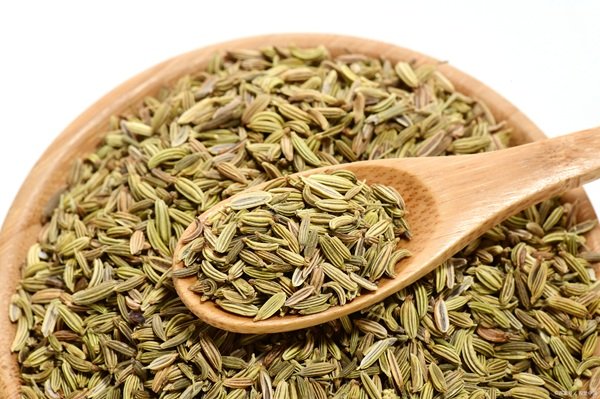
I. Getting to Know Fennel Seed
| Item | Details |
|---|---|
| Herb Name | Xiao Hui Xiang (小茴香), commonly shortened to Xiao Hui (小茴) |
| Latin Name | Foeniculi Fructus — the dried ripe fruit of Foeniculum vulgare Mill. (Apiaceae family) |
| Nature & Flavor | Pungent, Warm |
| Meridian Tropism | Liver, Kidney, Spleen, Stomach |
| Core Actions | Dispel cold & stop pain; Regulate qi & harmonize the stomach |
| Standard Dosage | 3–6 g in decoction |
Fennel seed is both a common kitchen spice and a frequently used warming interior herb in TCM. Its medicinal character can be summarized in one line:
It travels specifically to the lower burner, warms and disperses cold, and moves qi to relieve pain—making it exceptionally suited to problems of "pain from cold" and "distension from cold."
II. The Two Core Actions Explained
Action 1: Dispel Cold & Stop Pain — The Go-To Herb for Lower-Burner Cold Stagnation
Pungent and warm, fennel seed warms and unblocks the lower burner, disperses cold, and moves qi. Any pain arising from "cold evil congealing and stagnating" falls within its scope:
| Indication | Typical Presentation |
|---|---|
| Cold hernia abdominal pain | Cold pain in the lower abdomen radiating to the testicles; worsens with cold, eases with warmth |
| Testicular cold-dragging (冷坠) | Scrotal dragging, distension and cold pain; pulling sensation in the lower abdomen |
| Cold pain in the lower abdomen | Persistent cold, aching pain in the lower abdomen; prefers warmth and pressure |
| Uterine cold dysmenorrhea | Menstrual cramps with cold lower abdomen; relieved by heat; dark menstrual blood with clots |
💡 Why does fennel work here? TCM teaches that "cold causes contraction and congealing." When cold evil invades the lower burner, qi and blood become "frozen"—and stagnation creates pain. Fennel's pungent warmth disperses the cold and moves the qi, effectively "thawing" the lower burner. Once flow resumes, pain ceases.
Action 2: Regulate Qi & Harmonize the Stomach — Warm Away Spleen-Stomach Cold
Entering the Spleen and Stomach meridians, fennel warms and disperses cold from the middle burner and regulates qi:
| Symptom | Manifestation |
|---|---|
| Cold-type epigastric distension & pain | Cold pain and fullness in the stomach; worsens after cold/raw foods |
| Belching & nausea | Rebellious stomach qi rising; frequent burping and queasiness |
| Poor appetite (low intake) | Spleen-stomach weakened by cold, impaired transportation |
| Cold-type vomiting | Vomiting clear fluid with a cold sensation in the stomach |
| Intestinal gas / bloating | Abdominal distension, borborygmus (rumbling), relieved after passing gas |
This is exactly why folk tradition uses "fennel tea" for bloating after catching cold—it warms the center, disperses cold, and moves qi to relieve distension.
III. Three Major Clinical Applications at a Glance
| Field | Applicable Conditions | Fennel's Role |
|---|---|---|
| Gynecology | Cold-congealed blood-stasis dysmenorrhea, cold lower abdominal pain, menstrual blood with clots | Warms the uterus, disperses cold, activates blood to relieve pain—resolving "uterine cold with clots" |
| Digestion | Cold-type stomach pain, abdominal distension with borborygmus, diarrhea from catching cold | Warms the center, disperses cold, regulates qi, relieves distension, stops diarrhea |
| Andrology | Cold hernia, cold dragging distension in the lower abdomen and genitals | Warms the Liver, disperses cold, moves qi to relieve pain (a core herb in Nuan Gan Jian, Warm the Liver Decoction) |
IV. Usage & the Critical Difference in Processing
1. Internal: 3–6 g in Decoction
| Preparation | Directional Bias | Best For |
|---|---|---|
| Salt-fried fennel (盐小茴香) | Directed to the lower burner (salt guides the herb to the Kidney) | Primarily gynecology (dysmenorrhea, uterine cold) and hernia (testicular cold-dragging, cold hernia) |
| Raw fennel seed (生小茴香) | Regulates Spleen-Stomach qi | Primarily spleen-stomach bloating, cold-type abdominal distension, indigestion |
⚠️ Dosage note: A standard 3–6 g decoction is sufficient. Fennel is pungent, warm, and aromatic-dispersing—exceeding the dose is inadvisable, as it can consume qi, damage yin, and stoke fire.
2. External: Warm Compress on the Abdomen (Practical Home Method)
Dry-fry fennel seed (coarse salt may be added) or warm it briefly, place in a cloth bag, and apply as a warm compress to the lower abdomen or navel (Shenque, CV8). Suitable for:
- Bloating and borborygmus from catching cold
- Cold-type dysmenorrhea and cold lower abdominal pain
- Deficiency-cold abdominal pain in the elderly
📍 Mechanism: The navel has thin skin and rich vascularity; heat plus the herb's penetrating action warms and unblocks, dispersing cold and relieving pain. Keep the temperature comfortable and avoid burns.
V. Contraindications & Cautions (Please Read Carefully)
⚠️ Three Groups Who Should Avoid or Use With Caution
| Contraindication | Manifestations | Explanation |
|---|---|---|
| Yin deficiency with effulgent fire—use with caution | Dry mouth and throat, heat in palms and soles, stomach heat with bitter taste, prone to "heat" symptoms, tidal fever and night sweats | Fennel's pungent warmth fans the fire; in yin deficiency it "pours oil on the flame"—not for standalone use |
| Damp-heat patterns—not suitable | Damp-heat stomach pain (burning epigastric pain, bitter/sticky mouth, yellow greasy coating); damp-heat dysmenorrhea (thick, foul-smelling menstrual blood, yellow vaginal discharge) | Damp-heat requires clearing and draining; warming herbs are contraindicated and will aggravate the condition |
| Pregnancy—requires physician guidance | — | Pregnant women must not self-administer large amounts; use only under evaluation and guidance by a TCM practitioner |
Additional Cautions
- Fennel is warm in nature and should not be taken long-term or in large doses—stop once the condition improves (中病即止);
- Those allergic to Apiaceae plants (celery, carrot, cumin) should use caution;
- If symptoms of "heat" appear after use—dry mouth, sore throat, burning stomach sensation—discontinue and consult a practitioner.
VI. Clinical Reminders from Dr. Wu Mingjie
In the Fengyang Daoist clinical system, fennel seed may be a "kitchen remedy," but used correctly it works swiftly. Three keys:
- Differentiate cold from heat: It applies only to cold patterns—pain that prefers warmth and pressure, worsens with cold, pale tongue with white coating, cool extremities. For heat patterns (burning pain, bitter taste, yellow greasy coating), it is absolutely contraindicated.
- Distinguish raw from processed: For lower-burner conditions (dysmenorrhea, hernia) use salt-fried fennel; for spleen-stomach bloating use raw fennel. Different processing means different direction.
- Control the dose: 3–6 g is enough. As a pungent aromatic, overuse injures qi and yin.
🌿 Fengyang Daoist principle: Food and medicine share the same source. Used correctly it is good medicine; used incorrectly it feeds the pathogen. Differentiate the pattern first; stop once the effect is achieved.
⚠️ Disclaimer
This article is for TCM educational purposes only and does not constitute medical advice.
TCM emphasizes pattern differentiation. The same "abdominal pain" or "dysmenorrhea" may arise from entirely different cold/heat and deficiency/excess patterns—fennel applies only to cold patterns. In damp-heat, yin deficiency, or excess-heat cases, using it will worsen the condition.
Consult a qualified TCM practitioner before use. Do not self-prescribe or take long-term. Pregnant or breastfeeding women, children, and those with chronic conditions must use it only under professional guidance.
Related Reading
- Wild Salmon Roe Nutrition & TCM Benefits: Omega-3, B12, and Who Should Avoid It
- Pumpkin Leaves: Nutrition, TCM Benefits & 3 Healthy Recipes
- Bai Snake Root (Green Olive Root): Lingnan Folk Remedy for Dampness & Joint Pain
- Guchi Shenfang: Qing Dynasty Herbal Tooth Powder for Gums & Toothache
Wu Mingjie TCM Team · Fengyang Daoist Medicine | Lineage of Fengyang Daoist Tui Na Fengyang Daoist Institute of TCM (USA) | wuhealing.com