Cinnamon Bark (Rou Gui): TCM's Premier Herb for Tonifying Fire, Guiding Fire Home & Dispelling Cold
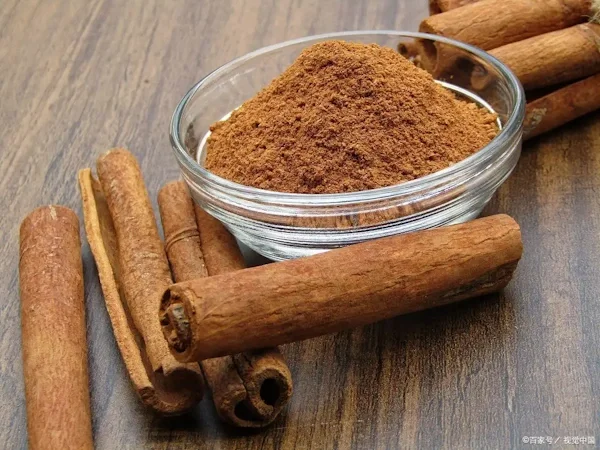
Abstract: Cinnamon bark (Rou Gui, 肉桂) is the dried bark of Cinnamomum cassia. Pungent, sweet and very hot in nature, it enters the Kidney, Spleen, Heart, and Liver meridians. Its three core actions are: tonify fire and strengthen yang (warming the kidney's life-gate fire, and uniquely guiding fire back to its source for "upper-heat-lower-cold" patterns such as recurring mouth ulcers with cold legs), dispel cold to stop pain, and warm and unblock the meridians. This guide covers four clinical applications, the 1–5 g decoction with late addition, the critical differences between Rou Gui / Gui Xin / Gui Zhi, and three key contraindications.
⚠️ For TCM educational purposes only. This does not constitute medical advice. Consult a qualified TCM practitioner before using any herb.
I. Getting to Know Cinnamon Bark
| Item | Details |
|---|---|
| Herb Name | Rou Gui (肉桂) — Cinnamon Bark |
| Latin Name | Cinnamomi Cortex — the dried bark of Cinnamomum cassia Presl (Lauraceae family) |
| Nature & Flavor | Pungent, Sweet, Very Hot |
| Meridian Tropism | Kidney, Spleen, Heart, Liver |
| Core Actions | Tonify fire & strengthen yang; Dispel cold & stop pain; Warm & unblock the meridians |
| Standard Dosage | 1–5 g in decoction (added late) |
Cinnamon bark is a familiar kitchen spice, yet in TCM it is the premier herb among warming interior medicines. Its medicinal character can be summarized in one line:
Pure Yang and very hot—it specifically tonifies the life-gate fire and warms the body's entire yang qi—making it exceptionally suited to "yang deficiency with cold congealing" and "deficient fire floating upward."
II. The Three Core Actions Explained
Action 1: Tonify Fire & Strengthen Yang — Warming the Kidney's Life-Gate Fire
Pungent, sweet, and very hot, cinnamon bark enters the Kidney meridian directly to warm the life-gate (Ming Men) true fire, making it the key herb for kidney yang deficiency:
| Manifestation of Kidney Yang Deficiency | Details |
|---|---|
| Cold intolerance / fear of cold | Chronically cold, wears more clothing than others, eases with warmth |
| Cold hands and feet | Cold extremities, worse in autumn and winter |
| Cold pain in the lower back and knees | Cold, aching, weak lower back and knees; worsens with cold |
| Frequent night urination | Kidney yang failing to transform and vaporize; multiple night awakenings |
| Impotence / uterine cold (infertility) | Decline in reproductive function or a cold uterus due to waning life-gate fire |
🌟 Guiding Fire Back to Its Source — Cinnamon's Most Distinctive Use
Beyond tonifying fire, cinnamon uniquely guides fire back to its source (引火归元)—drawing floating deficient fire back down to the lower burner's life gate. It specifically treats upper-heat-lower-cold (true cold with false heat):
| Upper Heat (deficient fire floating up) | Lower Cold (true yang deficiency) |
|---|---|
| Recurring mouth ulcers, sore throat | Cold legs, cold lower back and knees |
| Facial acne, dry mouth without much desire to drink | Frequent night urination, loose stools |
| Hot flushes in the head and face, vexation, insomnia | Cold hands and feet, fear of cold |
💡 Mechanism insight: In these cases, the mouth ulcers, sore throat, and acne are not "too much fire" but "fire floating upward." The lower burner's true yang is deficient, leaving rootless fire to drift up. Using cold herbs to "clear heat" here only deepens the deficiency and makes the problem recur. Cinnamon guides the fire home—the upper heat resolves and the lower cold warms, which is treating the root.
This is the wisdom of "guiding fire back to its source"—and it is precisely what distinguishes cinnamon from ordinary warming herbs.
Action 2: Dispel Cold & Stop Pain — Warm the Meridians, Dispel Cold Evil
Cinnamon warms and unblocks the meridians and dispels cold evil. Any pain from "cold congealing" falls within its scope:
| Indication | Presentation |
|---|---|
| Cold-congealing epigastric & abdominal cold pain | Cold pain in the stomach and abdomen; prefers warmth and pressure; worsens with cold |
| Cold-damp impediment (Bi) pain | Cold joint pain with limited movement; worse in damp, rainy weather |
| Dysmenorrhea | Menstrual cramps with a cold lower abdomen; relieved by heat |
| Cold pain in the lower abdomen | Persistent cold, aching pain in the lower abdomen |
Action 3: Warm & Unblock the Meridians — Resolve Cold-Congealed Blood Stasis
Cinnamon warms and unblocks qi and blood in the vessels, indicated for cold-congealed blood stasis:
- Amenorrhea and dysmenorrhea
- Menstrual blood with clots (dark purple clots)
- Static blood masses
- Abdominal masses (Zheng Jia) of the cold-congealing type
Cold disperses with warmth; blood moves with warmth. Cinnamon, being very hot, is the representative herb for the principle "to resolve stasis, first warm the yang."
III. Common Clinical Applications at a Glance
| Application | Typical Presentation | Cinnamon's Role |
|---|---|---|
| Yang-deficiency cold intolerance; upper-heat-lower-cold constitution | Cold intolerance and cold limbs, yet recurring mouth sores, facial acne, sore throat | Tonify fire & strengthen yang + guide fire back to its source; restore upper-lower communication |
| Spleen-stomach deficiency cold | Cold abdominal pain, diarrhea after cold/raw foods, indigestion | Warm the center, dispel cold, fortify the spleen and stop diarrhea |
| Gynecology | Uterine cold dysmenorrhea, menstrual clots, cold lower abdomen | Warm the uterus, dispel cold, warm and unblock the blood vessels |
| Deficient yang floating upward | Mouth ulcers, facial acne, yet cold hands and feet | Guide fire back to its source, leading deficient fire downward back into place |
IV. Dosage & Administration (Critical Details)
1. Decoction: 1–5 g — Add Late
| Method | Explanation |
|---|---|
| Added late (后下) | Cinnamon contains volatile oils. Add it shortly before turning off the heat (or in the final 5–10 minutes). Prolonged boiling dissipates the active components and weakens the effect |
| Powder taken directly | Stronger in effect, but the dose must be smaller than in decoction; follow your practitioner's instruction |
⚠️ Dosage note: Cinnamon is very hot. A standard 1–5 g suffices. Do not take long-term or in large doses—this easily creates dryness, heat, and yin damage.
2. Rou Gui vs. Gui Xin vs. Gui Zhi (Distinguish Clearly)
| Item | Part / Source | Direction of Action |
|---|---|---|
| Rou Gui (cinnamon bark) | The tree bark; thicker bark means stronger action | Mainly warms the lower burner; tonifies fire, strengthens yang, guides fire back to source. Strongest of the three |
| Gui Xin (cinnamon heart) | The inner layer after removing the outer rough bark | Specifically warms the interior; warms the center, dispels cold, stops pain—without dispersing action |
| Gui Zhi (cinnamon twig) | The young twig of the cinnamon tree | Travels to the body surface; induces sweating, releases the muscle layer, warms the meridians, assists yang in transforming qi |
📌 One-line distinction: Rou Gui warms the interior (lower burner); Gui Xin warms the inner (middle burner); Gui Zhi travels to the surface (induces sweating). All come from one tree, yet each travels a different path—using the wrong one defeats the purpose.
V. Contraindications & Cautions (Please Read Carefully)
⚠️ Three Categories of Contraindication
| Type | Manifestations | Explanation |
|---|---|---|
| Yin deficiency with effulgent fire; excess-heat bleeding—contraindicated | Dry mouth, night sweats, tidal fever, nosebleeds, bleeding gums, dry stools, "heat" symptoms | Cinnamon is very hot and fans fire. In yin deficiency it "pours oil on the flame"; with excess-heat bleeding it is absolutely contraindicated |
| Pregnancy—use with caution | — | Very hot and moves blood. Must be evaluated and guided by a practitioner; do not self-administer |
| No long-term or high-dose use | — | Prolonged or excessive use easily causes dryness, heat, and yin damage, producing dry mouth, sore throat, and constipation |
Additional Cautions
- Those taking anticoagulant medication (e.g., warfarin): cinnamon may affect blood clotting—consult your physician before use;
- Excess-heat patterns (high fever, flushed face, thirst with preference for cold drinks, constipation, dark urine): contraindicated;
- If heat signs such as sore throat, dry mouth, or nosebleed appear after use, discontinue.
VI. Clinical Reminders from Dr. Wu Mingjie
In the Fengyang Daoist clinical system, the key to using cinnamon lies in "discerning cold from heat, and true from false."
- Discern true from false heat: Cinnamon's most refined use is treating "upper heat, lower cold." Recurring mouth ulcers, sore throat, and facial acne accompanied by cold legs, fear of cold, and frequent night urination indicate true cold with false heat—the fire has floated up; it is not an excess of fire. Here, cinnamon guides the fire home and often brings swift relief. Conversely, with pure excess heat (red tongue, yellow coating, thirst with cold-drink preference, constipation), it is absolutely contraindicated.
- Start with a low dose: Being very hot, cinnamon is typically started at 1–3 g and stopped once the effect is achieved (中病即止); heavy dosing is unnecessary.
- Add late to preserve potency: The volatile oil is the source of its pungent, warming, penetrating action. Prolonged boiling renders it ineffective—a common reason home-prepared decoctions "don't seem to work."
🌿 Fengyang Daoist principle: One skilled at tonifying yang must seek yang within yin; one skilled at using fire must return fire to its place. The art of cinnamon lies in the word "guide"—guiding fire back to its source, leading the dragon back into the sea.
⚠️ Disclaimer
This article is for TCM educational purposes only and does not constitute medical advice.
TCM emphasizes pattern differentiation. Cinnamon is pure yang and very hot, suitable only for yang-deficiency cold congealing and true-cold-false-heat patterns. In yin deficiency with effulgent fire, excess-heat bleeding, or pure excess heat, misuse will "pour oil on the flame" and worsen the condition.
Consult a qualified TCM practitioner before use. Do not self-prescribe, or take long-term or in large doses. Pregnant or breastfeeding women, children, those taking anticoagulants, and patients with chronic conditions must use it only under professional guidance.
Related Reading
- Fennel Seed (Xiao Hui Xiang) in TCM: Benefits, Uses & Who Should Avoid It
- Wild Salmon Roe Nutrition & TCM Benefits: Omega-3, B12, and Who Should Avoid It
- Bai Snake Root (Green Olive Root): Lingnan Folk Remedy for Dampness & Joint Pain
- Guchi Shenfang: Qing Dynasty Herbal Tooth Powder for Gums & Toothache
Wu Mingjie TCM Team · Fengyang Daoist Medicine | Lineage of Fengyang Daoist Tui Na Fengyang Daoist Institute of TCM (USA) | wuhealing.com