He Saved Thousands in America—Yet Insisted: Your True Doctor Lies Within
Have you ever experienced this?
A recurring stomach ache that lingers despite years of Western medication—only to flare up again once you stop. Blood pressure that swings wildly; a daily handful of pills that never seem to address the root cause. Or that sinking feeling when a doctor diagnoses a chronic condition and prescribes “lifelong medication.”
If so, this article might fundamentally change how you think about healing.
Because the physician we’re about to introduce didn’t just treat symptoms. Over 40 years, he used a 1,750-year-old medical system to help thousands of patients—many written off as “incurable” by Western medicine—reclaim their health. His core philosophy boils down to just six words:
Seventy percent nurturing. Thirty percent healing.
True healing power isn’t in the pill bottle. It’s already within you.
Who is he?
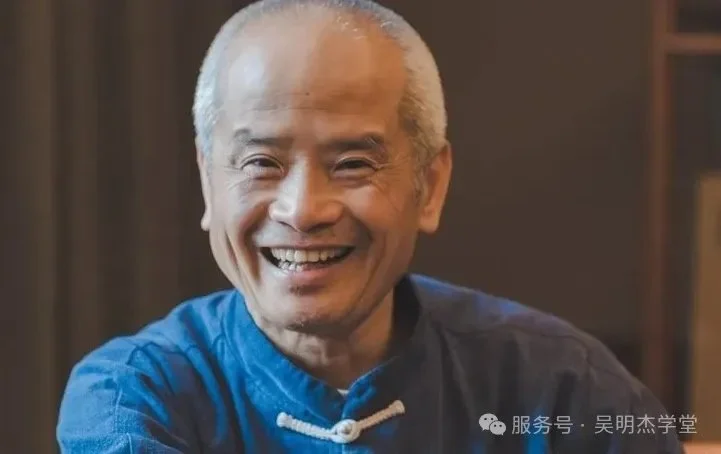
Wu Mingjie, born in 1965 into a family of TCM practitioners in Chaoshan, Guangdong. By age three, he could identify herbs. By five, he was memorizing formulas. By ten, he was accompanying his father on house calls. This was his childhood.
But Wu is no ordinary practitioner. He inherited a Taoist medical lineage—the Fengyang School—that stretches back 1,750 years.
The Fengyang lineage traces to Dong Feng, a physician of the Three Kingdoms period who practiced alongside Hua Tuo and Zhang Zhongjing as one of the “Three Miracle Doctors of the Jian’an Era.” In Fengyang, Anhui, Dong treated patients for free—asking only that each plant a single apricot tree upon recovery. Over time, thousands of trees blossomed into a grove. This is the origin of the beloved Chinese idiom: “Warm Spring in the Apricot Grove” (Xinglin Chunyuan)—a metaphor for the healing arts.
For 1,750 years, this system passed from master to disciple. Wu Mingjie is the twentieth-generation heir.
He is also a third-generation disciple of TCM Grand Master Deng Tietao, and a formal indoor disciple of the sixth generation of Yang Family Tai Chi. In him, medicine and martial arts converge—Tao and technique cultivated as one.
40 years of clinical practice. 1,750 years of heritage. Twenty generations of masters and disciples. Thousands of complex cases resolved.
How is Fengyang Taoist Medicine different?
Many have tried TCM—herbal decoctions, acupuncture—only to find results inconsistent. Why?
Wu cuts to the chase: “Too many modern TCM practitioners apply Western logic with Chinese herbs—treating the head for a headache, the foot for a foot ache. That betrays TCM’s very foundation.”
The Fengyang School focuses on holistic pattern differentiation + activating self-healing power. Instead of suppressing a symptom with a single herb, it restores the body’s natural rhythms across seven dimensions:
Internal Herbs – Classical formulas, tailored to the individual.
External Applications – Plasters, poultices, steams—delivering medicine transdermally to the source.
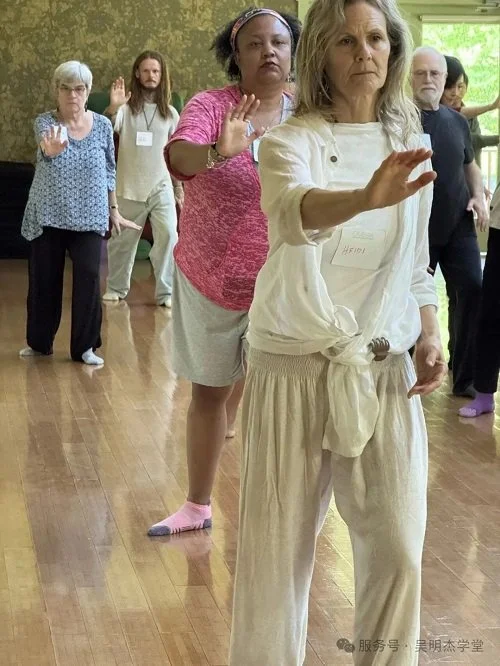
Fengyang Tai Chi – Wu’s unique style uses relaxed, circular movements to guide qi and blood.
Fengyang Qigong – Breathing and energy cultivation to awaken vitality along the Ren and Du meridians.
Acupoint Massage – Hua Tuo’s spinal techniques + Fengyang’s “Nine Lines” to clear meridian blockages.
Remote Consultation – Cross-continental tongue diagnosis and pattern analysis via telemedicine.
Tea & Diet Therapy – Food as medicine; daily regimens crafted by constitution.
These aren’t isolated tactics—they form an ecosystem. Internal and external methods open pathways; Tai Chi and Qigong ignite inner energy; massage clears stagnation; tea and diet lock in gains. Think of it as a full-system “cleanup and upgrade” for the body.
Why did he bring Taoist medicine to America?
In 1989, 24-year-old Wu made a puzzling choice: he moved to the United States.
America was then grappling with soaring cancer rates and an emerging opioid crisis. Patients were trapped on a treadmill of lifelong prescriptions—blood pressure pills, glucose regulators, painkillers—while their health steadily declined.
In Boston, Wu founded the Taoist Medicine Research Institute and Wu Healing Center, treating patients worldwide—especially those with late-stage cancer or chronic illnesses deemed “out of options” by conventional medicine.
His logic was clear: “Western medicine excels at removing lesions and managing emergencies—that’s its strength. But true recovery requires TCM’s holistic cultivation. Improve the soil, and the crops thrive. Seventy percent nurturing, thirty percent healing—that’s the principle.”
Four Real Cases
Myasthenia Gravis: William (Hawaii), diagnosed in 2019. One eye nearly shut; struggled climbing slopes; couldn’t lift 5 kg. Steroids brought severe side effects. Wu modified the classical Bu Zhong Yi Qi Tangformula (per Deng Tietao’s protocol). Improvement in 7 days. After two months, motor function largely restored; both eyes opened fully.
15-Year Asthma, Resolved in One Session: Lauren suffered asthma for 15 years, relying on inhalers every six hours. Wu applied one session of tuina massage + cupping. Six weeks later, Lauren wrote: “Fifteen years of asthma—gone!”
Lymphoma Tumor Vanishes: Ms. Qiu (New York). Battled breast cancer twice and lymphoma for a decade. Six rounds of chemo/radiation—each remission lasted only 3–10 months. After her last relapse, she switched to concentrated herbal powders. Four months later, the tumor mass disappeared.
Food Therapy Reverses Kidney Tumor Hematuria: An African woman presented with a right kidney tumor and hematuria. Surgery was advised, but she was allergic to antibiotics. Wu prescribed a natural-food regimen: fresh carrot, celery, and dandelion juice, plus 10 cashews daily. Hematuria ceased.
A Chinese Healing Art, Witnessed by the World
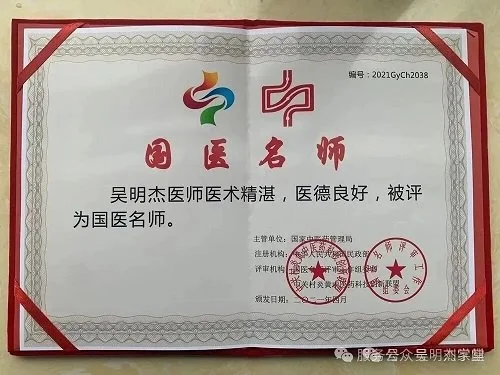
2021: Awarded “National Famous TCM Master” certificate by the National Administration of Traditional Chinese Medicine.
2017: Received Special Contribution Award from the Massachusetts House of Representatives.
2019: Personal documentary Who Am Iwon Gold at the Los Angeles Film Festival.
2022: Named “Most Outstanding Taoist Physician”; image featured on the Nasdaq screen in Times Square.
Author of The Tao Within, published globally in English and Chinese.
What does this mean for you?
You may never fly to Boston for a consultation. But Wu’s principles are universal:
Look beyond symptoms—follow the flow of qi. TCM teaches: blockage causes pain. Emotional stagnation harms the liver; overthinking weakens the spleen; fear damages the kidneys. Modern science increasingly confirms these links.
Seventy percent nurturing, thirty percent healing. Not “no medication”—but don’t rely solely on it. Master diet, sleep, movement, and emotional balance—and many chronic conditions begin to reverse naturally.
The superior physician treats before illness arises. Waiting for a lab report to act is waiting too long. Learn to sense subtle shifts in your body daily.
Integration is optimal. Western medicine shines in acute, critical care. For post-surgical recovery and chronic management, TCM’s strengths are irreplaceable.
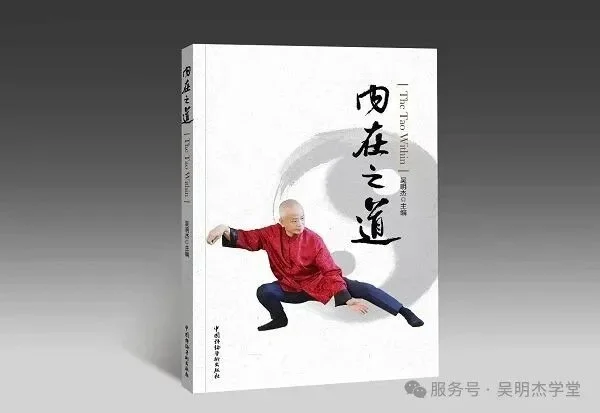
“Within each of us resides a sacred essence. We are souls of infinite power—endowed with the ability to create, to heal, and to manifest reality.”
— Wu Mingjie, The Tao Within
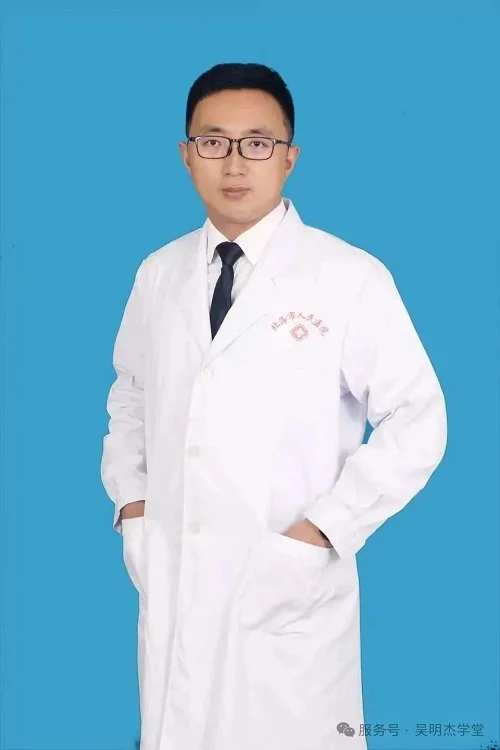
About the author: Liu Jiaqi, Chief Physician, Colorectal & Anal Surgery, Beihai People’s Hospital; disciple of Dr. Wu Mingjie (Fengyang lineage); specialist in integrated Chinese-Western medicine; fourth-generation inheritor of TCM Grand Master Deng Tietao.
Follow Dr. Liu Talks Medicine—preserving Taoist medical wisdom worth knowing.