Twenty Years Ago, TCM Grand Master Deng Tietao Prophesied the Hospital of the Future — and Every Word Has Come True
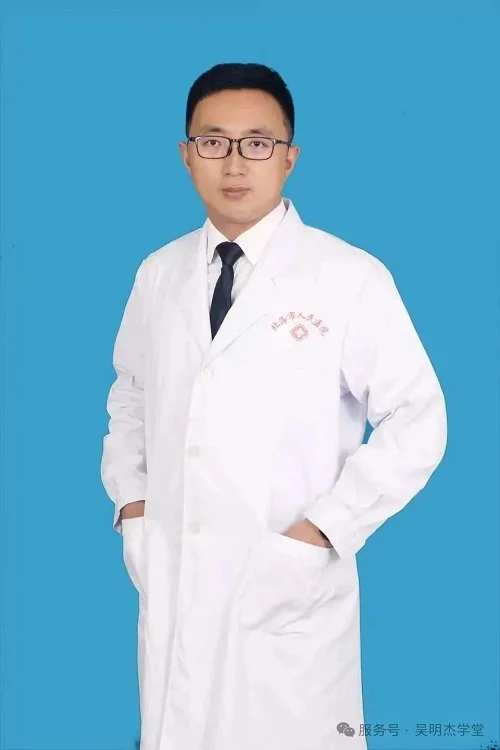
About the author: Liu Jiaqi, Chief Physician, Colorectal & Anal Surgery, Beihai People's Hospital; disciple of Dr. Wu Mingjie (Fengyang lineage), specialty in integrated Chinese-Western medicine; fourth‑generation inheritor of TCM Grand Master Deng Tietao.
March 25, 2001. Guangzhou.
TCM Grand Master Deng Tietao sat down and wrote an essay titled "Ten Thousand Miles of Cloudlit Sky, Ten Thousand Miles of Road"(《万里云天万里路》).
He was 85 that year. In that essay, he did not dwell on his own achievements, nor look back on past glories. Instead, he wrote out — in full — his prophecies for the future of medicine.
More than twenty years on, when you reread those "predictions" of his, it is hard to believe they came from an elderly Chinese physician writing two decades ago. Because almost every one of them — is coming true.
Chapter 23 ofThe Tao Within includes the essential text of this essay in full. Let us walk through his prophecies, one by one, and see what a Grand Master saw in his old age.
🔮 Prophecy One: "Humanity will be freed from the suffering of chemical drugs."
Deng's first vision:
"Humanity will be freed from the pain, side effects, and after‑effects brought by chemical drugs, traumatic examinations, and invasive treatments. Medicine must uphold humanitarianism."
The year was 2001 — no one yet knew that opioid abuse would, a decade later, become a public‑health crisis sweeping the United States. No one yet knew that "patient‑centered care" would become the global slogan of healthcare reform. But Deng already saw it clearly: if the cost of medicine is more painful than the disease itself, medicine has gone off course.
His prescription was not "abolish chemical drugs" — but a balance: alongside pharmaceuticals, develop natural therapies that are simple, proven, convenient, and affordable (简、验、便、廉). "Simple, proven, convenient, affordable — these are the finest traditions of Chinese medicine," he wrote.
Twenty years later, global medicine is indeed turning — precision medicine, minimally invasive surgery, immunotherapy — all chasing the same goal: less harm, sharper efficacy.
🔮 Prophecy Two: Medicine will merge with culture, aesthetics, and art.
This one is the most astonishing:
"Medical science will merge with culture, aesthetics, and art, raising humanity's health aspirations into the realm of beauty within the spiritual world."
Then he listed what would exist inside a future "Health Paradise":
"Qigong, martial arts, literature, painting, music, dance, fine food, medicinal cuisine, simulated environments… all will become essential parts of the Health Paradise."
In the early 2000s, no one had yet coined "Health Paradise". Nursing homes were nursing homes; hospitals were hospitals. But Deng already saw a completely different space — a place that no longer frightened people, where health cultivation was an enjoyment, not a burden.
Today? Wellness towns, health resorts, forest‑therapy bases — these emerging models are almost word‑for‑word what Deng described.
He added specially: "Receiving health cultivation will become a pleasure, not a burden."Read today, that is the perfect definition of "experiential health consumption."
🔮 Prophecy Three: TCM must go global — by being "simple, proven, convenient, affordable".
Deng's core global vision:
"In the 21st century, billions in the Third World still live in poverty and disease. For 'health for all' to be a democratic right, medicine must be simple, proven, convenient, affordable."
He was not saying "make the whole world take Chinese herbs." He was saying: let the whole world have the cheapest, most effective, most accessible medicine possible.
Desmodium styracifolium— picked from field edges, boiled 7 days, expels stones. Near-zero cost.
Fir‑bark splints for bone setting — no surgery, no steel plates, just cloth straps for a few weeks.
Fengyang Hand‑Foot‑Mouth Powder — external patch on the sole, works in one hour.
Moxibustion on Zusanli— costs cents, strengthens spleen and digestion.
That is what Deng meant by "simple, proven, convenient, affordable."
Wu Mingjie carries this very line of thought into every case in The Tao Within. He delivered herbs to rural Puning, free of charge. His U.S. clinic offers sliding‑scale fees to low‑income patients. He donated his entire apprenticeship tuition to a school. In Cambodia, he helped the government bring TCM into grassroots care — because rural Cambodia looks exactly like the "billions in poverty and disease" Deng described.
🔮 Prophecy Four: To conquer AIDS, cancer, etc., we must return to nature.
This one may have sounded the boldest at the time:
"Conquering AIDS, cancer, malaria, cardio‑cerebrovascular disease — this will rely on returning to nature, a green medical revolution. 21st‑century TCM will play an extremely important role."
Twenty years later — immunotherapy (letting the body recognize and attack cancer cells itself) has become the fourth pillar of oncology. Gut‑microbiome research is redefining "how diet heals." TCM's widespread use during COVID gave the world its first large‑scale glimpse of "natural medicine's" power.
Deng's "return to nature" was not the shallow binary of "skip Western meds, take herbs." He meant: shift the focus of treatment from "kill the pathogen" to "restore the body's natural defense system." That direction is exactly where global medical research is hottest today.
His "Centenarian Project" was a complete life strategy
Deng didn't only prophesy the future of medicine. He drafted a personal Centenarian Project for himself — not a vague "wellness slogan," but a full life plan with goals, execution, and self‑review.
He launched it at 90. At 96 he told his disciples: "I will certainly live past 100."He lived to 103.
What made up his Centenarian Project?
"The soul of medicine: benevolence and skill. The strategy of medicine: the superior physician treats before illness arises." — his professional mission. Writing books, teaching disciples, advocating for TCM well into his 80s.
"Cultivate steadfast TCM disciples." — he launched the national "famous masters taking disciples" movement to rescue TCM's inheritance crisis.
"Kindness is the best longevity medicine." — he donated his life's savings to his students.
"Give health to friends." — he wrote letters to everyone he knew, sharing wellness knowledge, holding nothing back.
"Learn for life, strive for life, stay healthy for life, give for life." — these four lines are the most precious legacy Deng Tietao left the world.
From "Ten Thousand Miles of Cloudlit Sky" to today
When Deng wrote "Ten Thousand Miles of Cloudlit Sky, Ten Thousand Miles of Road", Wu Mingjie had just started his Taoist‑TCM clinic in Massachusetts — TCM had almost no recognition in the U.S. Xiao Xinhe was still on the Guangzhou University of TCM track field, leading disciples daily through Jiuzhuan Daqiankunqigong.
More than twenty years later —
Wu Mingjie's Boston clinic has served patients from 50 countries. His documentary won Gold at the Los Angeles Film Festival. His book exists in Chinese and English, globally distributed. His disciples span multiple provinces in China and U.S. states.
Xiao Xinhe, now 80+, still sees outpatients, teaches pulse diagnosis, donates to students.
Deng Tietao passed at 103 — but the things he said are being turned, one by one, into reality by his disciples.
"In the cloudlit sky of the future, TCM has already found its right path."
"The future of medicine is not just about treating illness — it is culture, it is art, it is the experience of beauty. TCM is the oldest page of that future, and also the newest."
— Deng Tietao, Ten Thousand Miles of Cloudlit Sky, Ten Thousand Miles of Road, Guangzhou, March 25, 2001
⚠️ This article is a share of medical‑historical culture.
Edited by Dr. Liu Talks Medicine| Source: Deng Tietao, Ten Thousand Miles of Cloudlit Sky(excerpted in Chapter 23 of The Tao Within)