Wu Mingjie Clinical Case: 41-Year-Old with Tricuspid Regurgitation—Reversed in Eight Doses with Qi-Tonifying and Blood-Activating Therapy
About the author: Liu Jiaqi, Chief Physician, Colorectal & Anal Surgery, Beihai People’s Hospital; disciple of Dr. Wu Mingjie (Fengyang lineage); specialist in integrated Chinese-Western medicine; fourth-generation inheritor of TCM Grand Master Deng Tietao.
Chest tightness, limb numbness, difficulty opening the mouth, aphasia, and profound fatigue leaving him unable to walk—this wasn’t a stroke, but it looked alarmingly similar. The patient, Mr. Wu, aged 41 and at the peak of his career, walked into Dr. Wu Mingjie’s clinic on June 2, 2020.
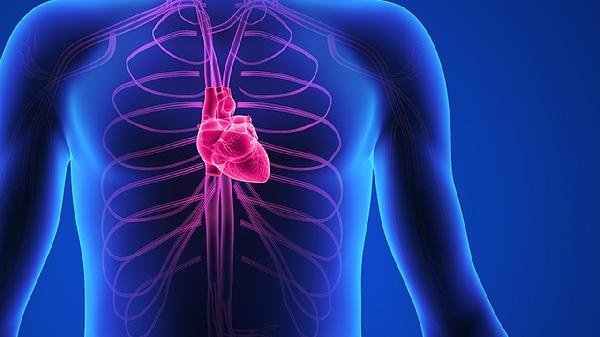
The echocardiogram was clear: mild aortic regurgitation, mild mitral regurgitation, mild tricuspid regurgitation. All three valves were failing to close tightly.
Heart valves function as doors between the heart’s four chambers. When they don’t seal properly, blood flows backward with each heartbeat. This regurgitation means that with every pump, a portion of the blood is doing useless work—the heart must strain harder to deliver the same volume of blood to the body. Short-term compensation is possible, but long-term heart failure is inevitable.
Mr. Wu’s symptoms signaled that this compensatory mechanism had reached its limit. Chest tightness indicated insufficient cardiac output and myocardial ischemia. Limb numbness and immobility pointed to a sharp drop in peripheral perfusion. Aphasia and difficulty moving the lips reflected transient cerebral hypoperfusion. Together, these might prompt a Western physician to rule out a TIA (transient ischemic attack) or early stroke. But Dr. Wu traced them to a single underlying cause.
His pulse was thin and choppy (se). His tongue was dark red with prominent ecchymosis and a yellow, greasy coating.
[TCM Pattern Differentiation]
This tongue and pulse presentation pointed to a core pathogenesis: Qi stagnation and blood stasis. A thin pulse directly indicates deficient qifailing to propel the blood vessels; a choppy pulse feels like a knife scraping bamboo—signifying sluggish blood flow. The dark red tongue suggests heat in the blood aspect; the ecchymosis is a morphological sign of static blood accumulation—in TCM, sublingual and surface ecchymosis are the most直观 objective indicators of blood stasis syndrome. The yellow, greasy coating reveals phlegm-heat internally congested, resulting from stagnant qitransforming into fire and scorching fluids into phlegm.
But Dr. Wu didn’t stop at the label “qi stagnation and blood stasis.” He investigated the root cause: “The primary etiology is prolonged work and family stress, sleep deprivation, and overeating.” These three threads wove together a deeper pathogenesis: liver qidepression.
Stress → Liver depression → Qi stagnation → Qi fails to move blood → Blood stasis → Heart vessel obstruction → Valve incompetence. This is a complete causal chain. Dr. Wu’s own annotation is precise: “Liver wood fails to engender heart fire, leading to heart yang deficiency.” In the Five Elements, the liver corresponds to wood, the heart to fire; wood fuels fire in a parent-child relationship. When liver qistagnates, the “mother” (wood) is preoccupied with its own distress and cannot nourish the “child” (fire)—thus, heart yang inevitably becomes deficient.
Even more profound is Dr. Wu’s TCM interpretation of valvular regurgitation: “Deficient qileads to blood stasis, weakening cardiovascular kinetic force and increasing blood viscosity, slowing circulation. The mitral valve cannot close tightly, causing blood to reflux into the heart.” The brilliance here lies in his shift away from simply mapping the valve to a specific TCM organ. Instead, he reinterprets regurgitation through hemodynamics: the heart’s pumping power (TCM qi) is insufficient, blood flow slows and thickens, and the valve loses the fluid dynamic conditions required for passive closure.
This is an engineering-minded TCM perspective—applying fluid dynamics. Valves don’t actively close via muscle; they snap shut passively due to blood velocity and pressure gradients. Insufficient heart qi→ slowed flow → incomplete valve closure. The logic is internally consistent and aligns with modern principles of fluid mechanics.
The Initial Prescription was a textbook example of qi-tonifying and blood-activating therapy:
Astragalus (Huangqi) 80g, Angelica tail (Dangguiwei) 10g, Red Peony (Chishao) 10g, Earthworm (Dilong) 10g, Szechuan Lovage (Chuanxiong) 5g, Safflower (Honghua) 10g, Peach Kernel (Taoren) 10g, Zhendigen10g, Milky Oat Vine (Jixueteng) 10g. Decoct in water, one dose daily for three consecutive days. Plus Notoginseng powder (Sanqi), 3g each time, twice daily, taken with warm water.
[Formula Analysis]
The foundational framework is the renowned Buyang Huanwu Tang (Restore the Yang to Rescue the Collapse Decoction) from Wang Qingren’s Corrections to Errors in the Medical Forest. Wang specified “four taels of Astragalus as the sovereign herb, the rest as assistants and messengers.” The original formula uses 120g of Astragalus to treat “hemiplegia due to qideficiency and blood stasis.” Mr. Wu didn’t present with hemiplegia, but the underlying mechanism was identical—qideficiency as the root, blood stasis as the branch.
Dr. Wu made two key modifications: adding Zhendigen10g—a unique regional herb to cool blood and activate circulation, targeting the dark red tongue and yellow coating indicative of “heat in the blood aspect”; adding Milky Oat Vine 10g—to nourish blood and unblock channels. Its mild nature activates blood without damaging upright qi, making it ideal for long-term regulation.
Using 80g of Astragalus required clinical courage. But Dr. Wu’s diagnosis of qideficiency was unequivocal—thin pulse, systemic fatigue, and inability to walk were all concrete signs. Tonifying qidemands a bold approach; small doses would be a drop in the ocean against such profound circulatory stagnation.
After three doses, he returned on June 5, 2020, for a follow-up.
The second phase escalated treatment comprehensively. Interventions expanded from two to four:
① Acupuncture and tuina, once daily for 10 days.
② 99% plant-based diet; abstain from alcohol, milk, yogurt, and heavy meats.
③ Adjusted herbal formula, five doses.
④ Green-Rhythm Cellular Physiotherapy Device, one hour daily for 10 days.
The prescription evolution was central. Dr. Wu significantly adjusted the Buyang Huanwu Tang base: Astragalus reduced from 80g to 60g (shifting from urgent attack to gentle tonification); Earthworm reduced from 10g to 6g. A new array of herbs was introduced:
Xihuangcao(Rabdosia serra) 10g—clears heat and drains dampness (addressing the yellow, greasy coat).
Rhubarb (Dahuang) 6g—purges the bowels and dispels stasis (providing an exit for pathogenic factors).
Immature Bitter Orange (Zhishi) 10g—moves qiand breaks stagnation.
Water Plantain (Zexie) 10g—promotes urination and leaches out dampness.
Red Sage (Danshen) 10g—invigorates blood and calms the spirit.
Bupleurum (Chaihu) 10g—soothes the liver and relieves depression (directly targeting the root of liver qistagnation).
Trichosanthes Peel (Gualoupi) 10g—widens the chest and dissipates nodules (addressing the core symptom of chest tightness).
Chinese Garlic (Xiebai) 3g—unblocks yang and disperses clumps (specifically for chest bi and heart pain).
Hogfennel Root (Qianhu) 6g—descends qiand transforms phlegm.
Platycodon (Jiegeng) 3g—lifts the herbs upward to the chest.
The Gualou-Xiebaipair is the core of the Gualou Xiebai Baijiu Tangfrom the Essentials from the Golden Cabinet, specifically for “chest bi preventing recumbency, heart pain radiating to the back”—precisely matching Mr. Wu’s cardiovascular symptom cluster. Qianhu-Jiegengguides the formula’s action into the chest, ensuring potency reaches the heart and pulmonary circulation. Chaihu-Zhishiforms the crucial qi-moving duo from the Sini Sanin the Treatise on Cold Damage—striking directly at the root of liver qistagnation.
The shift from initial to follow-up formula perfectly illustrates the clinical rhythm of “treat the branch urgently, the root gradually.” The first prescription aggressively tonified qi(80g Astragalus) to rapidly relieve kinetic failure → the follow-up shifted to regulating qi(reducing tonification, increasing liver-soothing) to resolve liver depression, transform blood stasis, and clear phlegm-heat at the fundamental level.
Lifestyle intervention was not adjunctive here—it was integral to the core treatment. A 99% plant-based diet eliminates animal saturated fats, directly reducing blood viscosity and cholesterol levels, synergizing perfectly with blood-activating herbs like Earthworm, Safflower, Peach Kernel, and Notoginseng. Abstaining from alcohol, milk, and yogurt—all considered “dampness- and phlegm-generating” in TCM dietary theory—was crucial; for a patient with a yellow, greasy coat indicating phlegm-heat, each bite would otherwise fuel the pathological fire.
Dr. Wu, both the author of this case and a distant relative of the patient, concluded with an objective note. He neither exaggerated efficacy nor promised a cure, focusing instead on clarifying the logic of pattern differentiation and therapeutic principles. This restraint itself reflects professionalism.
This case raises a profound structural question.
In Western medicine, valvular regurgitation is an “organic lesion”—a physical structural defect of the valve. The only definitive treatments are surgical repair or replacement. Medical therapy aims to control symptoms and slow progression. The trajectory from “mild” to “moderate” to “severe” is generally viewed as a one-way street.
But Dr. Wu’s logic offers a different perspective: If the worsening of regurgitation depends largely on hemodynamic state (flow velocity, pressure, viscosity)—not solely on intrinsic valvular degeneration—then improving hemodynamics through qi-tonifying and blood-activating therapy could fundamentally slow or even reverse some cases of mild regurgitation.
This doesn’t replace valve surgery. Rather, it proposes an intervention strategy for a “gray zone” not covered by standard Western protocols. For mild regurgitation, lifestyle modification plus medication is a near-vacuum in current Western practice—statins lower lipids, beta-blockers control rate, but neither directly targets the mechanism of regurgitation. The combination of modified Buyang Huanwu Tang (tonify qi, activate blood) + radical lifestyle overhaul (99% plant-based diet) precisely fills this void.
This case is a beginning, not a conclusion. How much symptom improvement resulted from seven doses of herbs and ten days of intensive therapy? Was a follow-up echocardiogram performed to objectively verify valvular changes? The original text doesn’t specify. But the underlying logic is sound and warrants further clinical validation.
Follow me for more reliable insights into TCM and health.