K-Sundo Therapy for Chronic Neck Pain & Headaches
You've done massage. You've done stretching. You've taken painkillers.
Your head still hurts. Your neck is still stiff.
If this sounds familiar, the problem may not be "the neck" at all—
Your jaw and your pelvis are "teaming up" to keep your head and neck miserable.
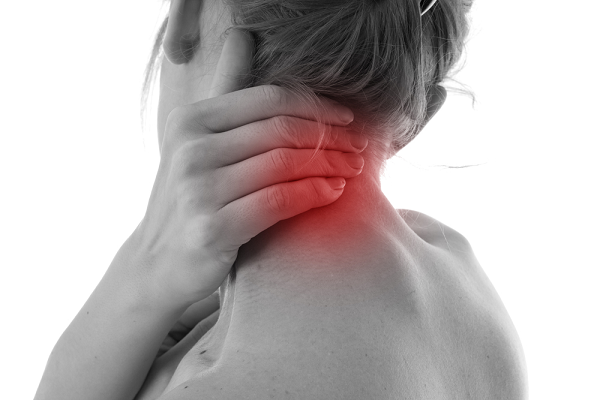
I. The Hidden Root of Chronic Neck Pain/Headaches
The blind spot of specialty-divided modern medicine is precisely why chronic neck pain and headaches are so hard to cure—
| Department You Visit | What the Doctor Examines | The Real Problem May Be |
|---|---|---|
| Neurology | Cerebral vessels, nerves | Temporomandibular joint (TMJ) tension |
| Orthopedics / PT | Cervical discs, muscles | Pelvic tilt → whole-spine misalignment |
| Pain Clinic | Trigger-point injections, nerve blocks | Full-length craniofascial chain tension |
| Psychology | Tension headaches, anxiety | Chronic masseter/medial pterygoid spasm |
Treating a single spot is like fixing one leaky pipe joint while ignoring the water tower and the whole building's plumbing.
II. K-Sundo's Core Insight: Cranio-Pelvic Integration
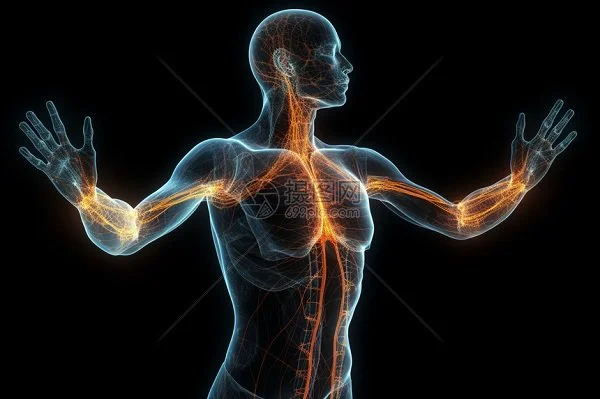
The Body Has a "Longitudinal Tension Chain"
From the top of the skull to the soles of the feet runs a continuous fascia-nerve-energy channel:
Cranial base fascia → Cervical → Thoracic → Lumbar → Pelvis → Lower limbs
        ↑                                                              ↑
   Upper segment (cranium/TMJ)                                     Lower segment (pelvis/sacrum)
A key feature of this chain—when one end tightens, the entire chain follows.
Upper Segment Compression: The TMJ "Domino Effect"
- Chronic clenching, grinding, stress-induced jaw gripping
- Masseter, medial pterygoid, temporalis in sustained spasm
- Cranial base fascia (galea aponeurotica) pulled downward
- Greater/lesser occipital nerves compressed → occipital neuralgia, migraines
- Cranial nerve circulation blocked → dizziness, brain fog
Lower Segment Stiffness: The "Remote Effect" of the Pelvis
- Pelvic tilt/rotation → whole spine deviates laterally
- Quadratus lumborum, iliopsoas in chronic tension → transmission upward
- Cervical muscles overcompensate for pelvic tilt
- Posterior neck muscles overloaded → chronic neck pain
This is why "treat the neck for neck pain" doesn't work—you're only fixing half the chain.
III. How K-Sundo Works: Simultaneous Top-Bottom Release
The essence of K-Sundo: release both ends of the chain at the same time.
Upper Release (Cranial Release)
| Movement Element | Action |
|---|---|
| Gentle jaw micro-opening/closing training | Releases masseter & medial pterygoid spasm |
| Soft TMJ mobilization | Restores normal TMJ gliding |
| Cranial base fascial release | Frees greater/lesser occipital nerve compression |
| Hyoid muscle group relaxation | Opens throat passage; improves brain blood flow |
Result: Cranial nerve circulation restored → migraine frequency drops → brain fog lifts
Lower Adjustment (Pelvic Realignment)
| Movement Element | Action |
|---|---|
| Pelvic micro-tilt reset training | Corrects pelvic tilt/rotation |
| Sacroiliac joint mobilization | Restores pelvic symmetry |
| QL / iliopsoas stretching | Cuts off upward tension transmission |
| Arch activation | Rebuilds lower-limb biomechanical chain |
Result: Spinal alignment returns to neutral → cervical compensation decreases → neck pain gradually eases
The Synchronous Key (The K-Sundo Secret)
Here's the key—doing upper first, then lower, is not as good as doing both at once.
When the TMJ and pelvis are gently guided in the same time window:
- The entire longitudinal tension chain releases from both ends simultaneously
- The spine "straightens like a gently pulled rubber band," naturally returning to neutral
- Cranial AND spinal nerves are released at the same time
- The autonomic nervous system one-click-switches from sympathetic to parasympathetic
This "whole-body longitudinal structural adjustment" is something no single-site physical therapy can achieve.
IV. Comparison with Conventional Treatments
| Dimension | Massage / Tuina | Cervical Traction | Trigger-Point Injection | K-Sundo |
|---|---|---|---|---|
| Scope | Local muscles | Cervical segment | Single pain point | Full longitudinal chain |
| Addresses TMJ | ❌ | ❌ | ❌ | ✅ Core treatment |
| Addresses Pelvis | ❌ | ❌ | ❌ | ✅ Synchronous adjustment |
| Regulates ANS | Indirect, brief | None | None | Direct, sustained |
| Durability | Days to weeks | Days | Weeks to months | Progressive improvement |
| Invasive? | Non-invasive | Non-invasive | Invasive | Non-invasive, gentle |
V. Who Benefits Most from K-Sundo?
| Group | Typical Presentation | K-Sundo's Entry Point |
|---|---|---|
| 🤕 Recurring migraines | Medications losing effectiveness; no organic findings | TMJ unlock + cranial circulation restoration |
| 💢 Chronic neck pain | Massage/ acupuncture only helps for days | Pelvis-spine longitudinal adjustment |
| 😬 Chronic clenching/bruxism | Sore jaw mornings, headaches | Masseter release + cranial fascia release |
| 🧍 Postural deviation | Uneven shoulders, pelvic tilt, scoliosis | Synchronous top-bottom realignment |
| 😰 Anxiety + somatization | Headaches, neck stiffness, chest tightness together | Autonomic nervous system reset |
VI. K-Sundo at Wu Healing Center
At Wu Healing Center, K-Sundo is a core modality for chronic pain management:
- 🩺 3D Assessment: Postural analysis + fascial chain mapping + HRV autonomic testing
- 🎯 Personalized Protocols: Custom upper/lower/synchronous ratios based on each person's craniopelvic imbalance pattern
- 🧘 Gentle Guidance: All movements are low-intensity, spontaneous micro-movements—zero forceful manipulation
- 📈 Progress Tracking: Regular re-evaluation of headache frequency, pain VAS scores, and HRV markers
Our principle: Not brute force to "crack you into place"—let the body find its own alignment.
VII. Important Cautions
⚠️ K-Sundo involves craniomandibular and spinal work; inherent risks exist.
- Severe osteoporosis, spinal fracture, or intracranial lesions: contraindicated
- Acute cervical flare-ups or vertebrobasilar insufficiency: use with caution
- Significant TMJ organic pathology: see an oral & maxillofacial surgeon first
- Must be performed under a qualified therapist—never self-administer
- This article is for wellness education only; not a diagnosis or treatment recommendation
Closing Thoughts
Chronic neck pain and recurring headaches are often not "neck problems" or "head problems."
They are "warning lights" at different points along the same longitudinal tension chain.
The value of K-Sundo is that it sees the whole that modern specialty medicine keeps fragmenting—
From jaw to pelvis, your body is one continuous line. Release both ends, and the middle will find its place.
Related Reading
- How Fengyang Taiji Improves Cerebral Blood Flow
- How Qi Circulation Regulates Emotions & Relieves Anxiety
⚠️ Disclaimer: This article is for integrative wellness education only. Chronic neck pain and headaches may stem from various organic causes (cervical disc herniation, intracranial lesions, etc.)—please seek medical evaluation first. K-Sundo involves individual variability and potential risks; practice only under professional guidance.
Produced by Wu Healing Center · Fengyang Daoist Medicine