
How Fengyang Taiji Improves Cerebral Blood Flow
Ever feel this way—
You wake up and your head feels wrapped in gauze. In meetings your mind wanders and won't focus. By 3 or 4 p.m., you feel like someone pulled the plug.
Checkup results are "fine." Blood pressure is normal. Cervical X-ray shows only "mild degenerative changes."
This is the classic picture of cerebral microcirculatory insufficiency.

I. Why Does the Brain "Lose Power"?
The brain is 2% of body weight yet consumes 20% of the body's oxygen and 25% of its glucose.
When blood supply drops by just 10%, cognitive function measurably declines.
Common Causes of Reduced Brain Blood Flow
| Cause | Mechanism |
|---|---|
| Cervical degeneration / stiffness | Vertebral artery compression → posterior circulation ischemia |
| Prolonged head-forward posture | Cervical fascia tightens; blood flow at skull base obstructed |
| Sympathetic overdrive | Cerebral vasospasm; abnormal blood flow distribution |
| Qi & Blood deficiency (TCM) | Insufficient driving force to propel blood upward |
| Lack of exercise | Overall circulatory efficiency declines |
In one sentence: the "road" to the brain is blocked, or there aren't enough "trucks."
II. Why Most Exercise Doesn't "Reach" the Brain
Running, weightlifting, HIIT—these primarily train cardiopulmonary function and limb muscles.
Their benefit to brain blood flow is indirect, through whole-body heart rate elevation—a "flood irrigation" approach.
| Exercise Type | Effect on Brain Blood Flow | Limitation |
|---|---|---|
| Running / Cardio | Whole-body flow increase, indirect brain benefit | Doesn't target cervical / skull-base region |
| Strength Training | Short-term BP rise; cerebral vessels under pressure | No direct help for vertebral arteries |
| Yoga | Some inversions can increase brain flow | Difficult; hard for seniors to perform |
| Fengyang Taiji | Directly releases cervical spine; guides Qi upward to brain | Requires correct instruction |
Fengyang Taiji's uniqueness: not "flood irrigation," but "precision irrigation" of the brain.
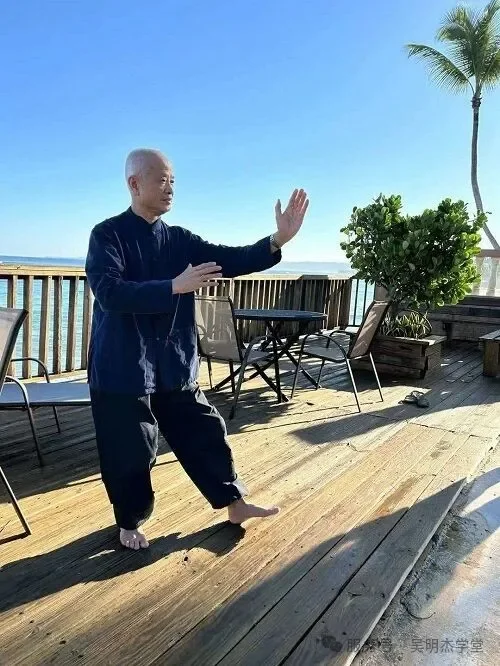
III. Four Mechanisms: How Taiji Nourishes the Brain
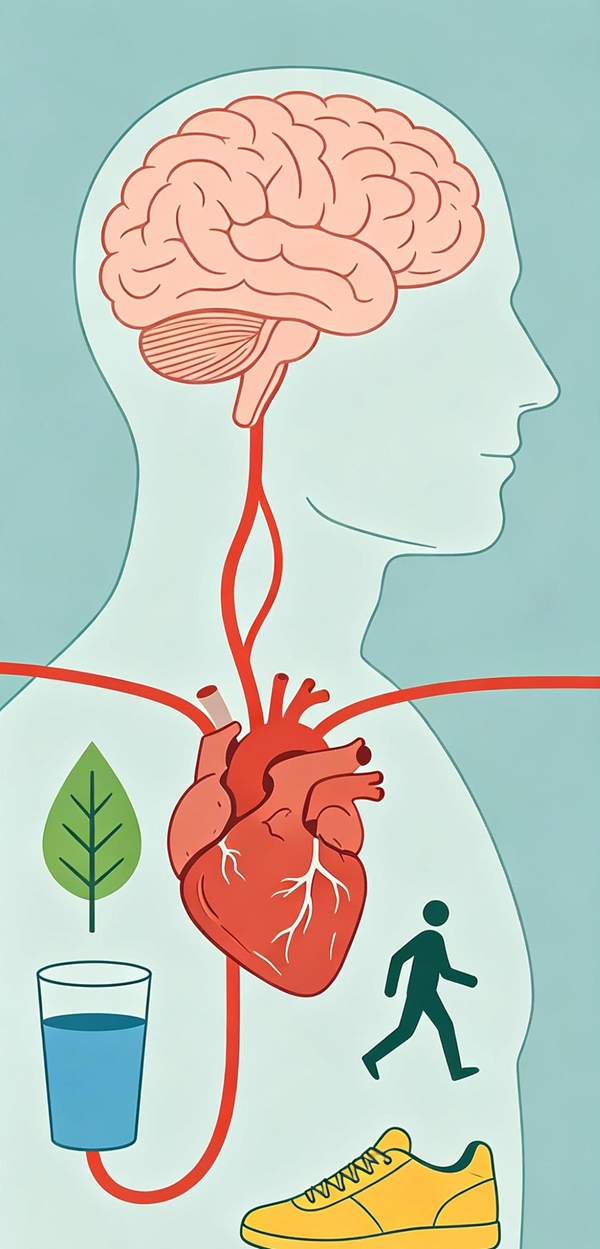
Mechanism 1: Spinal Decompression—Opening the "Highway to the Brain"
Every Fengyang Taiji form emphasizes waist-as-axis and spiral coiling of the spine.
- Cervical, thoracic, and lumbar vertebrae release section by section
- Fascial tension around the vertebral arteries decreases
- Vertebrobasilar blood supply improves
Effect: Blood flow to the posterior circulation (brainstem, cerebellum, occipital lobes) increases; dizziness and blurred vision improve.
Mechanism 2: Symmetrical Trunk Rotation—"Pumping" Brain Blood Flow
Forms like "White Crane Spreads Wings" and "Wild Horse Parts Mane" require symmetrical left-right trunk rotation.
- Rotational movement creates a "muscle pump" effect
- Promotes jugular venous return
- Lowers intracranial pressure; improves cerebrospinal fluid circulation
Mechanism 3: Gentle Upward Qi Guidance—"Where Qi Goes, Blood Follows"
The core principle of Fengyang Taiji: mind guides Qi; Qi moves the body.
- Movement coordinated with abdominal breathing
- Mind anchored at Dantian → Qi ascends the Governing Vessel → to Baihui (crown)
- The TCM principle: "Where Qi arrives, Blood follows"
Effect: Cerebral oxygenation increases; mental clarity, memory, and focus improve.
Mechanism 4: Abdominal Breathing—A Natural "Brain Oxygenator"
Fengyang Taiji is paired throughout with deep, fine, even, long abdominal breathing.
- Diaphragm descends → increased thoracic negative pressure → enhanced venous return
- Blood oxygen saturation rises by 3–5%
- Parasympathetic activation → cerebral vasodilation
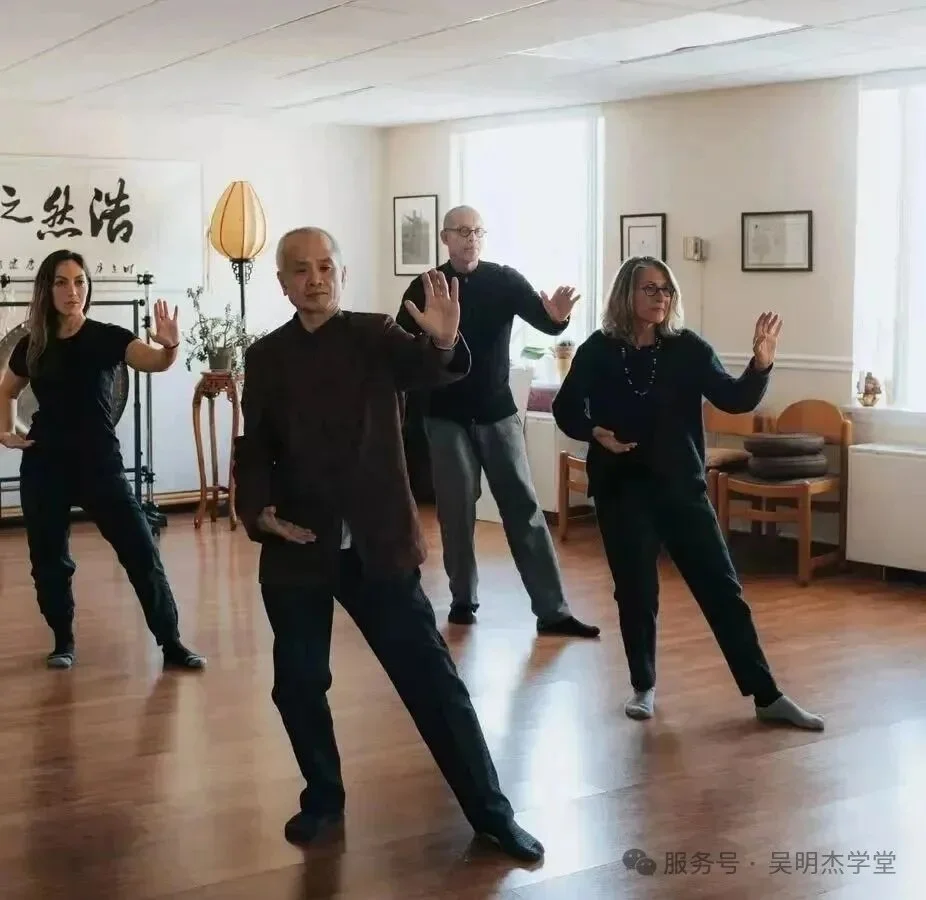
IV. Who Benefits Most?
Group Typical Presentation Taiji's Entry Point 🧓 Seniors Poor brain perfusion, dizziness, memory decline Gentle Qi guidance upward; improves brain circulation 💼 High-pressure professionals Brain fog, poor focus, afternoon "crashes" 3–15 min "recharge" 📱 Chronic "head-forward" posture Cervical issues, insufficient brain blood flow Cervical decompression + vertebral artery relief 😴 Chronic fatigue sufferers Brain fog + whole-body weakness Nourishes Qi & Blood; precise brain supply 🏥 Post-op rehabilitation Need for brain function recovery Low-intensity, high-safety
V. Practice Guidelines
✅ Correct Approach
- Move slowly and softly; prioritize "relaxation"
- Coordinate with abdominal breathing; inhale/exhale through the nose
- Mind on Dantian; waist as axis driving the four limbs
- 1–2 sessions daily, 3–15 minutes each
⚠️ Cautions
- Pause practice during acute cervical spine flare-ups
- Those with severe vertebral artery stenosis: consult a physician first
- Practice to the point of comfort; never force stretches
- Learn under a qualified instructor
VI. Important Warning
⚠️ > Fengyang Taiji is gentle, but not zero-risk.
Recurrent dizziness or fainting: rule out cerebrovascular disease first
Severe cervical degeneration: practice under medical guidance
This article is for wellness education only; not a diagnosis or treatment recommendation
Closing Thoughts
The brain is the body's "command center."
When the road to headquarters is clear, the entire body operates better.
Fengyang Taiji uses no brute force, no high intensity. It relies on—
> Relaxation, softness, slowness, and evenness—letting Qi and Blood naturally ascend to nourish your most precious organ.
Related Reading
- What Are the Fengyang Taiji Eight Forms?
- How the Microcosmic Orbit Calms the Nervous System
- Daoist Longevity Wisdom for Busy Modern Lives
⚠️ > Disclaimer:> This article is for wellness education only. Insufficient brain blood flow may stem from various organic diseases—please seek medical evaluation first. Fengyang Taiji involves individual variability; practice under professional guidance.
Produced by Wu Healing Center · Fengyang Daoist Medicine
The Fengyang Taiji Eight Forms are an exclusive IP created by Dr. Wu Mingjie.