
Active Compounds in Polygonatum (Huangjing) May Delay Brain Aging: Scientific Evidence from Gut Microbiota and Their Metabolites to the "Gut-Brain Axis"
In modern society, with declining birth rates and lengthening life expectancy, population aging is continuously accelerating. Brain aging and the associated cognitive impairment have become public health problems that cannot be ignored.
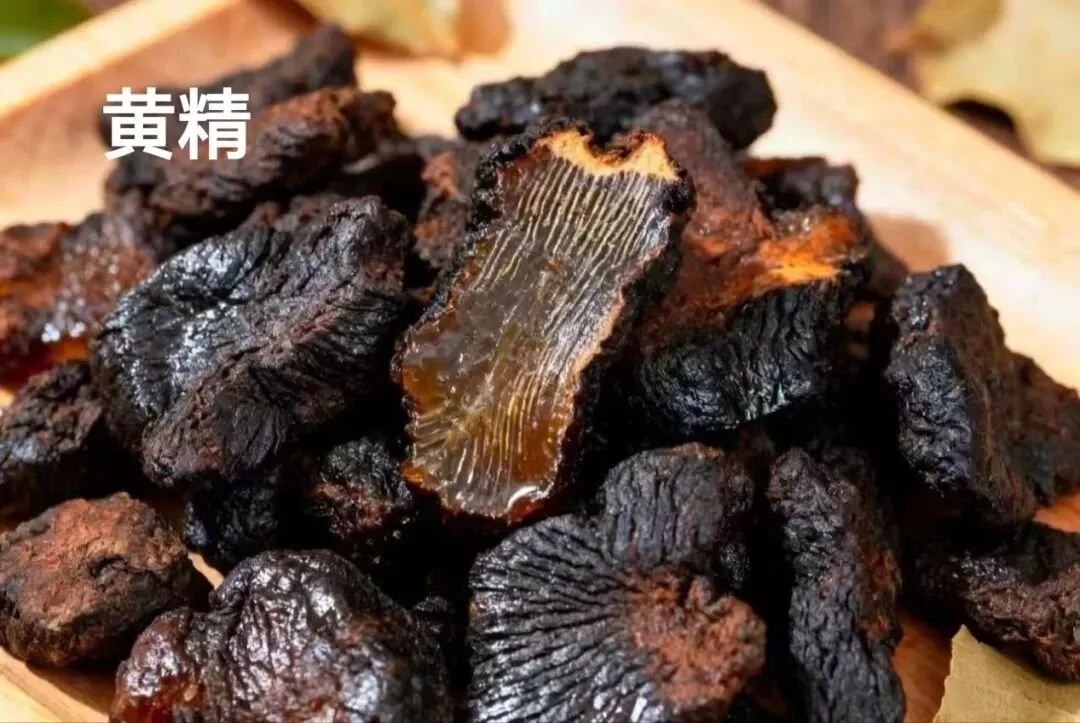
The traditional Chinese herb Huangjing (Polygonatum) has been regarded in medical texts from ancient times to the present as having the effect of "prolonging life." The anti-aging effects of its main active component, Polygonatum polysaccharide, are now being systematically verified by modern science.
An animal experiment combining gut microbiota and metabolomics, from the research perspective of the "microbiota-gut-brain" axis, has revealed the potential mechanism by which Polygonatum polysaccharides delay brain aging, providing a scientific basis for the modern application of this traditional Chinese medicinal material.
Brain Aging: The Invisible Crisis of an Aging Era
Brain aging is usually accompanied by problems such as declining learning and memory ability, pathological changes in the hippocampus, and oxidative stress imbalance, which can eventually develop into cognitive dysfunction and even neurodegenerative diseases such as Alzheimer's disease.
Research has found that the hippocampus is the core brain region regulating learning and memory, and its pathological changes are closely related to the deterioration of cognitive ability.
Inhibiting oxidative damage and pathological changes in the hippocampus is considered an important intervention direction for delaying brain aging. Finding safe and effective natural intervention methods has become a hot topic in the field of anti-aging research.
Polygonatum and Its Active Components
Huangjing is the dried rhizome of a plant of the Liliaceae family. It is neutral in nature and sweet in flavor, and enters the Spleen, Lung, and Kidney meridians. Its core authentic production area is Jiuhua Mountain in Anhui. The Chinese Pharmacopoeia records that it can tonify qi and nourish yin, strengthen the spleen, moisten the lung, and benefit the kidney; it is a substance that is both food and medicine.
Modern pharmacological research has found that Polygonatum polysaccharide possesses multiple biological activities, including antioxidant, anti-inflammatory, immunomodulatory, and neuroprotective effects. Previous studies have found that Polygonatum polysaccharide can improve the learning and memory ability of aging model animals.
However, the specific mechanism by which Polygonatum polysaccharide treats aging-related cognitive impairment is still unclear, particularly with regard to mechanism analysis based on the perspectives of gut microbiota and metabolomics.
Specific Design of the Animal Experiment
In this study, 36 male mice aged 6 weeks were randomly divided into six groups, with 6 mice in each group. The normal control group (NC) was injected with physiological saline, while the remaining mice were given intraperitoneal injections of D-galactose to establish a rapid aging mouse model.
The model group (D-gal) was administered distilled water by gavage. The three Polygonatum polysaccharide dose groups were each given 150, 300, and 600 mg/kg by gavage, corresponding to the PSP150, PSP300, and PSP600 groups. A donepezil positive control group was also established. All mice began gavage administration from week 5, continuing for 4 weeks.
Experimental Results and Analysis
1. Improvement of Cognitive Function
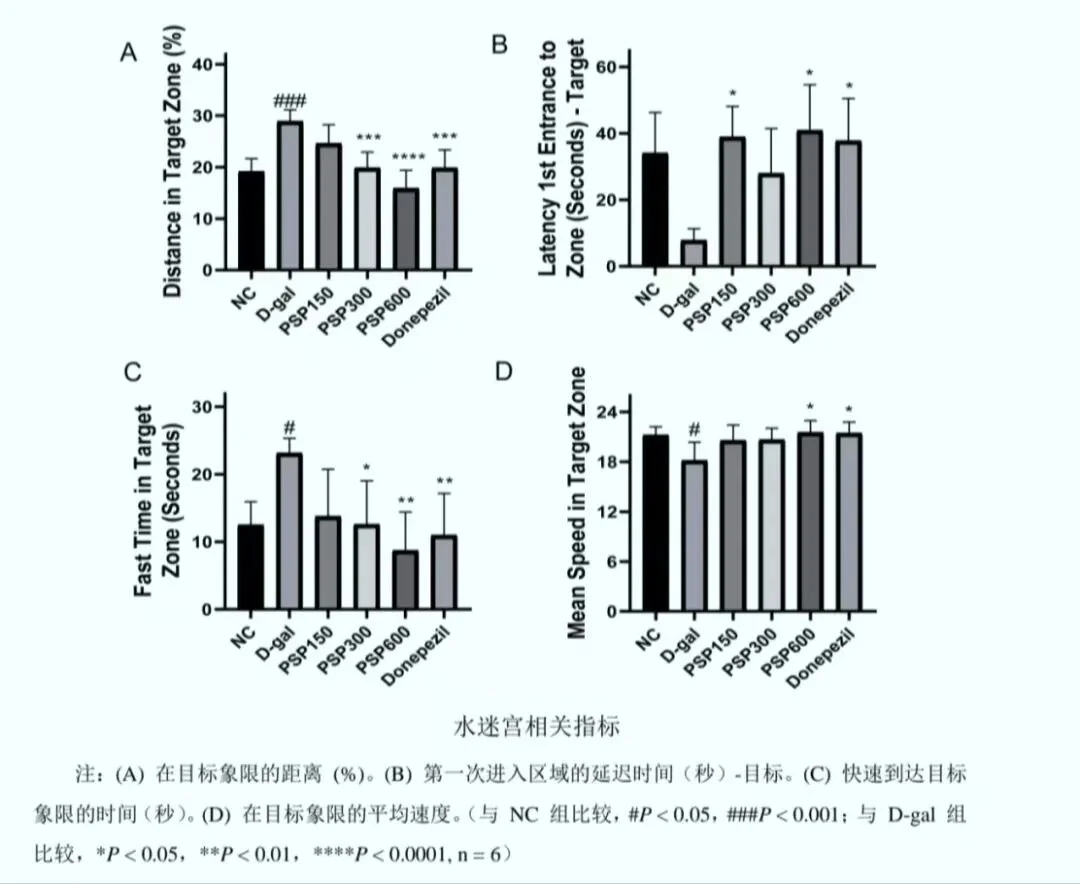
After 7 weeks of administration, the Morris water maze test was used to evaluate the spatial learning and memory abilities of the mice. The test results showed that the model group mice crossed the hidden platform fewer times and spent less time in the target quadrant, indicating obvious impairment of spatial memory ability.
The improvement effect of Polygonatum polysaccharide intervention showed an obvious dose dependence, with the 600 mg/kg group showing the most prominent effect, close to the effect of the positive drug donepezil.
In this group of mice, the proportion of distance traveled in the target quadrant increased significantly, the time to quickly reach the target quadrant shortened, and the average speed increased, indicating that the improvement effect of Polygonatum polysaccharide on spatial memory has an obvious dose-effect relationship.
2. Protection of Brain Tissue
Histopathological examination provided morphological evidence for the cognitive improvement. In the model group mice, neurons in the hippocampal CA1 and CA3 regions were sparsely and irregularly arranged, reduced in number, and showed typical aging changes such as nuclear pyknosis; morphological abnormalities such as deep neuronal staining and axonal vacuolar degeneration also appeared.
In all Polygonatum polysaccharide dose groups and the positive control group, the hippocampal neuron arrangement tended to be compact, the morphology was intact, the nucleoli were clear, and the proportion of damaged neurons was significantly reduced with lessened damage, indicating that Polygonatum polysaccharide has a direct neuroprotective effect and can improve pathological changes in brain tissue.
3. Regulation of Oxidative Stress
Oxidative stress imbalance is one of the core mechanisms of brain aging. In the model group mice, the malondialdehyde content in the hippocampus and serum increased significantly, while the activities of superoxide dismutase and glutathione peroxidase decreased significantly, suggesting that the brain had already suffered obvious oxidative damage.
After intervention with Polygonatum polysaccharide, the malondialdehyde content decreased in a dose-dependent manner; the activities of superoxide dismutase and glutathione peroxidase rebounded to varying degrees, with the 600 mg/kg dose group showing the most obvious recovery.
This indicates that Polygonatum polysaccharide can effectively reduce oxidative damage to hippocampal neurons by rebuilding the redox balance, thereby improving learning and memory ability and playing a role in delaying brain aging.
4. Improvement of Gut Microbiota
16S rDNA sequencing revealed obvious changes in the gut microbiota. In the model group mice, the diversity of gut microbiota decreased, and the ratio of Bacteroidetes to Firmicutes fell from 1.51 in the normal group to 0.82.
This ratio is considered to be closely related to aging and cognitive impairment. After intervention with 600 mg/kg of Polygonatum polysaccharide, this ratio recovered to 1.34; the diversity of the microbiota rose again, and the overall composition moved closer to that of the normal group.
At the genus level, the proportion of genera such as Lactobacillus decreased, while the abundance of beneficial bacteria such as Muribaculaceae and Lachnospiraceae increased, suggesting that Polygonatum polysaccharide can effectively regulate aging-related gut microbiota imbalance.
Mechanism of Action of Polygonatum Polysaccharide
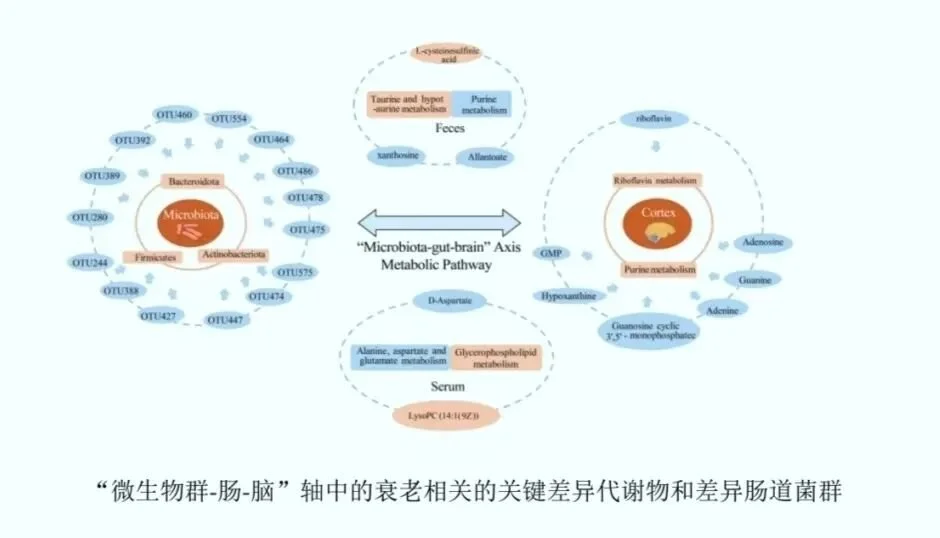
Non-targeted metabolomics analysis based on HPLC-QE-MS/MS showed that after Polygonatum polysaccharide intervention, 35, 9, and 58 key differential metabolites in the gut microbiota, serum, and brain tissue, respectively, were reversed.
These metabolites were mainly enriched in pathways such as purine metabolism, riboflavin metabolism, taurine and hypotaurine metabolism, alanine-aspartate-glutamate metabolism, and glycerophospholipid metabolism.
Among them, the change in purine metabolism in brain tissue was the most prominent. Metabolites such as adenine, guanine, adenosine, and hypoxanthine are all closely related to cognitive function and oxidative stress, suggesting that brain tissue metabolism has tissue specificity.
Correlation analysis further linked the relationships among gut microbiota, metabolites, and oxidative stress. The study identified three key bacterial groups: Prevotellaceae_NK3B31, Prevotellaceae_UCG-001, and unclassified Muribaculaceae, all belonging to the phylum Bacteroidetes.
These key bacterial groups were significantly correlated with purine metabolites in brain tissue and with oxidative stress indicators. Among them, the unclassified Muribaculaceae was closely related to metabolites of the microbiota, serum, and brain, suggesting that it occupies a core position in the "gut-brain axis."
The Mantel test confirmed that differential gut microbiota and cross-tissue metabolites have extensive interactions, and that brain tissue metabolites have the highest correlation with the microbiota, supporting the regulatory mechanism of the "microbiota-gut-brain axis."
Summary
This study confirmed that Polygonatum polysaccharide can improve cognitive function in aging mice, reduce pathological damage to the hippocampus, and rebuild the redox balance by regulating the "microbiota-gut-brain axis."
Its potential mechanisms include regulating key bacterial species of the phylum Bacteroidetes and affecting core pathways such as purine metabolism, thereby exerting a neuroprotective effect. In the future, with the continuous development of Polygonatum products that are both food and medicine, its application prospects in the field of anti-aging are worth looking forward to!
References
Partridge L, Fuentealba M, Kennedy BK. The quest to slow ageing through drug discovery. Nat Rev Drug Discov. 2020;19(8):513-32.
Cryan JF, O'Riordan KJ, Cowan CSM, et al. The Microbiota-Gut-Brain Axis. Physiol Rev. 2019;99(4):1877-2013.
Zhang Z, Yang B, Huang J, et al. Identification of the protective effect of Polygonatum sibiricum polysaccharide on d-galactose-induced brain ageing in mice by the systematic characterization of a circular RNA-associated ceRNA network. Pharm Biol. 2021;59(1):347-66.
Tao Aien, Zhao Feiya, Qian Jinfu, et al. Research progress on the bencaology, pharmacological action and pharmacodynamic substances of Polygonatum plants in treating diseases related to kidney essence deficiency. Chinese Traditional and Herbal Drugs. 2021;52(05):1536-48.
Yang De, Xue Shujing, Lu Qi, et al. Research progress on the pharmacological action and product development of Polygonatum. Hubei Agricultural Sciences. 2020;59(21):5-9.