
Drinking Waterfall Rou Gui Tea Worth $3,000
By Rebecca Emken
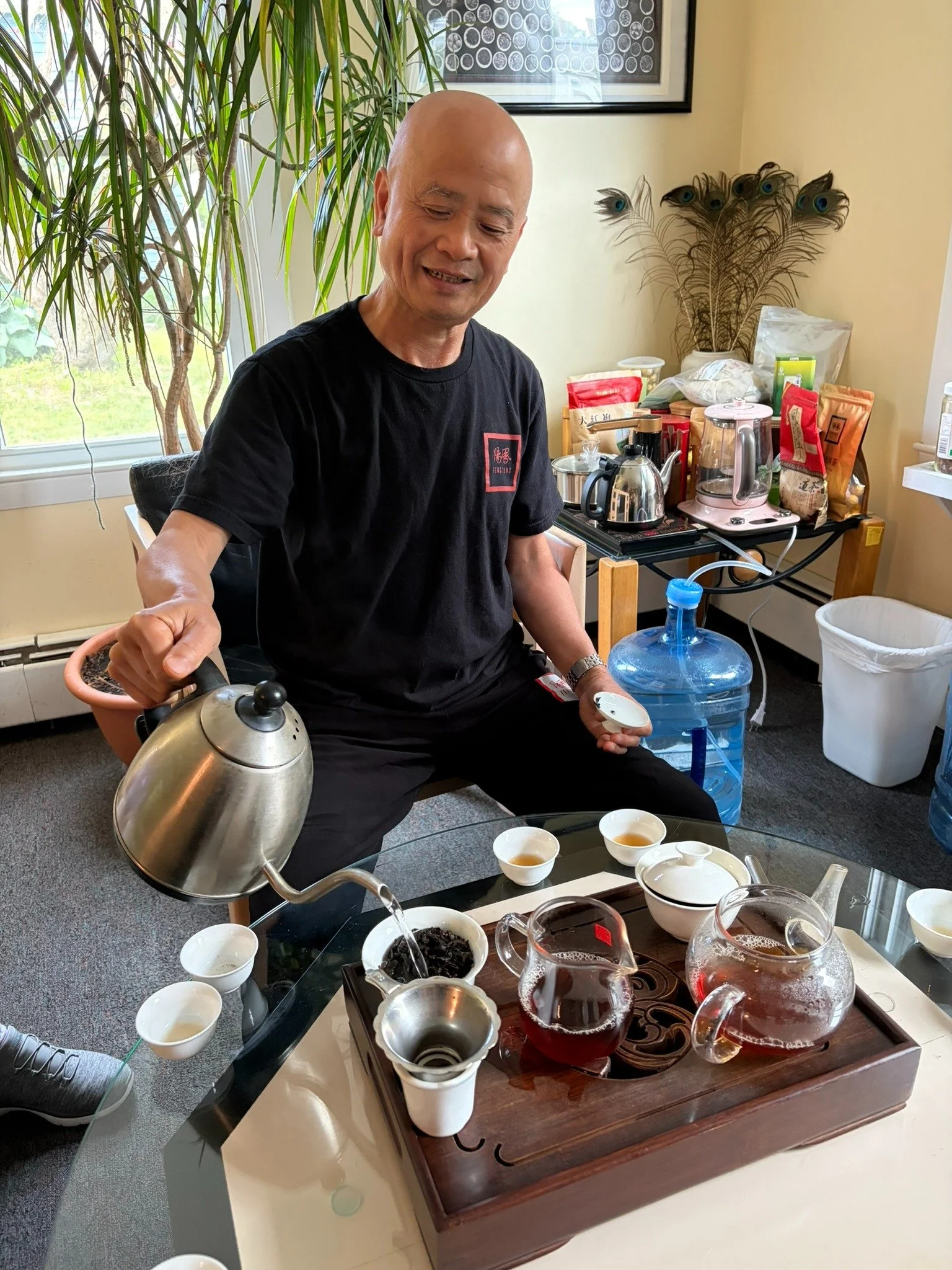
On a serene day at the Wu Healing Center in Maynard, Dr. Wu and I tasted a luxurious tea worth about $3,000 per pound. Tea of this exceptionally superior grade is so delicate and refined- brewing the same tea from different spring water companies brought out dramatically distinct flavors, textures, and liquor colors of this Rou Gui tea.
Rou Gui is a cultivar of Wuyi rock tea from Wuyi Mountain, China. The tea we enjoyed was an exceptionally rare and distinguished grade, with only about three pounds produced each year. Grown at Horse Head Cliff beside a cascading waterfall, it developed under a harmonious balance of sun (yang) and shade (yin), creating extraordinary growing conditions that are reflected in the tea’s extraordinary character.
Harvested from tea trees more than 35 years old and expertly crafted by Tea Master Zhou, it represents one of the finest expressions of Rou Gui. The liquor is rich and full bodied, with complex layers of flavor that unfold into warm notes of earth, cassia cinnamon, mineral depth, and lingering natural sweetness.
This tea is sold on sonwutea.com. You can find the product listing for the 2020 harvest here. At the time of publication, the 2020 harvest was valued at $193 per oz, or $3,088 per pound. The 2020 harvest is sold out, but if you’re interested in exquisite, high mountain teas, I recommend browsing sonwutea.com.
Roughly speaking, I would say that the tea Dr. Ming Wu served me was worth $3,000, since he had a (mostly empty at this point) pound bag of tea. However, the tea we drank was from the 2015 harvest, 11 years ago, and tea becomes more refined over time, aging like fine wine.
If Dr. Wu still had a full pound bag of this tea left and were to sell it, it would be worth over $3,000 in the market, considering how tea appreciates with age.
So to summarize how precious this tea was…
The tea was 11 years old (harvested in 2015, enjoyed in 2026)
It was grown high up on a mountain, by a waterfall
The tea tree is mature, over 35 years old
It was crafted by a highly skilled tea master
Only 3 pounds are produced each year
When you’re drinking luxurious tea of exquisite character and exquisite price (it’s worth it), you need to brew it with care in order to experience its full worth. If you were to simply drop these tea leaves at the bottom of a mug, and pour hot water over it, you might as well light your $3,000 on fire.
But if you brew this exceptionally high grade in the gong fu style, it brings out a taste so elegant and superb, the quality of the tea is worth the price.
Quick explanation of brewing tea gong fu style:
Use a gaiwan or teapot that is roughly 3-5 oz. When placing the tea leaves into your gaiwan or teapot, have the leaves fill up one-third of your gaiwan or teapot.
Infuse the tea for 3 seconds, for 10-15 times.
I specifically use the Millet Labeling Teamaking Method, which I learned in Guangzhou at Yi Mo Tea House. If you want to watch my (first ever!) YouTube video about me brewing tea using this method, you can watch it here.
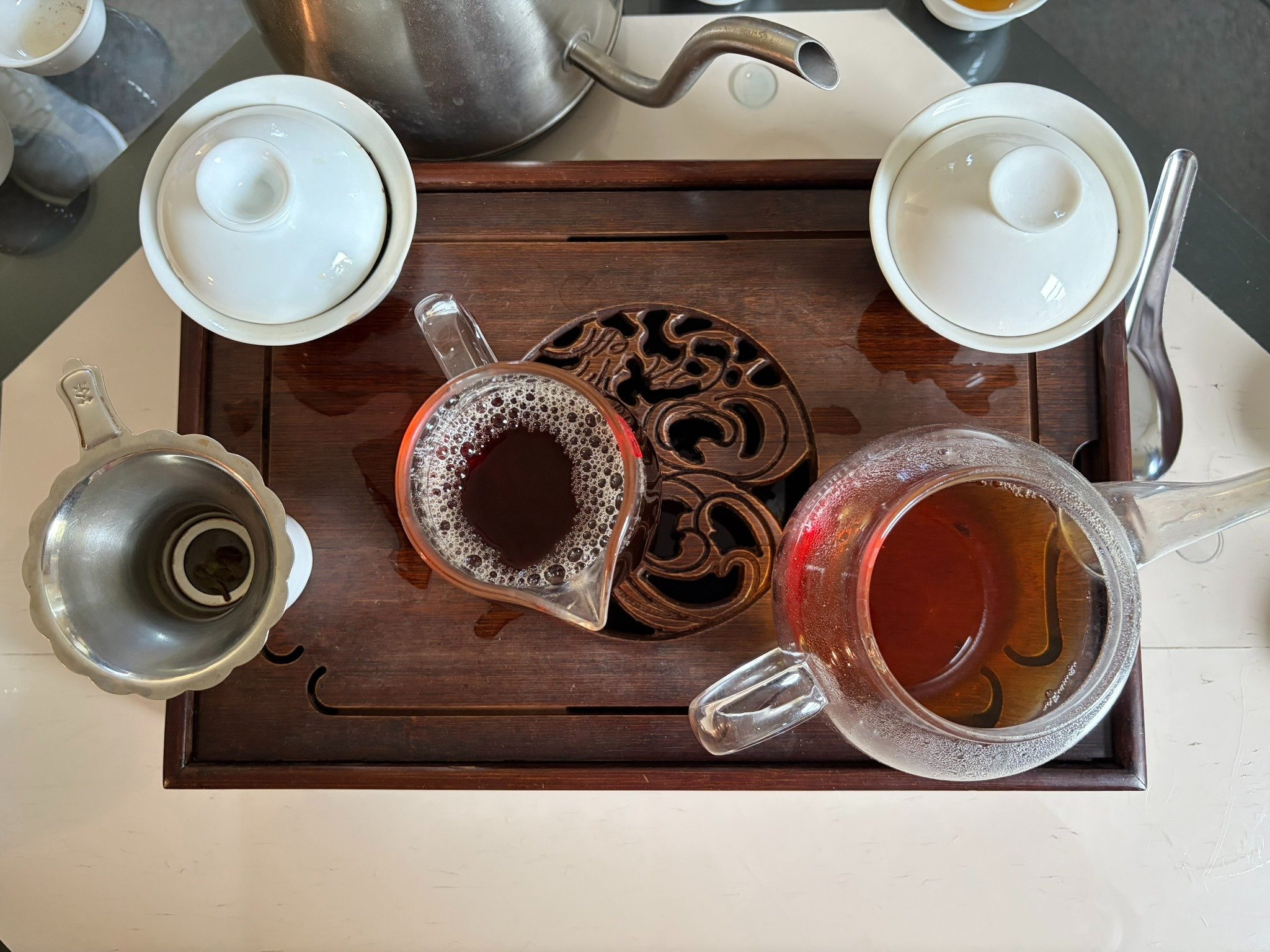
In my everyday drinking of tea, Poland Spring is my go-to for spring water, it’s amazing. But when it comes to drinking the rare teas like this one, Dr. Wu uses Fiji Water. Through his decades of tea tasting experience, Dr. Wu has found Fiji Water to bring out even more exquisite tastes in tea. Dr. Wu and I did a taste test, where Dr. Wu brewed this tea using both types of water. While the tea leaves from one gaiwan was brewed with Poland Spring water, the tea leaves in the second gaiwan were brewed with FIJI Water. In both cases, the water was brought to boiling (100°C or 212°F).
After tasting it as well, I understand the difference. While I love drinking Poland Spring Water, and drink tea brewed with it more often, it pales in comparison to FIJI Water in this specific case. When you have a tea brewed well, but then taste it alongside a tea brewed even more well, the great-but-not-as-great tea is perceived as worse by comparison.
Comparing Poland Spring Water to FIJI Water for this $3,000 Tea
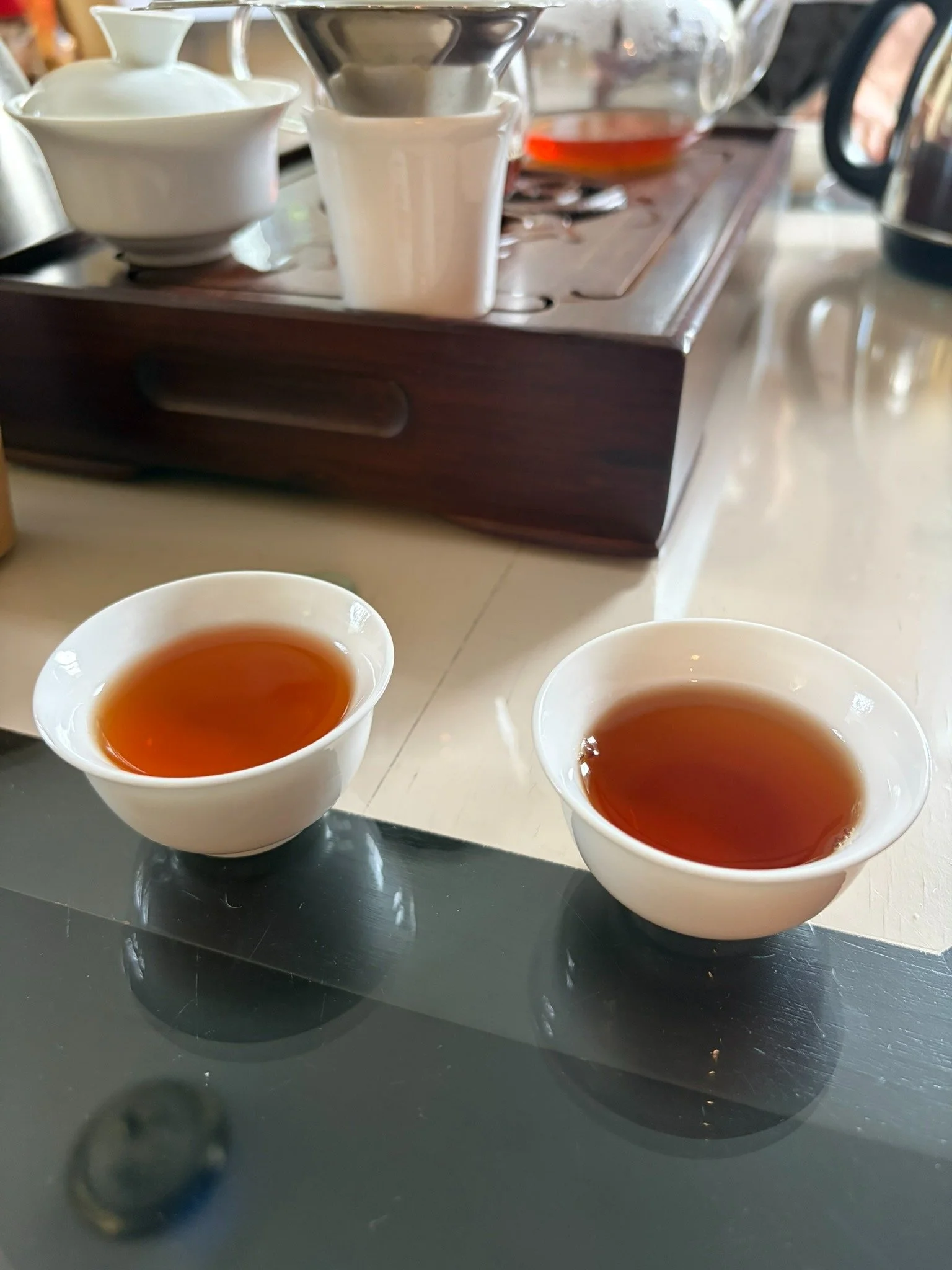
Rou Gui tea brewed with Poland Spring water (left), and FIJI Water (right).
Poland Spring Water
Suggested use: Wonderful for everyday teas
Aroma: Present, but weaker.
Tea liquor: Lighter color.
Texture: Feels smooth, then a rough undercurrent hits the tongue, then lingers afterwards.
Taste: Sweet, but then bitter and sour if alongside the other tea.
FIJI Water
Suggested use: Wonderful for teas of this refined, delicate character
Aroma: More aromatic.
Tea liquor: Darker color. With FIJI Water, the first brew was a richer color, and tea kept its darker color for longer. Several brews later, even after the other tea had lightened in both color and taste, the FIJI Water tea still retained its rich, dark color.
Texture: Extremely smooth texture that remains afterwards.
Taste: Fuller, sweeter, more satisfying taste.
Conclusion
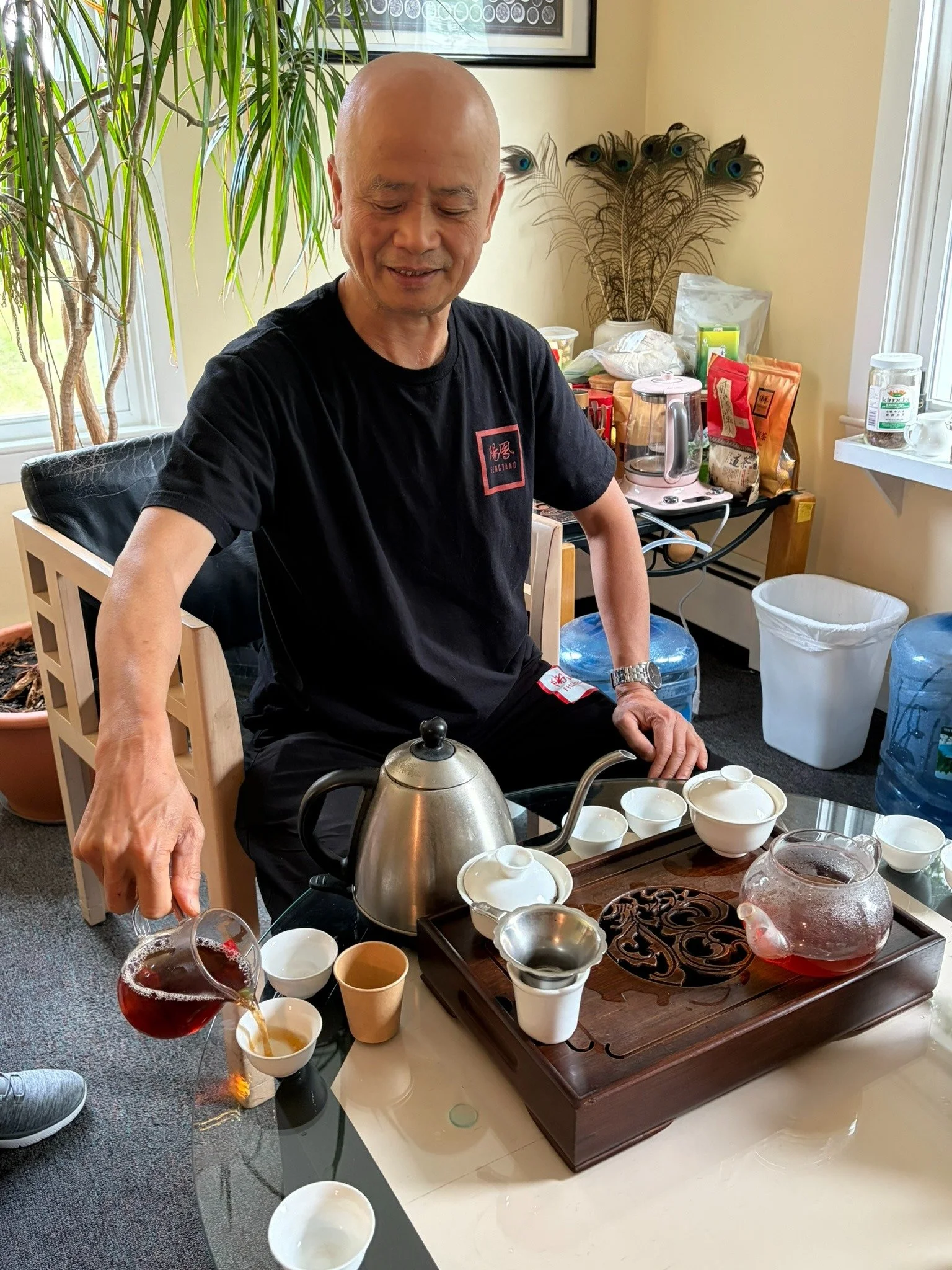
I deeply enjoy brewing tea through the gong fu ceremony, especially using the Millet Labeling Teamaking Method. When you brew excellently crafted tea in the small gaiwan, with brief infusions, it’s astounding how dynamic and the tea is, with a distinct taste each brew. Even the type of water you use shapes the characteristics of your bre
Tea is one of the 3 Ts of Fengyang TCM (Taoist/Traditional Chinese Medicine). By slowing down, having quality tea, and appreciating the rich ceremonial methods of brewing it, the experience rejuvenates both your body and your mind.
About the Author
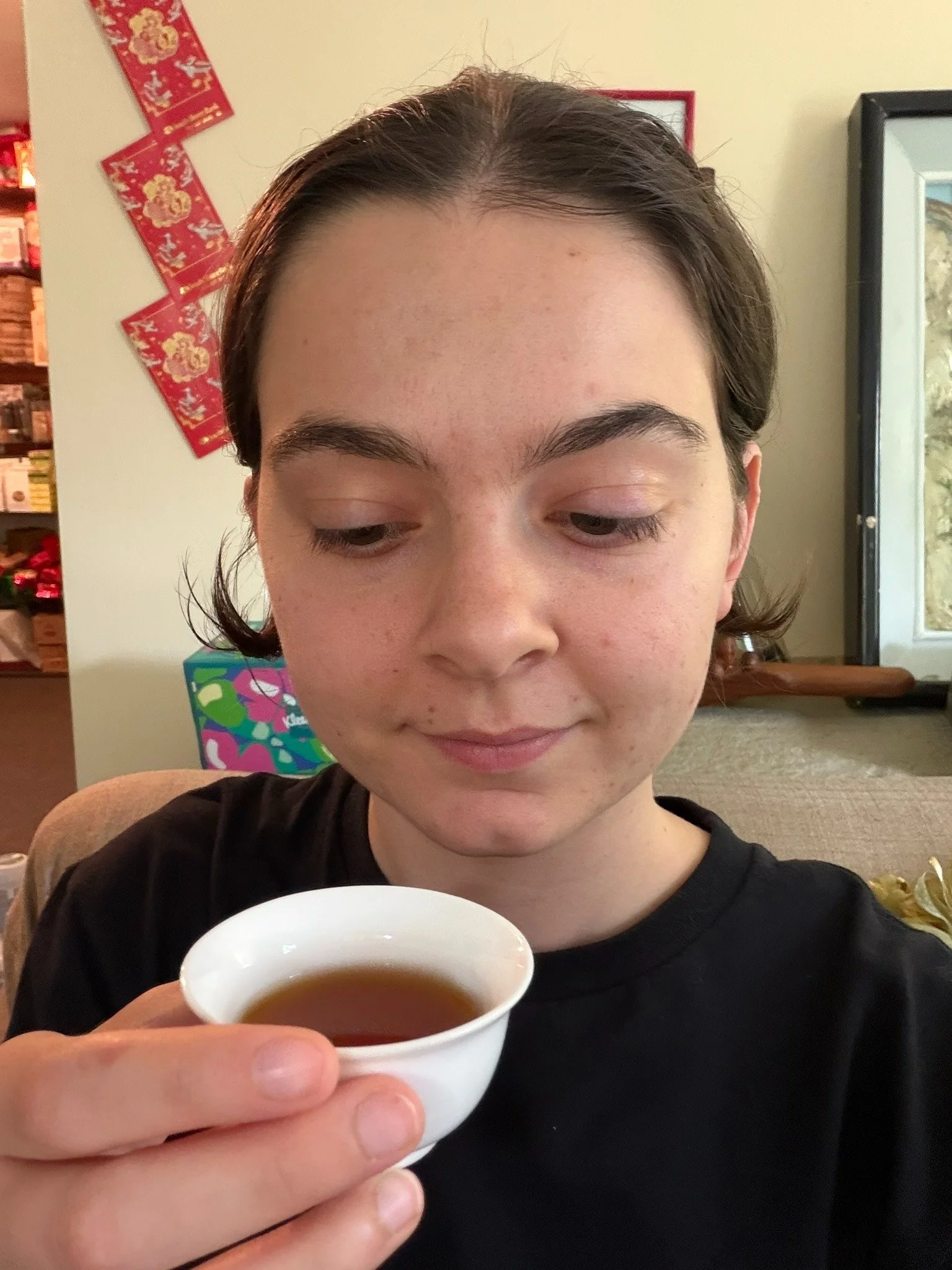
Rebecca drinking the Rou Gui tea (brewed with FIJI Water).
Rebecca is a Fengyang Traditional Chinese Medicine practitioner. She is a disciple of Dr. Ming Wu, a master of Chinese medicine. She hosts tea ceremonies and provides tui na bodywork treatments at the Wu Healing Center in Maynard MA, and at Healing Body Solutions in Palmer MA.
Rebecca posts videos about tea, tea brewing, and tea culture on her YouTube Channel, RebeccaHealing.
You can reach Rebecca at rebecca.tuina.healing@gmail.com, or at 508-281-9068 (text preferred).