Yi Mo Tea House- A Wonderful Place to Learn About Tea
Author: Rebecca Emken
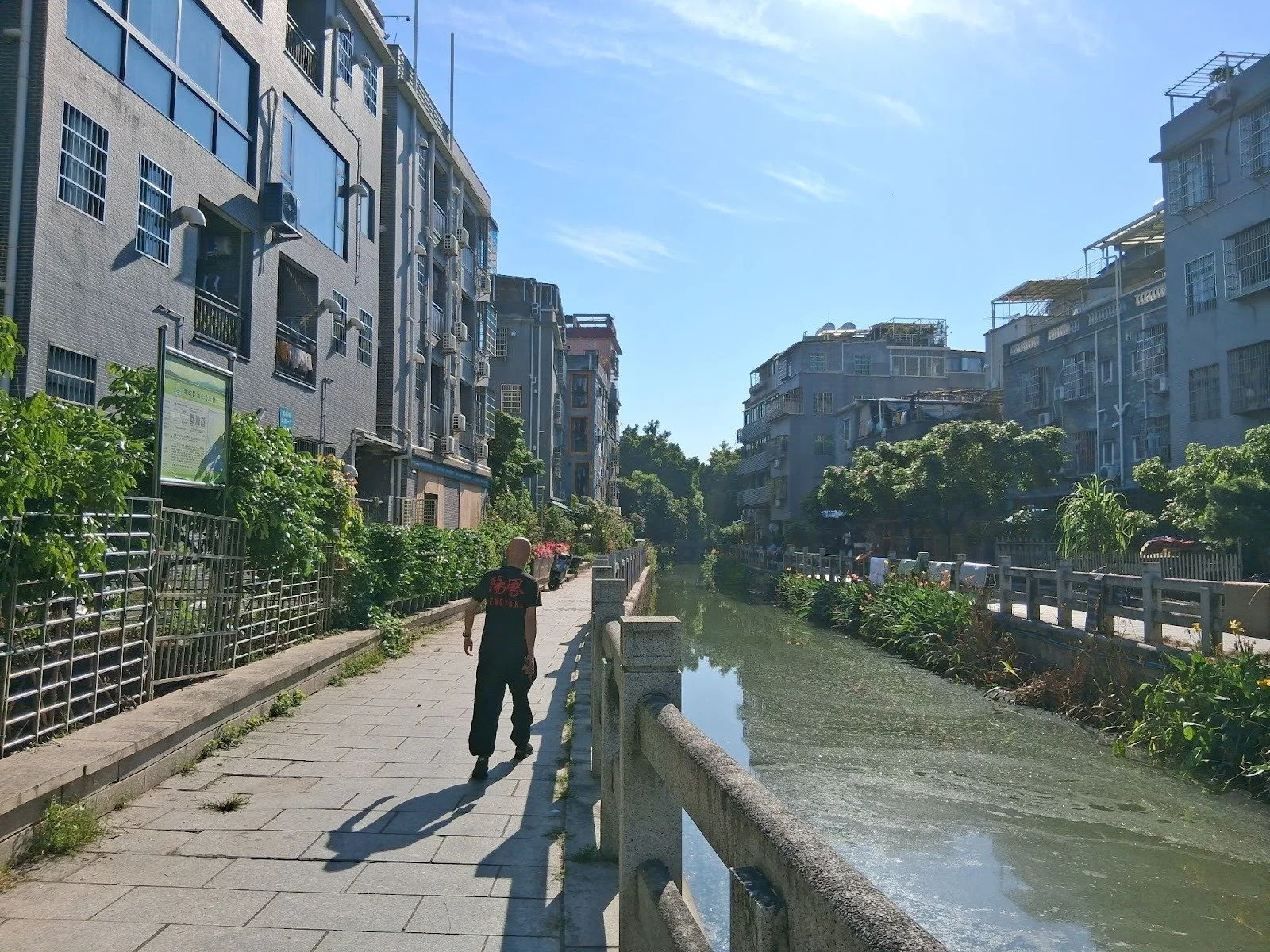
Dr. Wu walking towards Yi Mo Tea House.
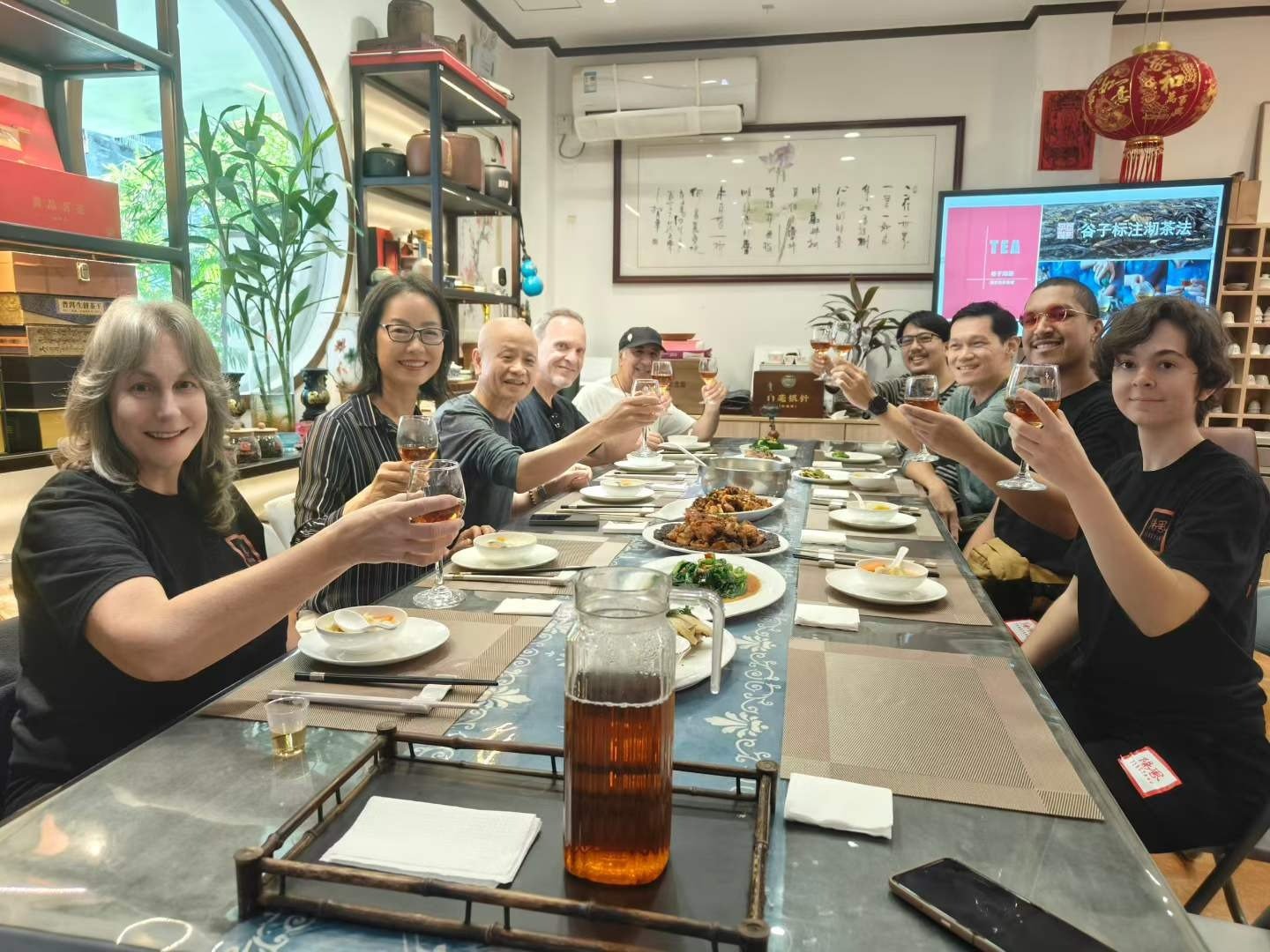
Dr. Wu and his students at Yi Mo Tea House, during the Fengyang International Certification Journey.
Tucked away in the scenic Shiji Village of Guangzhou, is a cradle of traditional Chinese tea culture. Yi Mo Tea House (易墨茶馆) teaches about the intricacies of tea leaves, the significance of tea culture, and the elaborate process to brew tea.
In November 2025, I was part of the Fengyang Tai Chi and Qi Gong International Certification Journey. Dr. Ming Jie Wu is a master of Fengyang Traditional Chinese Medicine. Dr. Wu brought eight students from the United States to Guangdong Province, China. During our international journey, we learned about Chinese medicine and Chinese culture. At Yi Mo Tea House, we learned about tea and Chaozhou tea culture.
The Chaozhou (Teochew) people are one of the ethnic groups present in Guangzhou, where Yi Mo Tea House is located. Part of Chaozhou culture is the Chaozhou Gong Fu Tea ceremony. Gong Fu tea is a specific process of brewing loose tea leaves. Once the tea is brewed, it ultimately is poured into tiny cups, so that people appreciate the delicious tea taste with every sip. During the art of tea brewing, one of the pieces used is a small teapot or gaiwan. A gaiwan is a small bowl with a lid, which you’ll see in the photos below.
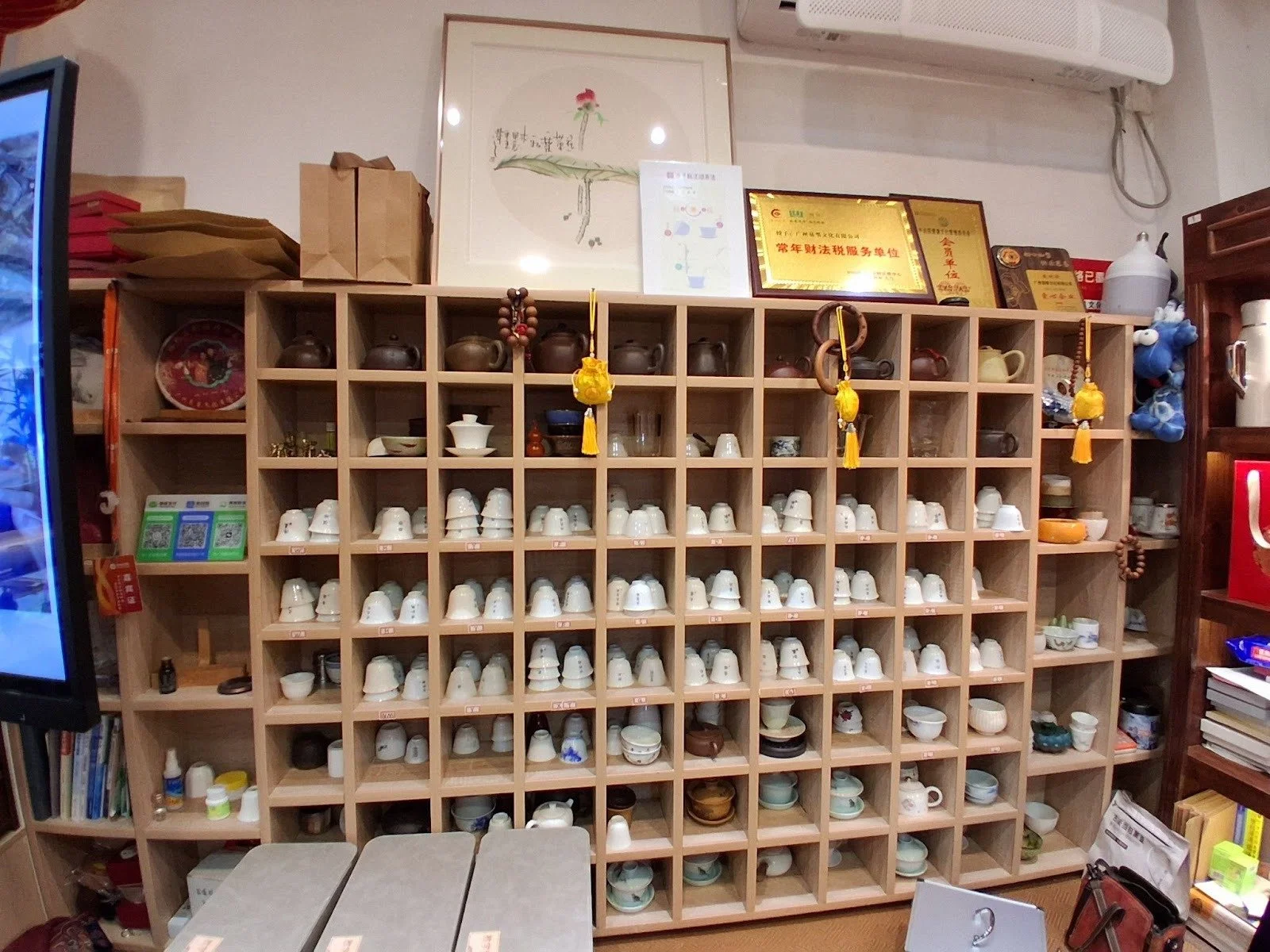
A bookcase of gaiwans.
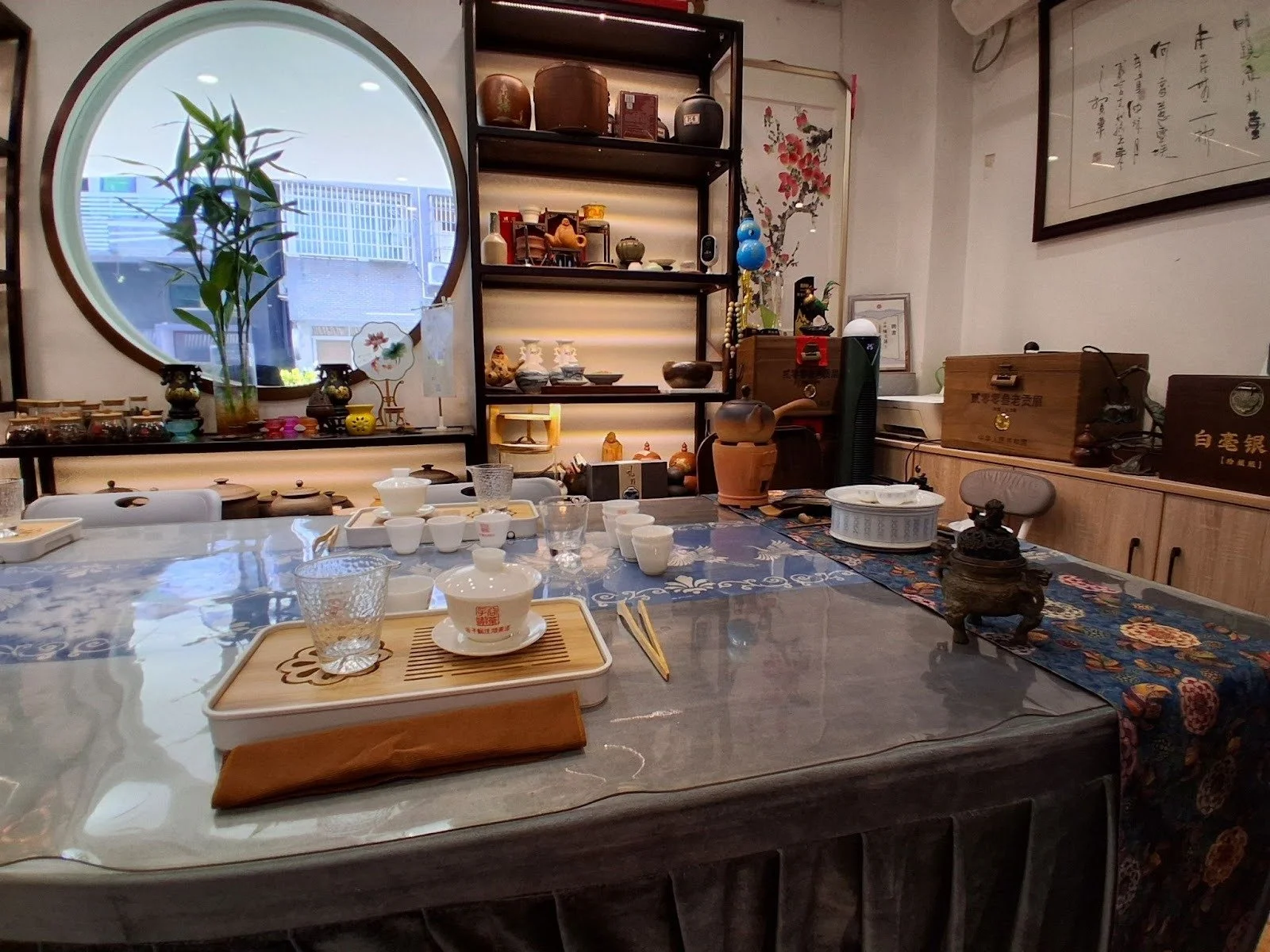
The gong fu tea set that I used at Yi Mo Tea House.
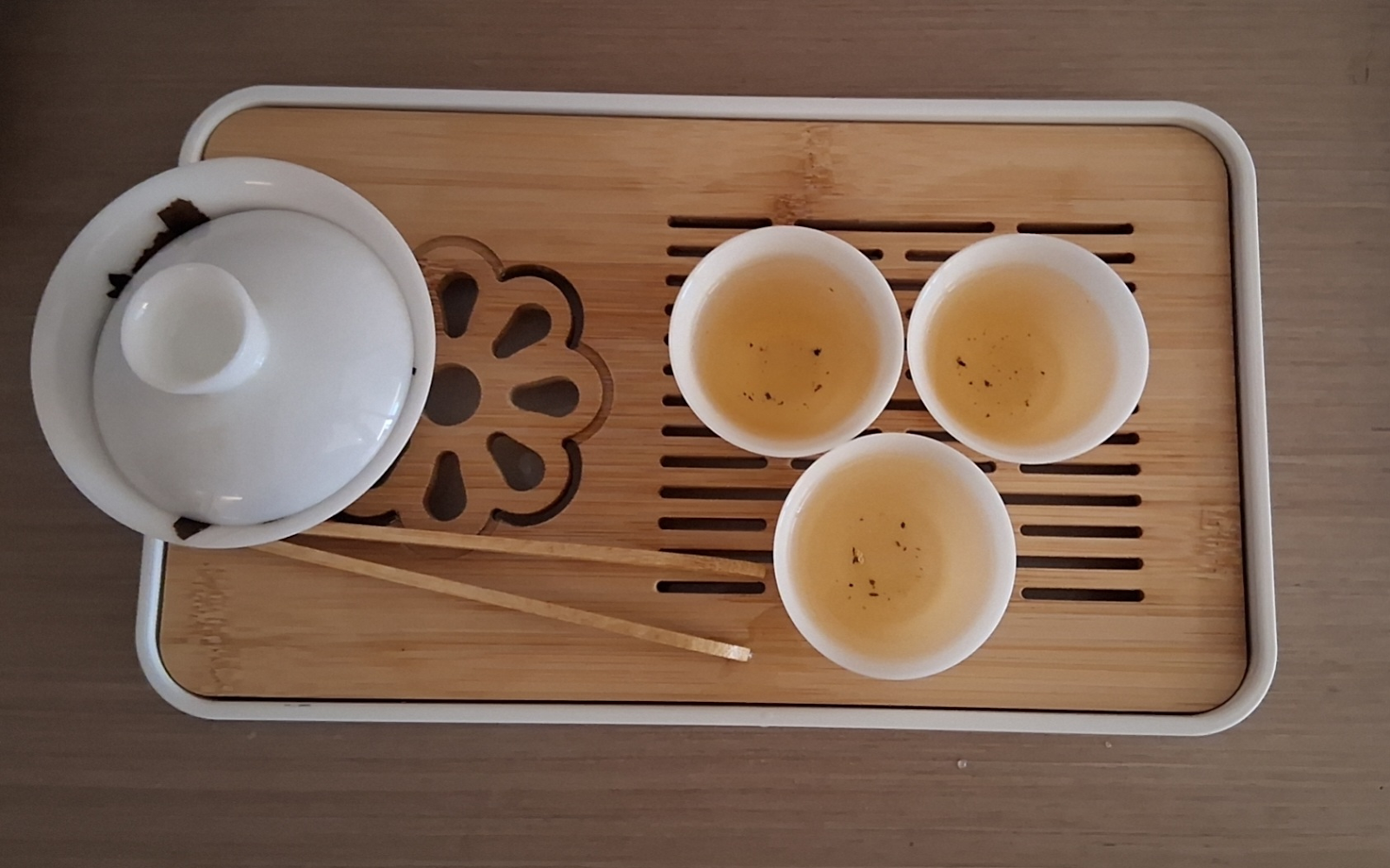
A closer view of the gong fu tea set. The gaiwan is on the left, and tiny teacups are on the right.
At Yi Mo Tea House, we learned about tea, and tea culture. The world of Chinese tea has a rich, extensive history. There are many types of tree teas, producing a diverse array of tea leaves with various nutritional properties and flavor profiles. We learned about the intricacies of the tea leaf, and what makes tea be of good quality. We learned the Millet Labeling Teamaking method of brewing tea, which enables us to fully taste the detailed flavored profile and smooth texture of good quality tea.
Yi Mo Tea House also sells loose leaf teas, and the materials one needs for a proper Gong Fu tea set.
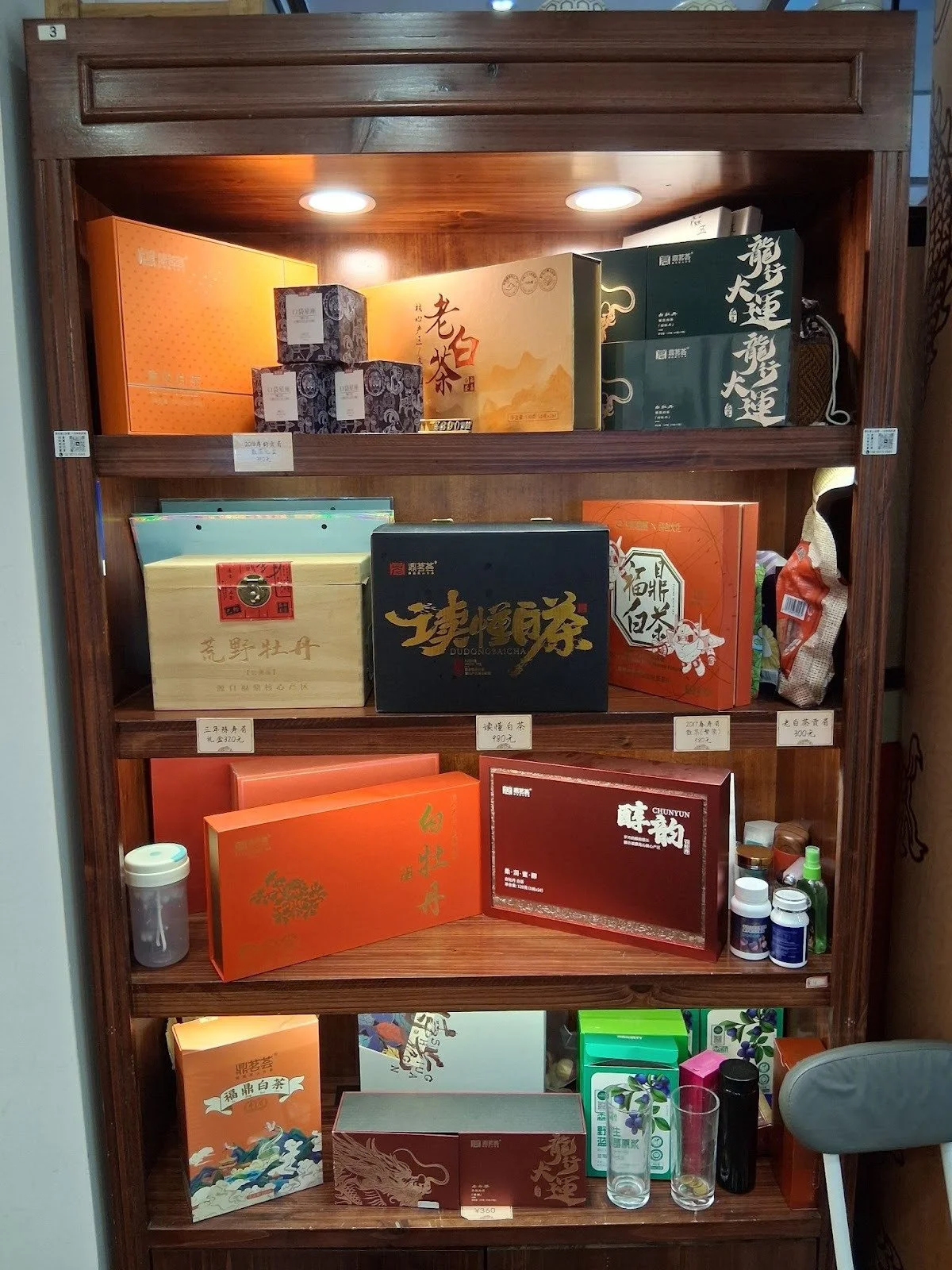
A bookcase of boxes of tea. The packaging of tea tends to be detailed, colorful, and shiny.
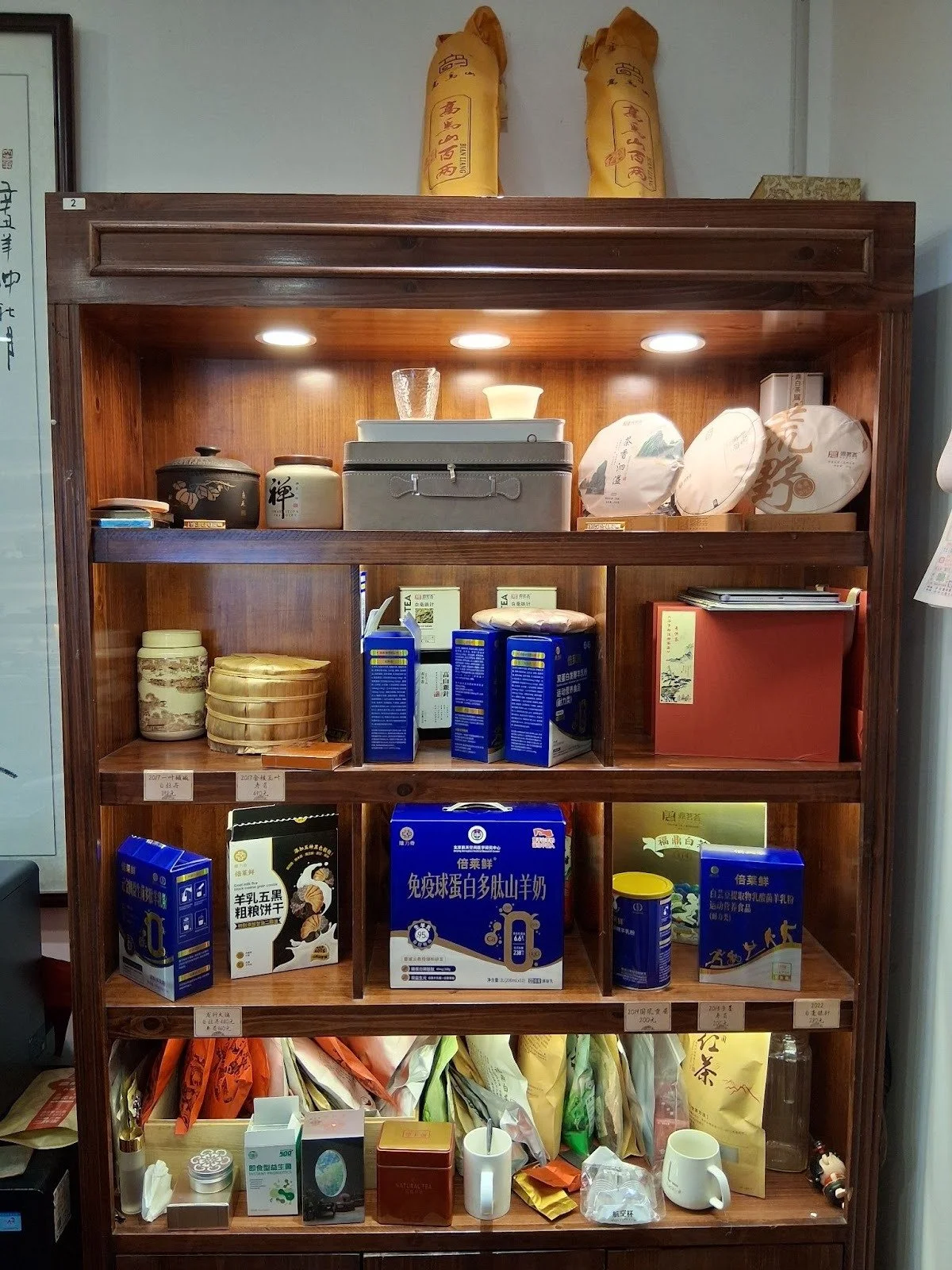
Another bookcase of tea. Some teas are packaged in boxes. Others are packaged in circular tea cakes (see the topmost shelf, on the right side).
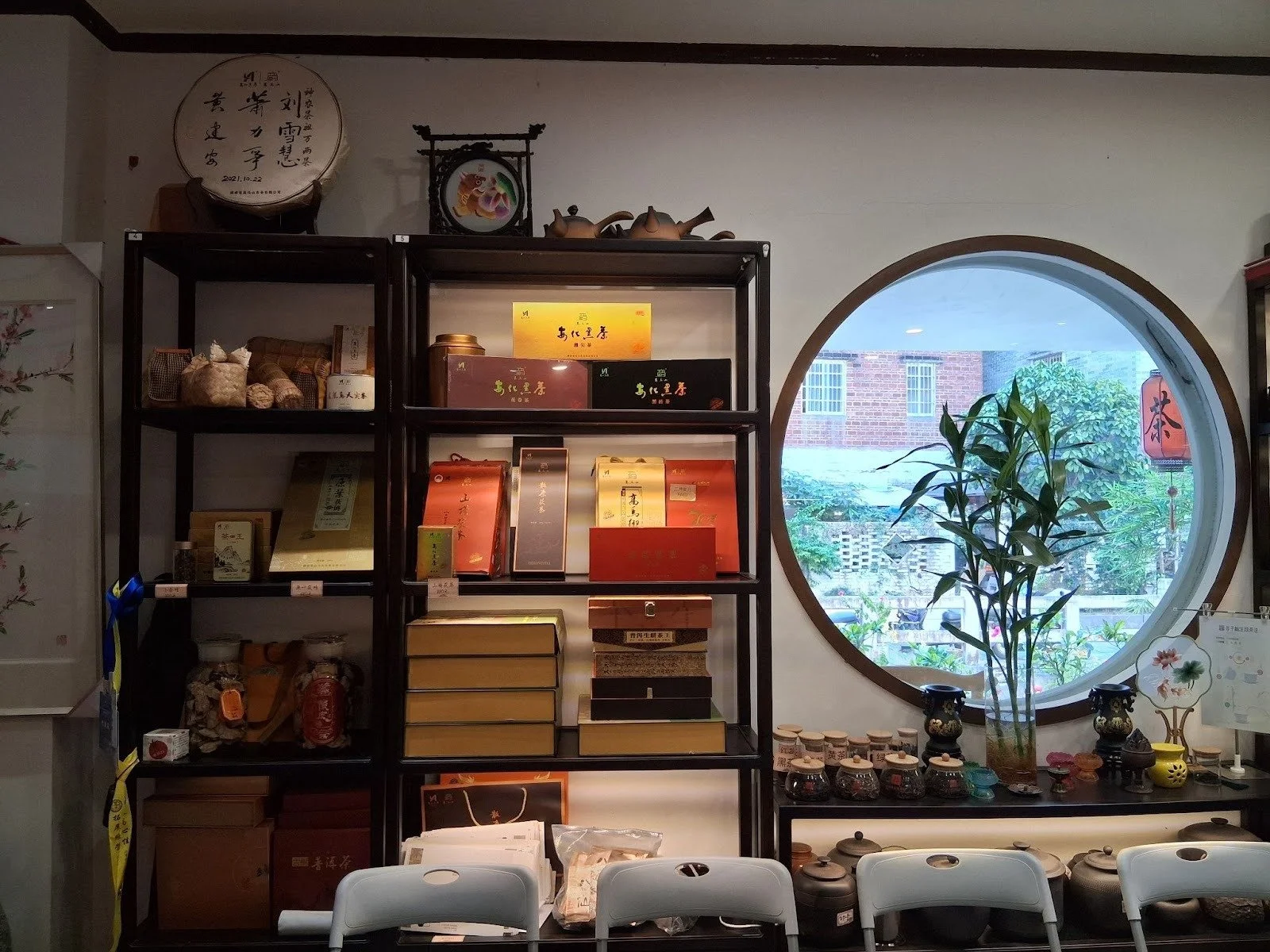
Various teas near the circular window and bamboo plant, which are quintessential designs in Chinese culture.
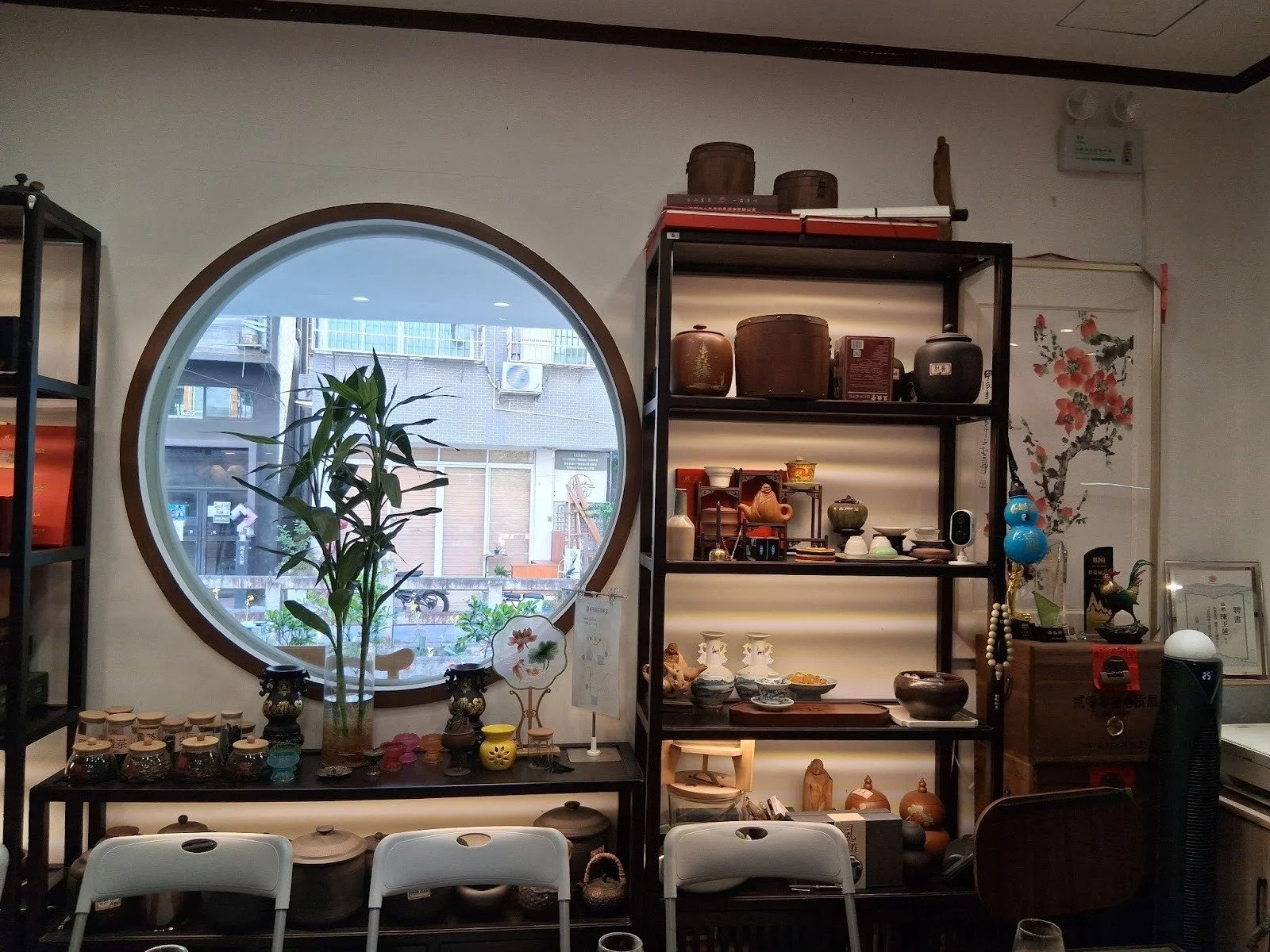
More teas on display.
Gong Fu tea is detailed and intentional. It’s all about being aware of the tea. Properly teamastering is being aware of the movements, process, and taste of tea brewing. By slowing down and focusing on the tea, you appreciate the drink’s rich flavor, and enjoy the bliss of being calm and centered.
I wanted to give thanks to Master Wu for taking us on this journey to China. Thank you Master Guzi, my friend WuTong, and everyone else at Yi Mo Tea House for teaching us. Thank you to my senior brother Jason Ni, for being a phenomenal translator. Jason was translating high level concepts from Chinese to English. Everyone did an excellent job.
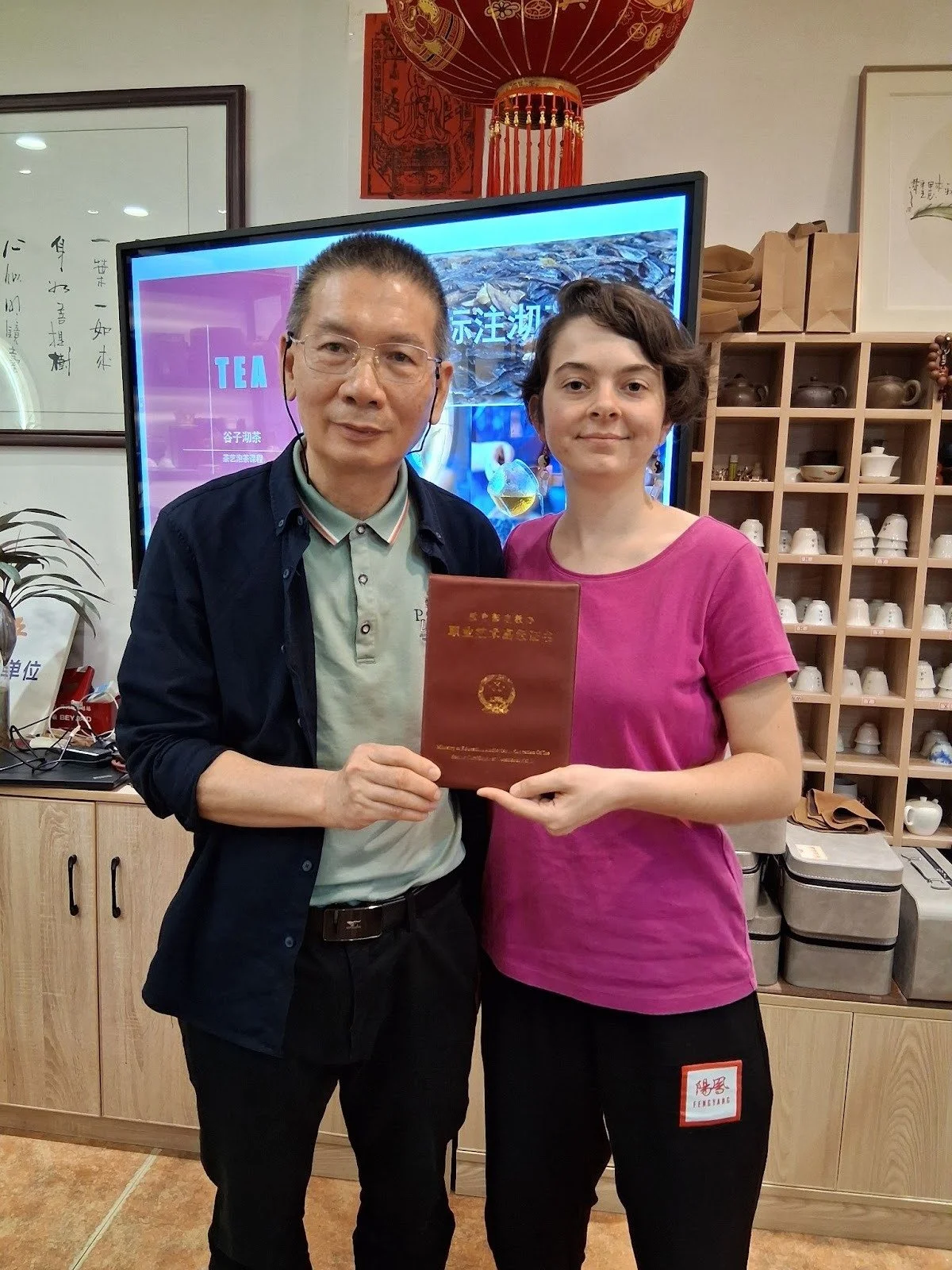
Rebecca with Master Guzi, who continues to help teach her about tea.
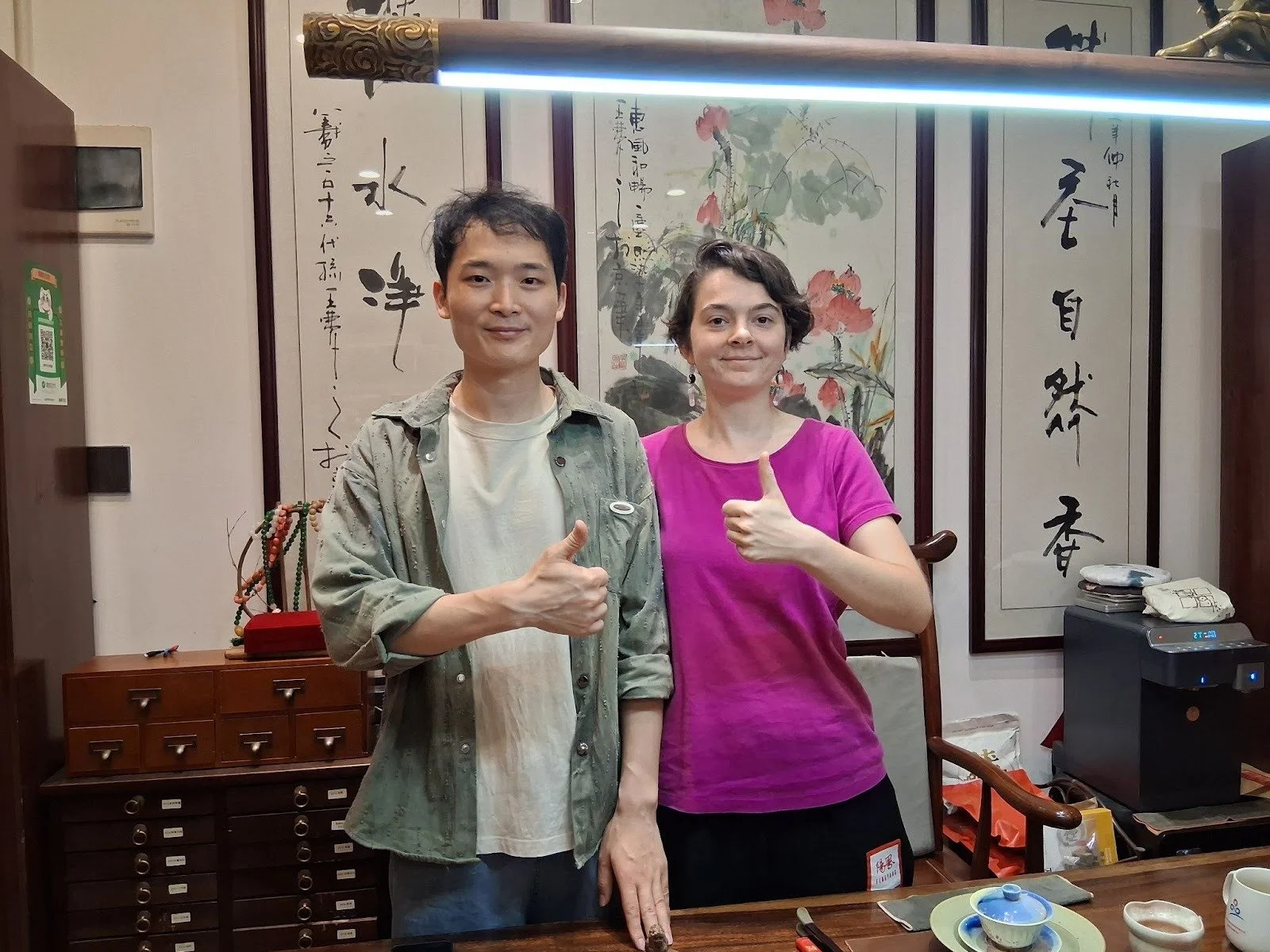
Rebecca with her friend WuTong, who continues to help teach her about tea.
About the Author
Rebecca is a Fengyang Traditional Chinese Medicine practitioner. She is a disciple of Dr. Ming Wu, a master of Chinese medicine. She hosts tea ceremonies and provides tui na bodywork treatments at the Wu Healing Center in Maynard MA, and at Healing Body Solutions in Palmer MA.
Rebecca posts videos about tea, tea brewing, and tea culture on her YouTube Channel, RebeccaHealing.
If you’re interested in attending a tea ceremony in Maynard MA or Palmer MA, you can visit the Tea Ceremony Homepage on WuHealing.
You can reach Rebecca at rebecca.tuina.healing@gmail.com, or at 508-281-9068 (text preferred).