Natural TCM Approaches to Post-Treatment Cancer Fatigue
Treatment is over. The tumor has shrunk. Lab markers have improved.
Yet you feel more exhausted than before treatment began.
You are not alone. Cancer-Related Fatigue (CRF) after treatment is one of the hardest and most overlooked problems survivors face.
Oncologists track tumor markers, but they often cannot see the whole person's exhaustion.

I. How TCM Understands Post-Treatment Fatigue
In the holistic view of Daoist and Traditional Chinese Medicine, the post-treatment body is defined by one core pattern—
Severe damage to Zheng Qi (vital energy); deficiency of both Qi and Blood; organs depleted by treatment.
Breaking Down the Pathomechanism
| Pathomechanism | Manifestation | Modern Correlation |
|---|---|---|
| Qi Deficiency | Whole-body weakness, shortness of breath, weak voice | Muscle atrophy, mitochondrial dysfunction |
| Blood Deficiency | Pale complexion, dizziness, palpitations, dream-disturbed sleep | Anemia, suppressed hematopoiesis |
| Spleen-Stomach Weakness | Poor appetite, indigestion, weight loss | Post-chemo gastrointestinal mucositis |
| Kidney Essence Depletion | Weak low back & knees, poor memory, premature aging | Endocrine disruption, adrenal fatigue |
| Liver Qi Stagnation | Low mood, anxiety, irritability, insomnia | Treatment-related PTSD, emotional trauma |
In one sentence: Cancer treatment is "destroying a thousand enemies at the cost of eight hundred of your own." Now the task is to slowly repair the "eight hundred."
II. Why "Aggressive Tonics" Backfire
Many patients and families think: treatment is done, time to tonify!
Ginseng, deer antler, donkey-hide gelatin, "Ten-Perfect Great Tonic Soup"…
But TCM teaches: "A deficient body cannot receive strong tonics."
| Problem | Consequence |
|---|---|
| Over-tonifying causes fire | Dry mouth, sore throat, worsening insomnia |
| Greasy tonics burden the stomach | Worse appetite, bloating, diarrhea |
| "Closing the door on the thief" | Residual pathogens trapped; tonics feed the pathogen |
The post-treatment body is like a war-torn city—you cannot build skyscrapers yet. First clear the rubble, repair the roads, restore water and power.
This is why we insist on: gentle, gradual, sustainable.
III. The Wu Healing Recovery Framework
We avoid aggressive interventions and instead build a four-layer gentle recovery system—
Layer 1: Regulate Qi Circulation (The Foundation)
- Microcosmic Orbit practice: 15–20 min daily; circulate Du-Ren vessels; replenish Zheng Qi
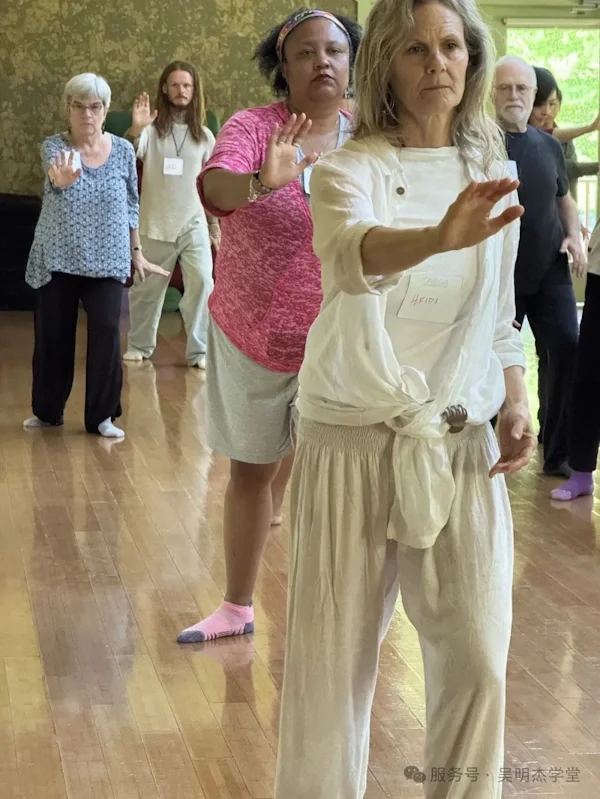
- Standing Stake (Zhan Zhuang): Feet shoulder-width apart, mind on Dantian; start with 10 min
- Abdominal Breathing: Anywhere, anytime; interrupt sympathetic overdrive; activate parasympathetic repair
Goal: shift the body from "fight mode" back to "repair mode."
Layer 2: Appropriate Herbal Support
- Focus on spleen-strengthening and Qi-boosting (Six Gentlemen / Four Gentlemen思路)
- Add Blood-nourishing and spirit-calming herbs (Suan Zao Ren, Fu Shen, Ye Jiao Teng)
- Include stomach-harmonizing herbs (Chen Pi, Bian Dou Hua, Sha Ren)
- Absolutely avoid extreme cold, extreme heat, or harsh attack/purge herbs
Principle: Food-as-medicine; slow tonification; personalized herbal formulas based on pattern differentiation.
Layer 3: Gentle Dao-Yin Movement
- Fengyang Taiji Eight Forms: 3–15 min daily; gently舒展 the spine
- K-Sundo micro-movements: Release craniomandibular and pelvic tension; regulate autonomic nervous system
- Ba Duan Jin / Wu Qin Xi: Classical Dao-yin; add gradually as strength returns
All movement: "light sweat, no exhaustion" as the benchmark.
Layer 4: Mind-Body Balance Training
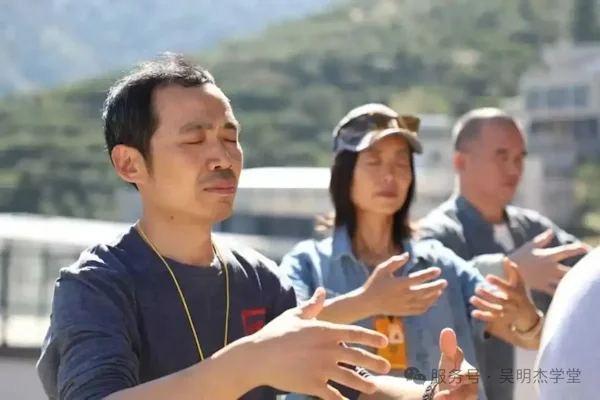
- Seated Meditation: 10 min daily; mind on Dantian
- Emotional Release: Use movement practices to discharge fear and anxiety accumulated during treatment
- Community Support: Survivor互助 groups to reduce isolation
TCM says: "Anger damages the Liver; overthinking damages the Spleen; fear damages the Kidneys." If emotions are unstable, no tonic will work.
IV. Sample Recovery Timeline
| Phase | Timing | Focus |
|---|---|---|
| Early Post-Acute | 0–3 months post-treatment | Primarily rest; light standing stake & breath work |
| Early Recovery | 3–6 months | Add Fengyang Taiji Eight Forms; mild herbal support |
| Consolidation | 6–12 months | Full four-layer system running; gradually increase activity |
| Long-Term Maintenance | 1 year+ | Establish daily wellness habits; regular follow-up & adjustment |
⚠️ This is a general reference. Every plan must be individualized and physician-supervised.
V. Critical Warnings
⚠️ Please read carefully:
- This article is for wellness education; cannot replace standard oncology care
- Post-cancer rehabilitation must be approved by your oncologist
- Herbal support must be prescribed by a qualified TCM practitioner—never self-prescribe
- New or worsening symptoms: seek medical attention immediately
- We advocate "TCM + Western integration"—we never advise patients to discontinue standard treatment
Closing Thoughts
The end of cancer treatment is not the finish line—it is the starting point of a different journey.
The core of this journey is not about "conquering" anything, but rather—
Gently, patiently, rebuilding the body piece by piece.
Seven-tenths nourishment, three-tenths treatment. Follow the Dao of Nature. Achieve through non-action.
"When genuine Qi is internalized, pathogens cannot invade." — Yellow Emperor's Inner Canon
⚠️ Disclaimer: This article is for holistic wellness education only. It cannot replace standard oncology care. Post-cancer recovery involves high individual variability—please proceed under professional guidance. Wu Healing Center strongly opposes patients discontinuing standard treatment without physician approval.
Produced by Wu Healing Center · Fengyang Daoist Medicine