
An American Spine Patient's Journey: Fengyang Tui Na and the Back That Was "Scheduled for Surgery"
In the United States, being told by an orthopedic doctor that "you have a disc herniation and should consider surgery" is a heavy blow for many patients. The patient in this story——Colleen Jaggi, chose a different path.
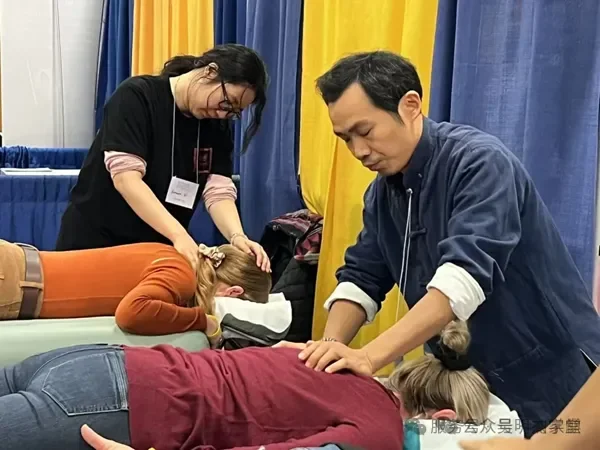
This American patient had long suffered from a spinal condition—pain in the lower back and limited mobility. Imaging indicated disc problems, and Western medicine recommended considering surgery. Hoping for one last option, the patient came to Connecticut to consult Dr. Wu Mingjie and received Fengyang Tui Na.
Fengyang Tui Na: Not Pressing the Painful Spot, but Treating the "Lines"
Fengyang Tui Na is a Daoist external healing system passed down through the Fengyang lineage for over a thousand years, systematized by Dr. Wu Mingjie. Its greatest difference from ordinary massage lies in this: it does not merely target the painful spot, but follows nine meridian reaction lines to locate the root of qi stagnation.
For spinal problems, Fengyang Tui Na applies "warming and unblocking" (wen tong) technique along the meridian reaction lines on both sides of the spine—releasing fascial adhesions, unblocking the qi of the Governing Vessel and Bladder meridian, and adjusting segmental imbalance of the spine. The technique emphasizes "guiding the hands with qi, with measured lightness and firmness"—not the harder, the better.
Several Sessions, and the Back Feels Light Again
After several Fengyang Tui Na sessions, the patient's changes gradually emerged:
Lower back pain significantly reduced; sitting for long periods and bending over no longer restricted;
Spinal mobility restored; morning stiffness faded;
Ultimately surgery was avoided, and normal life and work resumed.
This is Fengyang Daoist medicine's "seventy percent nourishment, thirty percent treatment" put into practice: when qi and blood flow freely and the meridians are cleared, the body's self-healing power awakens.
From "surgery recommended" to "feeling light again," Fengyang Tui Na offered another possibility—with a pair of hands.
⚠️ Medical Disclaimer: This article shares an individual patient case. Results vary and this does not constitute a promise of efficacy or medical advice. Serious spinal conditions and disc herniation with nerve compression (such as limb numbness or bowel/bladder dysfunction) must first be evaluated at a qualified medical facility; the decision regarding surgery should follow the opinion of an orthopedic specialist. Fengyang Tui Na must be performed by a qualified practitioner—do not attempt to imitate. Seek medical attention if unwell.