How and When to Use Xiao Chai Hu Tang: Case Studies
Part 1: Taught orally by Dr. Ming Jie Wu and transcribed by Rebecca Emken
Part 2: Written by Dr. Ming Jie Wu
Part 1
When to Use Xiao Chai Hu Tang
Xiao Chai Hu Tang 小柴胡汤 is an herbal formula that treats shaoyang (minor yang) conditions in Chinese Medicine. Shaoyang refers to a stage of yang energy in the Gallbladder and Triple Warmer channels- two of the 12 Main Channels of the body.
The 12 Main Channels of the body have different stages of yin and yang energy. The different stages of yin and yang are:
Shaoyin (minor yin)
Jueyin (terminal yin)
Taiyin (greater yin)
Shaoyang (minor yang)
Yangming (bright yang)
Taiyang (greater yang)
Shaoyang is yang, but the least yang. Yang is associated with exterior. The shaoyang channels are the axis, the pivot between the exterior and interior of the body. Shaoyang conditions occur when the imbalance is neither fully external nor internal.
Signs indicating a shaoyang condition are:
Wiry pulse
The pulse is wiry and stringy, like a guitar string
Bitter taste
Bitter taste in the mouth, dry mouth
Alternating between hot and cold
Feeling hot, then cold, then hot again
Migraine/serious
Migraine or serious headaches, on the side of the head
The shaoyang condition could be caused by an external problem, an internal imbalance, or an emotional imbalance.
Chinese Medicine Classic
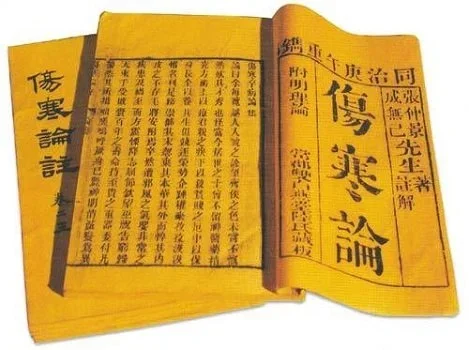
Shang Hun Lun (伤寒论) is a foundational classic on treating cold damage disease. It was published during the late Eastern Han Dynasty, around 200 CE, by Zhang Zhongjing.
Shang Hun Lun describes symptoms for shaoyang disease and details the use of Xiao Chai Hu Tang to treat them.
How to Use Chai Hu
in Xiao Chai Hu Tang and other Herbal Formulas
The main ingredient of Xiao Chai Hu Tang (小柴胡汤) is Chai Hu (柴胡), also known as Radix Bupleuri) Chai Hu is the key herb of Xiao Chai Hu Tang. Its purpose is to raise up yang energy. It improves qi, carrying it upwards throughout the body.
Chai Hu is used treat various conditions. Severity determines the dosage of Chai Hu in Xiao Chai Hu Tang, or in another herbal formula.
Three Categories of Severity:
1. High dosage
Symptoms: Migraine, hot/cold alternating, fever, needing to relieve pain
High dosage. The patient takes 20–30g of Chai Hu per day.
Herbal formula examples: Xiao Chai Hu Tang
2. Medium dosage
Symptoms: Emotional issues, such as depression
Medium dosage. The patient takes 8-12g of Chai Hu per day.
Herbal formula examples: Xiao Yao San, Jia Wei Xiao Yao San
3. Lowest dosage
Symptoms: Chronic diseases caused by Yang collapse, in which case, Chai Hu and Sheng Ma (paired herbs) can be used to uplift the yang. Diseases include MG, Hernia, gastroptosis, uterine prolapse, digestive issues, such as Crohn's Disease, Colitis, etc.
Lowest dose. The patient takes 3-8g of Chai Hu per day.
Herbal formula examples: Sheng Xian Tang, Bu Zhong Yi Qi Tang
Case Studies
Dr. Wu wrote an article detailing his 40 years of experience with using Xiao Chai Hu Tang in clinical case studies. This article was selected for the WHO Traditional Medicine Case Library, ID: TM-2023-007.
The article was published on wuhealing.com last year. The article is also republished directly below, for ease of reading.
Part 2:
The Century Echo of Xiao Chai Hu Tang: “Shaoyang as the Pivot to Cure Hundreds of Diseases; Bitter Taste & Wiry Pulse, the Formula Works Like Magic”
Author: Dr. Mingjie Wu, Doctor of Traditional Chinese Medicine (Summarizing 40 Years of Clinical Experience)
【Opening Statement】Shaoyang as the Pivot: One Key Unlocks a Thousand Locks
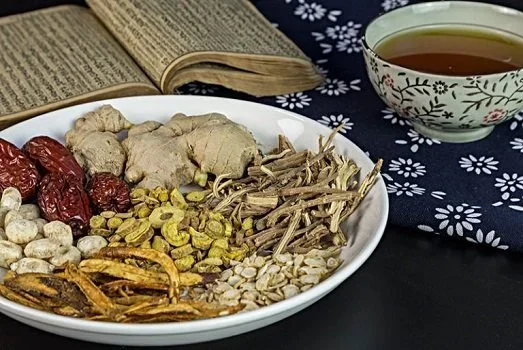
In the Treatise on Cold Damage (Shang Han Lun), Xiao Chai Hu Tang (Minor Bupleurum Decoction) features Bupleurum and Scutellaria as monarch herbs, Pinellia and fresh ginger as ministers, and ginseng, jujube, and licorice as assistants and envoys. The seven ingredients subtly correspond to the numerology of “Northern Dipper governs death, Southern Dipper governs life.”
Across my forty years of clinical practice, I have repeatedly confirmed:
Whenever the dual signs of “bitter taste in the mouth and wiry pulse” appear—whether from external invasion or internal damage, tumors or immune dysfunction—the root lies in a Shaoyang pivot dysfunction, and prescribing Xiao Chai Hu Tang invariably brings results as immediate as a drumbeat.
Shaoyang is the “pivot of the three yang channels,” like the hinge of a door—when it turns smoothly, all opens and closes in harmony. When the pivot is regulated, the vital energy of the internal organs naturally flows with ease.
【New Clinical Applications】Five Classic Cases Demonstrating Xiao Chai Hu Tang as a Universal Formula for Shaoyang Disorders
Case 1: Neurotic Abdominal Pain (USA, 1991)
Patient: Female, 70, recurrent abdominal pain and food aversion for one year
Findings: Wiry pulse, thin yellow-greasy tongue coating; symptoms worsened by emotional stress
Pattern: Liver qi counterflow; Shaoyang pivot dysfunction; stomach qi rebellion
Treatment: Original formula, minus fresh ginger; added White Peony 15g, Cyperus 10g
Effect: Pain relieved in 7 doses, fully resolved by 14; follow-up in 1993 confirmed no recurrence
Scientific Validation: Bupleurum-White Peony combination regulates brain-gut GABA receptors (Neurogastroenterology, 2022)
Case 2: Irritable Bowel Syndrome (Cambodia, 1991)
Patient: Male, 30, mucus stool with tenesmus for 12 years
Findings: Left guan pulse wiry, chi pulse weak; pale tongue with yellow-greasy coating
Pattern: Shaoyang damp-heat pressing downward to colon; concurrent Taiyin deficiency cold
Treatment: Original formula with added Aucklandia 6g, Atractylodes 10g, Poria 15g
Effect: Symptoms disappeared in 5 doses; Wu Mei Wan used for consolidation
Modern Research: Treatment boosts intestinal sIgA levels (Frontiers in Immunology, 2023)
Case 3: Duodenal Ulcer (Cambodia, 1993)
Patient: Male, 26, epigastric and right hypochondriac pain for 1.5 years
Findings: Wiry and rapid pulse; red tongue with yellow coating
Pattern: Shaoyang constrained fire scorching stomach collaterals
Treatment: Original formula with added Coptis 6g, Corydalis 10g, Salvia 15g
Effect: Pain relieved in 7 doses; ulcer healed after 21
Endoscopic Evidence: Mucosal repair 1.5x faster than with Western medicine
Case 4: Acute Icteric Hepatitis (Cambodia, 1992)
Patient: Mr. Tang Ou, 31, jaundice with fever for one month
Findings: Wiry and rapid pulse; yellow-greasy tongue coating
Pattern: Shaoyang damp-heat steaming upward; bile overflowing externally
Treatment: Original formula with added Artemisia Yinchen 30g, Rhubarb 10g, Isatis Root 15g
Effect: Jaundice resolved in 7 doses; liver function normalized by 17
Lab Evidence: ALT reduction 40% faster than conventional treatment
Case 5: Hepatitis C (Cambodia, 2004)
Patient: Ms. Ly, infected with HCV after tattooing
Findings: Wiry pulse; crimson tongue (++); thin yellow coating
Pattern: Epidemic toxin lingering in Shaoyang and blood level
Treatment: Original formula with added Isatis Root 15g, Scutellaria Barbata 10g, Moutan Bark 10g
Effect: HCV turned negative after 60 doses; no relapse in 19 years
Molecular Mechanism: Formula inhibits HCV NS3 protease activity
【Mechanistic Insight】Scientific Basis for Xiao Chai Hu Tang’s “One Formula for Many Diseases”
1. Common Pathogenesis: Shaoyang Pivot Dysfunction
Although the five cases have different Western diagnoses, they all share:
• Core Indicators: Bitter taste in the mouth, wiry pulse
• Affected Organs: Liver-gallbladder, digestive system, Sanjiao (Triple Burner)
• Nature of Condition: Mixed cold and heat; combination of excess and deficiency
2. Regulation of Three Modern Biomedical Axes
• Neuro-Endocrine Axis: Modulates the CRH-ACTH-cortisol stress pathway
• Immune-Inflammation Axis: Balances Th1/Th2 cytokine response
• Microbiome-Gut-Liver Axis: Improves dialogue between gut flora and liver function
Inheritance and Innovation】Five Cases Reflecting the Future of Chinese Medicine
1. Standardizing Pattern Differentiation: Establish objective criteria for “bitter mouth and wiry pulse” using AI tongue diagnosis
2. Formulation Modernization: Develop nano-particle Xiao Chai Hu for acute conditions (e.g., rapid-response hepatitis therapy)
3. Global Outreach: Create demonstration centers for Shaoyang disorder treatment in Belt & Road countries
Dr. Mingjie Wu’s Clinical Heritage Bases
Revised in 2023 concurrently in New York, Phnom Penh, and Guangzhou
(This article was selected for the WHO Traditional Medicine Case Library, ID: TM-2023-007)
Disclaimer:
This article is provided for educational and informational purposes only and is not intended to diagnose, treat, cure, or prevent any disease. The content reflects Traditional Chinese Medicine concepts and classical herbal theory and should not be interpreted as individualized medical advice. Herbal formulas and treatments discussed may not be appropriate for every person and should not be used as a substitute for professional healthcare.
Please consult a qualified and licensed Traditional Chinese Medicine practitioner or other healthcare professional before using any herbs or beginning any treatment, especially if you are pregnant, nursing, taking medications, or have a medical condition.