What Does the Spleen Do in Chinese Medicine? (Complete Guide)
Learn the role of the spleen in Traditional Chinese Medicine (TCM), including digestion, Qi production, common symptoms of imbalance, and how to strengthen your spleen naturally.
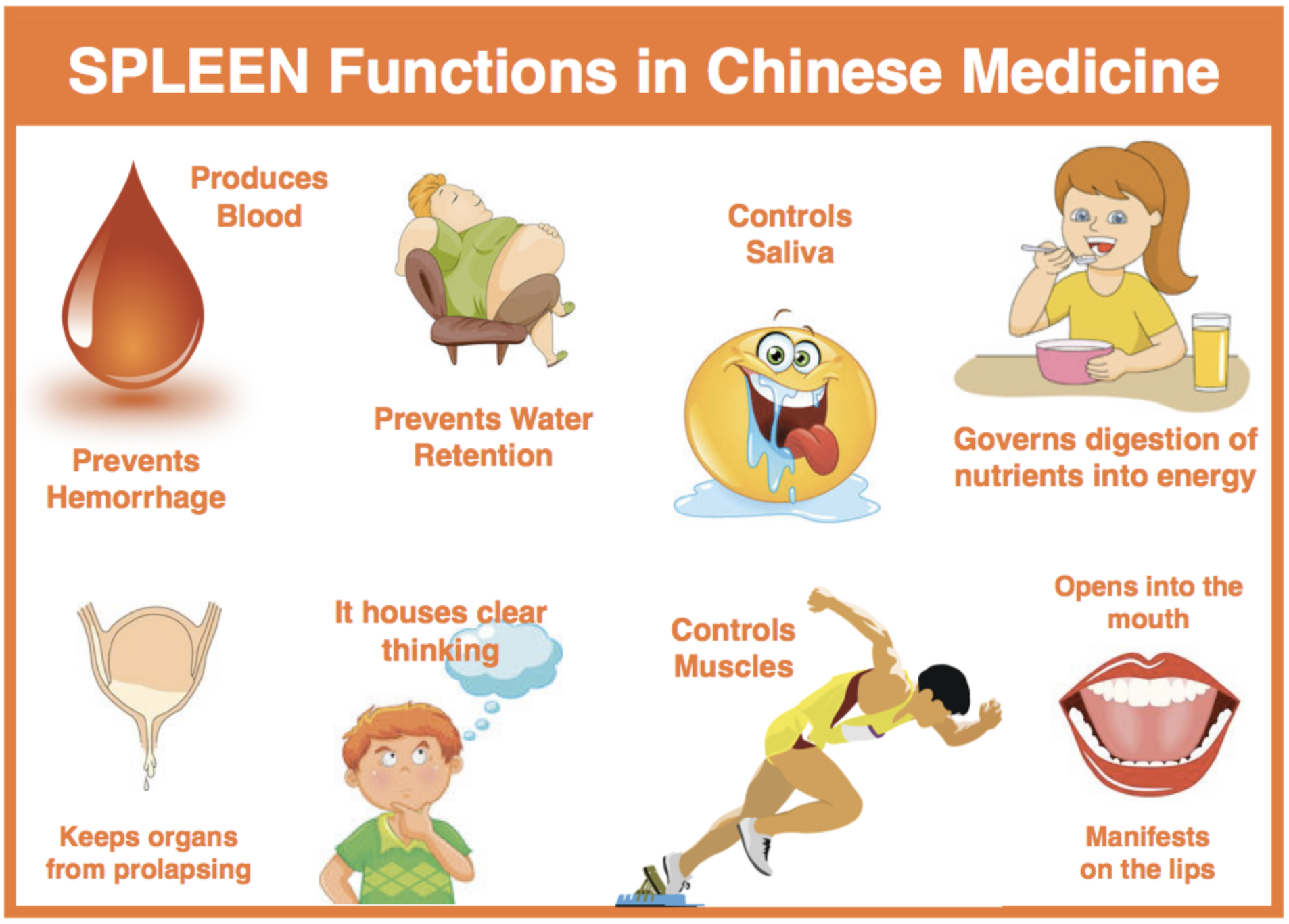
In Traditional Chinese Medicine, digestive disorders are rarely confined to the intestines alone. When the Spleen’s function of transformation and transportation is impaired, the effects can ripple outward into the limbs, the chest, and even the breath itself.
This case study of one of Dr. Wu’s recent patients illustrates how long-standing Spleen deficiency with dampness accumulation can manifest as irritable bowel symptoms alongside profound fatigue, heaviness, and reduced stamina.
Chief Complaints
A female patient presented with alternating constipation and loose stools for over one year, accompanied by abdominal distension, borborygmus (intestinal rumbling), and dull abdominal discomfort. In recent months, symptoms had worsened and expanded beyond the digestive tract, including:
A sensation of heaviness in both legs, described as “filled with lead”
Shortness of breath on mild exertion, such as hiking
Markedly reduced physical stamina
These symptoms fluctuated and were clearly aggravated by emotional stress and dietary indiscretions, a hallmark of Spleen-centered disorders with qi mechanism disruption.
Western Diagnosis
Irritable Bowel Syndrome (Mixed Type)
TCM Diagnosis
Diarrhea / Intestinal Depression
Pattern: Spleen deficiency with dampness exuberance, phlegm-turbidity obstruction, and qi mechanism disharmony
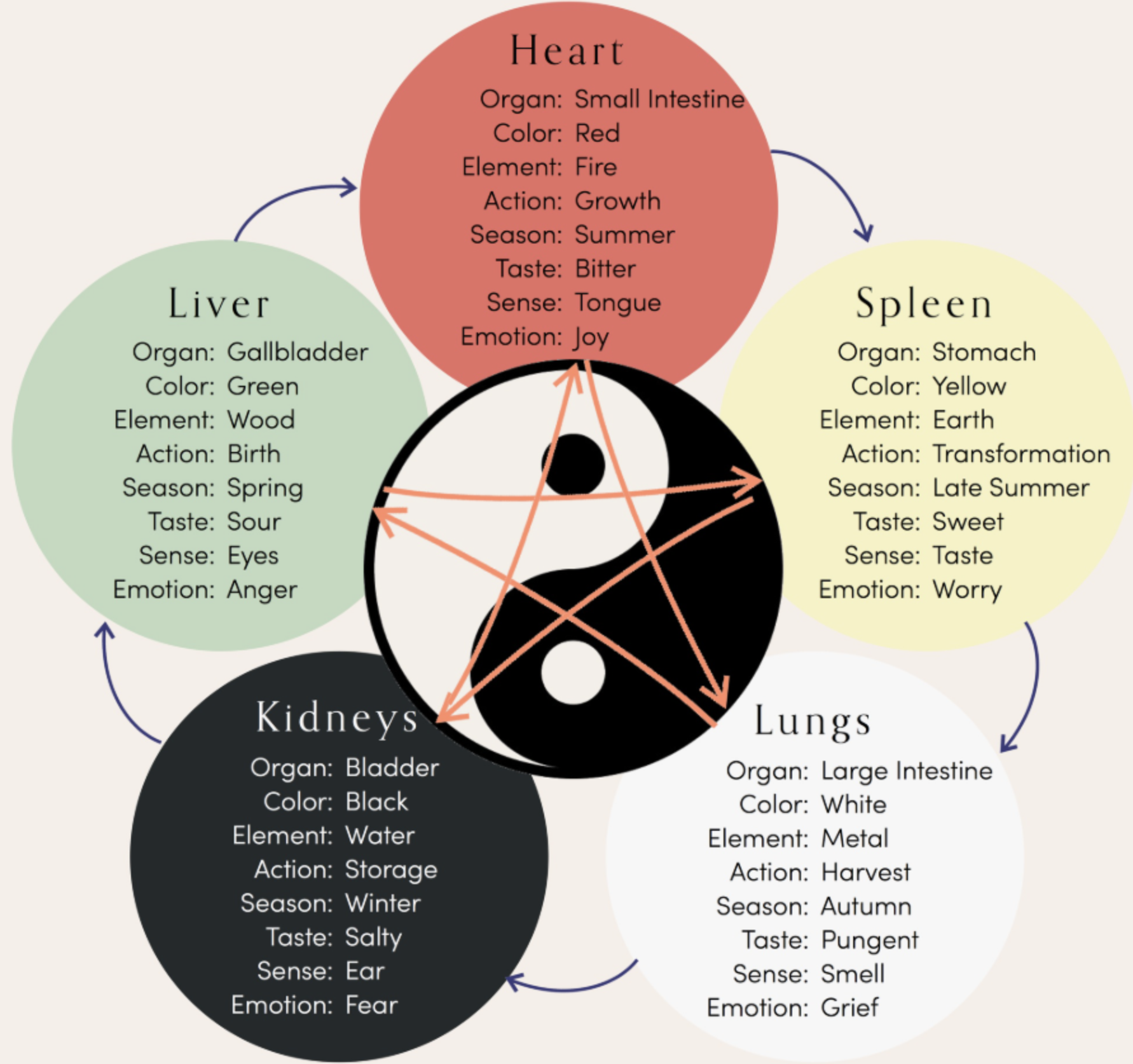
Understanding The Pattern
In TCM, the Spleen governs digestion, fluid metabolism, and the nourishment of the limbs. When Spleen qi is deficient, food and fluids are not properly transformed or transported. Over time, this leads to the internal accumulation of dampness.
Dampness is heavy, turbid, and lingering by nature. In this patient, it manifested in several characteristic ways:
Irregular stools and abdominal distension
Dampness obstructing the intestines and impairing the bowel’s conveyance functionHeavy, fatigued legs
Dampness obstructing the channels and collaterals, preventing the limbs from being properly nourishedShortness of breath on exertion
Dampness congealing into phlegm, which rose upward and interfered with the Lung’s ability to diffuse and descend qi
Additionally, emotional stress further disrupted the ascending and descending movement of qi, worsening stool irregularity and abdominal discomfort.
The tongue and pulse strongly supported this diagnosis.
Tongue: pale, swollen with tooth marks and a thick, white, greasy coating
Pulse: soggy (Ru) and thin (Xi)
Initial Treatment Response: A Key Diagnostic Confirmation
After beginning herbal treatment, the patient reported a distinct sequence of changes, which is diagnostically meaningful in TCM:
Increased bowel movements and urination
Dampness and turbidity being expelled outwardExpectoration of phlegm
Phlegm-dampness loosening and Lung qi beginning to regulateSubjective lightness, stronger legs, and improved breathing
Qi mechanism becoming smoother and Spleen transportation beginning to recover
Importantly, during a recent hike, the patient noted improved leg strength and less shortness of breath, confirming that the treatment was addressing the root rather than merely suppressing symptoms.
Treatment Principle
The core strategy was to:
Strengthen the Spleen
Drain dampness and turbidity
Transform phlegm
Regulate qi and restore proper ascending and descending movement
Rather than aggressively stopping diarrhea or forcing bowel regularity, treatment focused on restoring physiological order, allowing the intestines to normalize naturally.
Herbal Prescription
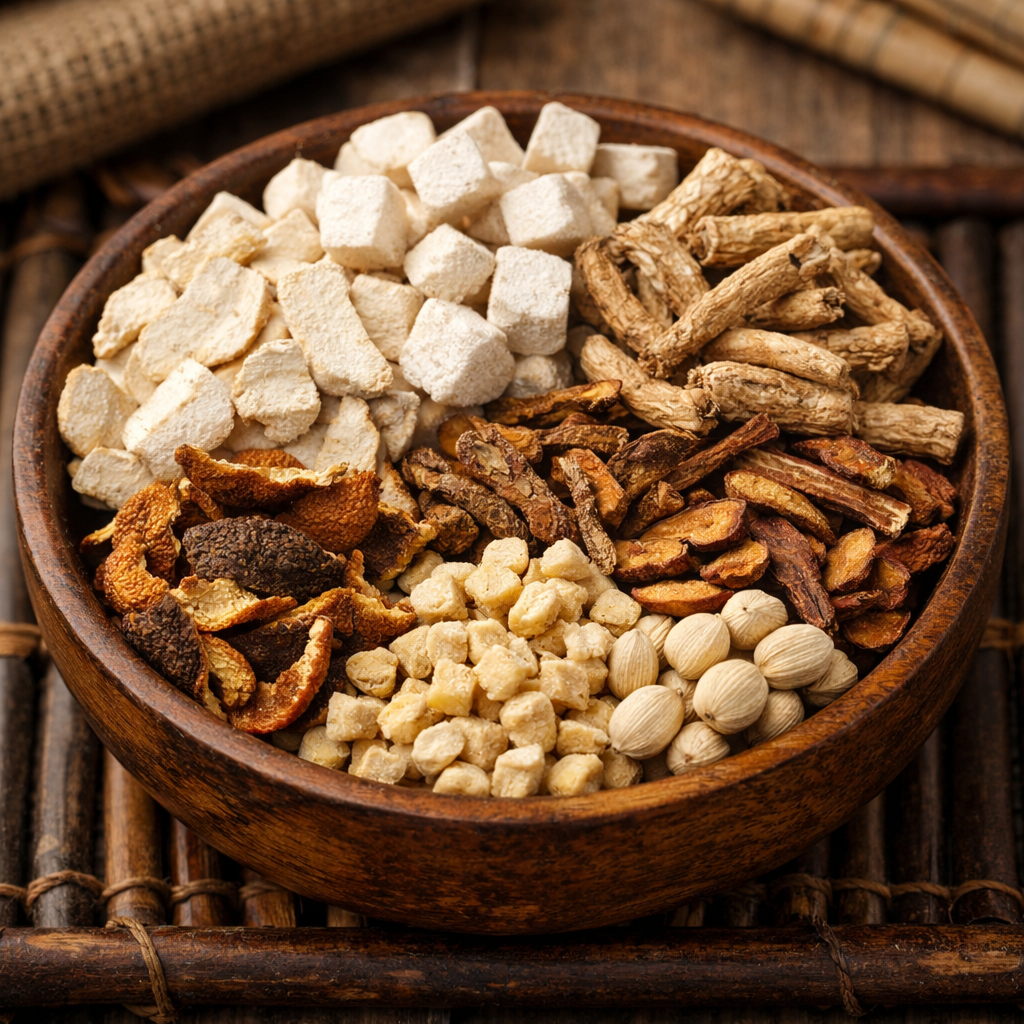
Bai Zhu (30g) Strengthens the Spleen and dries dampness
Fu Ling (10g) Promotes urination, leaches dampness, and supports the Spleen
Shan Hai Luo (20g) Tonifies qi and supports digestion
Zhi Gan Cao (6g) Harmonizes the formula and supports Spleen qi
Chen Pi (10g) Regulates qi, dries dampness, and relieves distension
Fa Xia (6g) Transforms phlegm and harmonizes the Stomach
Bai Dou Kou (6g, added near end) Aromatically transforms dampness and awakens the Spleen
Dosage: One dose daily, decocted twice and taken warm morning and evening, for an initial course of five doses.