A Special Gift of Longjing Green Tea from Hangzhou
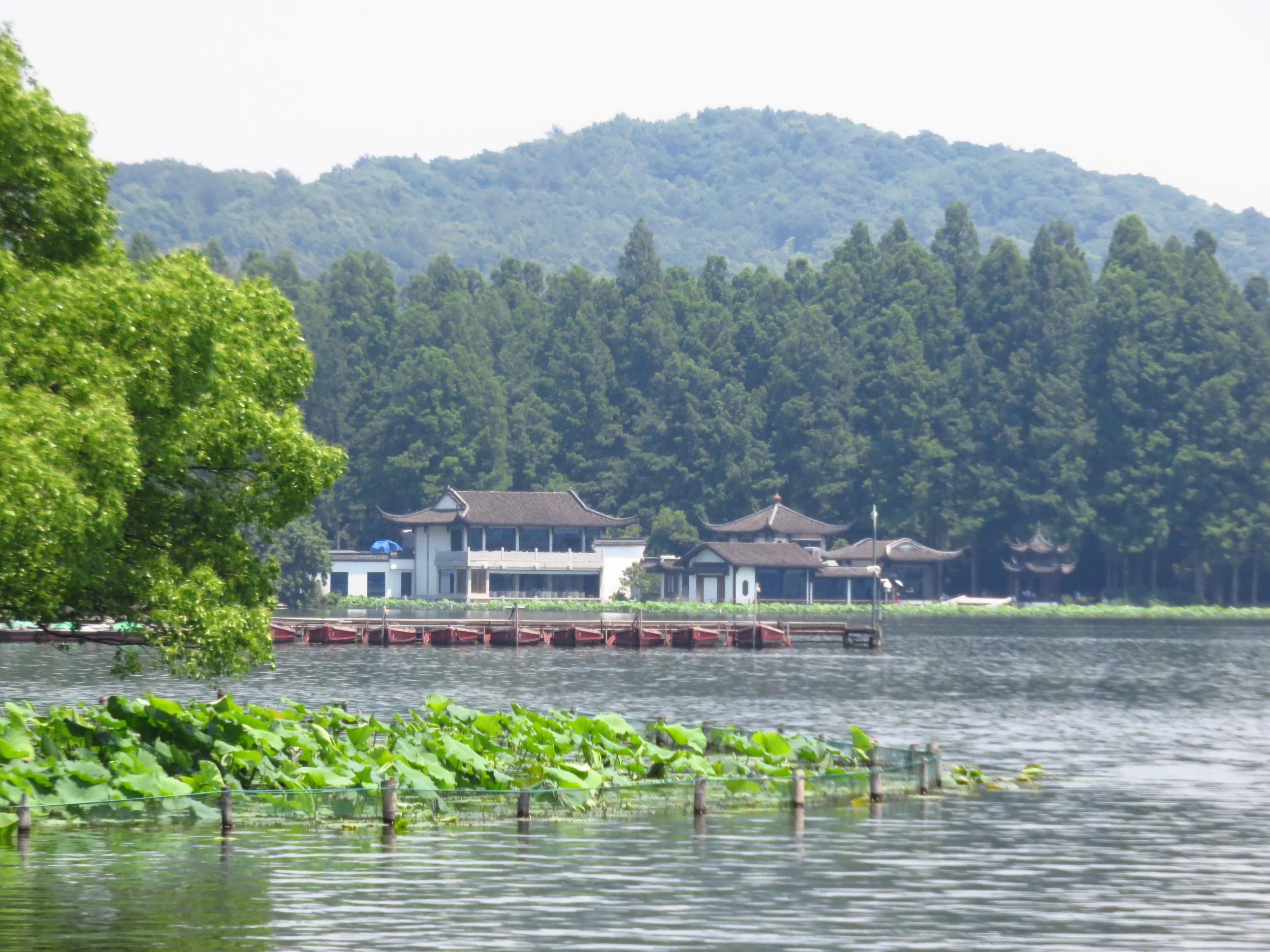
West Lake, Hangzhou.
Photo Credit: Yimin Wu
Written by Rebecca Emken, with assistance from Yimin Wu.
Yimin's Trip to Hangzhou
Yimin Wu is Dr. Wu’s son, and is studying at Shanghai University of Traditional Chinese Medicine. After completing his freshman year, Yimin took a three-day trip to Hangzhou, which was only a quick 2–3 hour train ride from Shanghai.
Hangzhou is known for its abundant greenery and the breathtaking West Lake. The region is also famous for its Longjing (Dragon Well) green tea. Longjing is a pan-roasted green tea with a pale jade color, a smooth texture, a sweet finish, and a subtle chestnut-like aroma. Longjing Village produces this famous green tea, particularly varieties grown in the surrounding West Lake region.
While exploring the mountains around Hangzhou, Yimin visited a local restaurant that served freshly brewed Longjing tea from nearby tea gardens. This cup of tea cost less than 40 RMB (about $6 USD), making it an inexpensive way to experience one of China’s most celebrated teas.
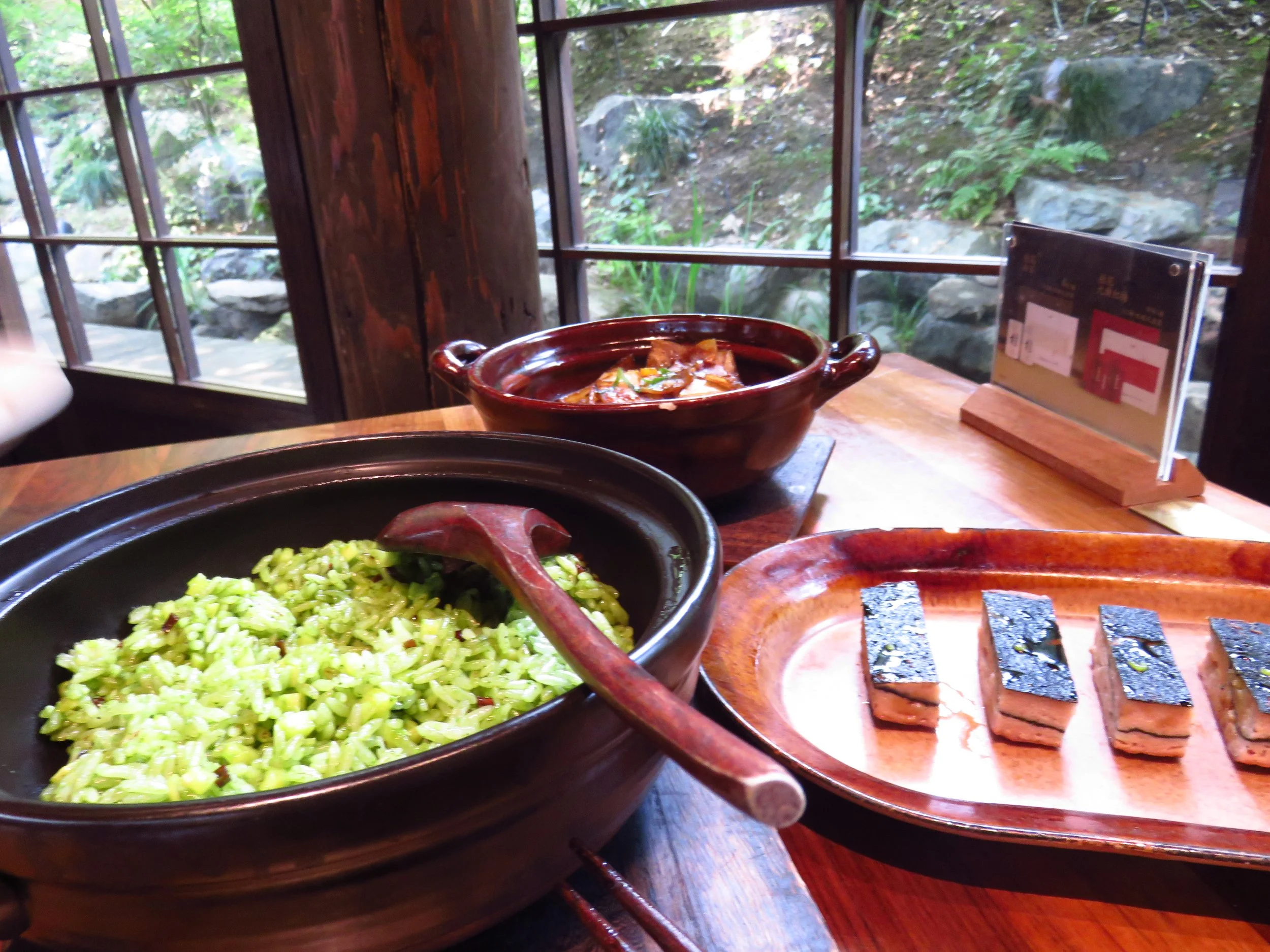
Eating at a restaurant in Hangzhou.
Photo Credit: Yimin Wu
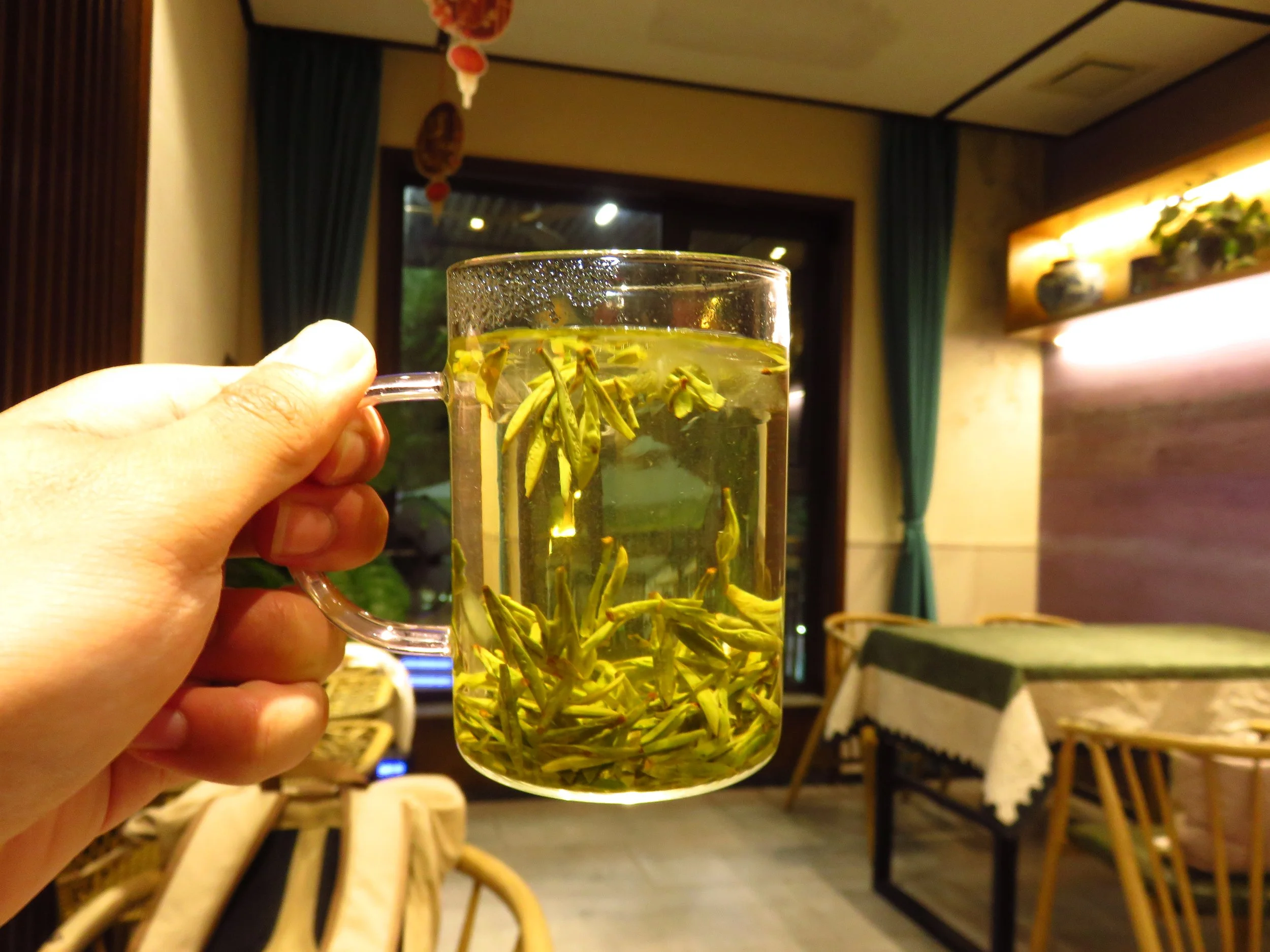
Having 40 RMB/$6 USD tea at a restaurant in Hangzhou.
Photo Credit: Yimin Wu
Buying Tea for Dr. Wu
During his trip, Yimin also purchased fresh 2026 early spring West Lake Longjing tea as a gift for his father. The tea was from the Shi Ba Ke (十八棵, "Eighteen Tea Trees") brand and was sourced from the Shifeng (Lion Peak) core production area of West Lake Longjing in Hangzhou. The 50 g box cost 650 RMB (about $93 USD).
The Shi Ba Ke name refers to the 18 imperial tea trees designated by Emperor Qianlong during his visit to Longjing in 1762. These legendary trees became a symbol of authentic West Lake Longjing tea. Today, the original imperial trees produce only a very small amount of tea each year and are preserved primarily for their cultural significance. Commercial Shi Ba Ke teas are instead produced from premium tea gardens in the same Shifeng core region.
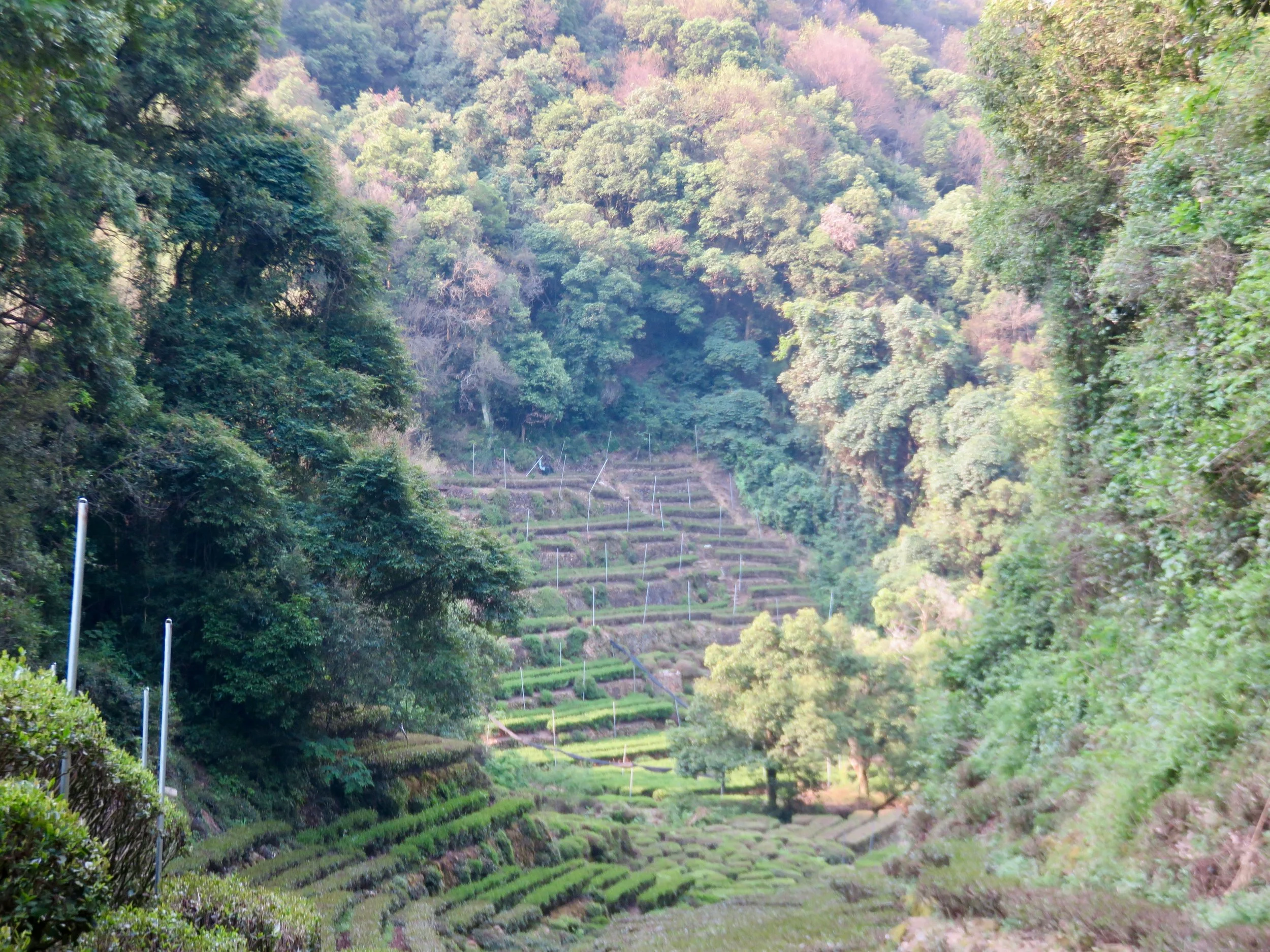
A tea garden.
Photo Credit: Yimin Wu
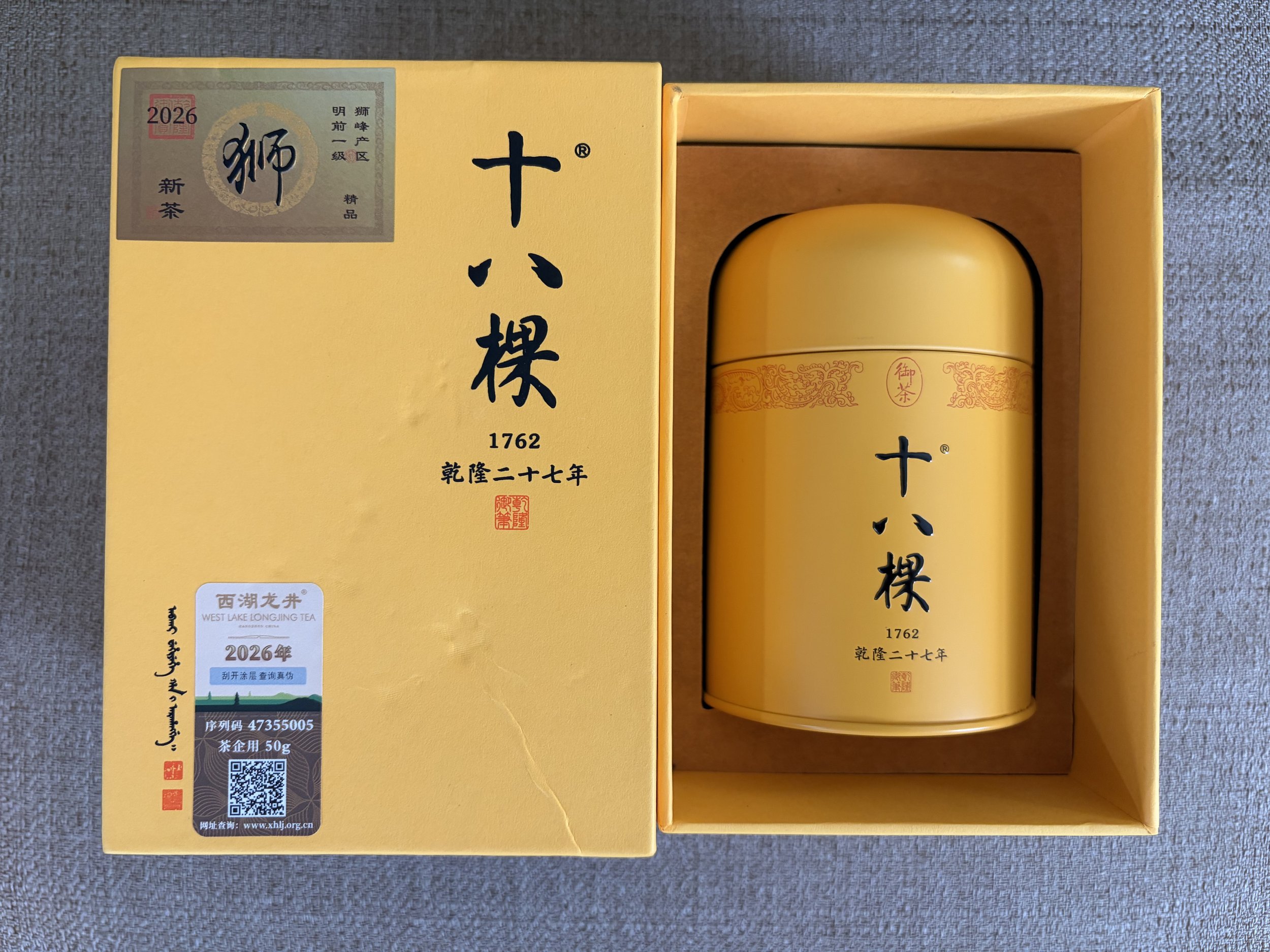
The box of Longjing Tea.
Photo Credit: Yimin Wu
Although the tea Yimin purchased was not made from the original imperial trees or the brand’s highest collectible grade, it is still considered a premium West Lake Longjing. It has a fresh, bean-like aroma, a smooth texture, a sweet lingering aftertaste, and a beautiful pale jade color. It was a thoughtful gift that later allowed Dr. Wu and I to experience one of Hangzhou’s finest teas together.
Having Tea with Dr. Wu
Later on, Dr. Wu brought the tea to the Wu Healing Center in Maynard. At the start of a Wednesday morning, he and I had a rejuvenating start to our day by sharing Longjing tea together.
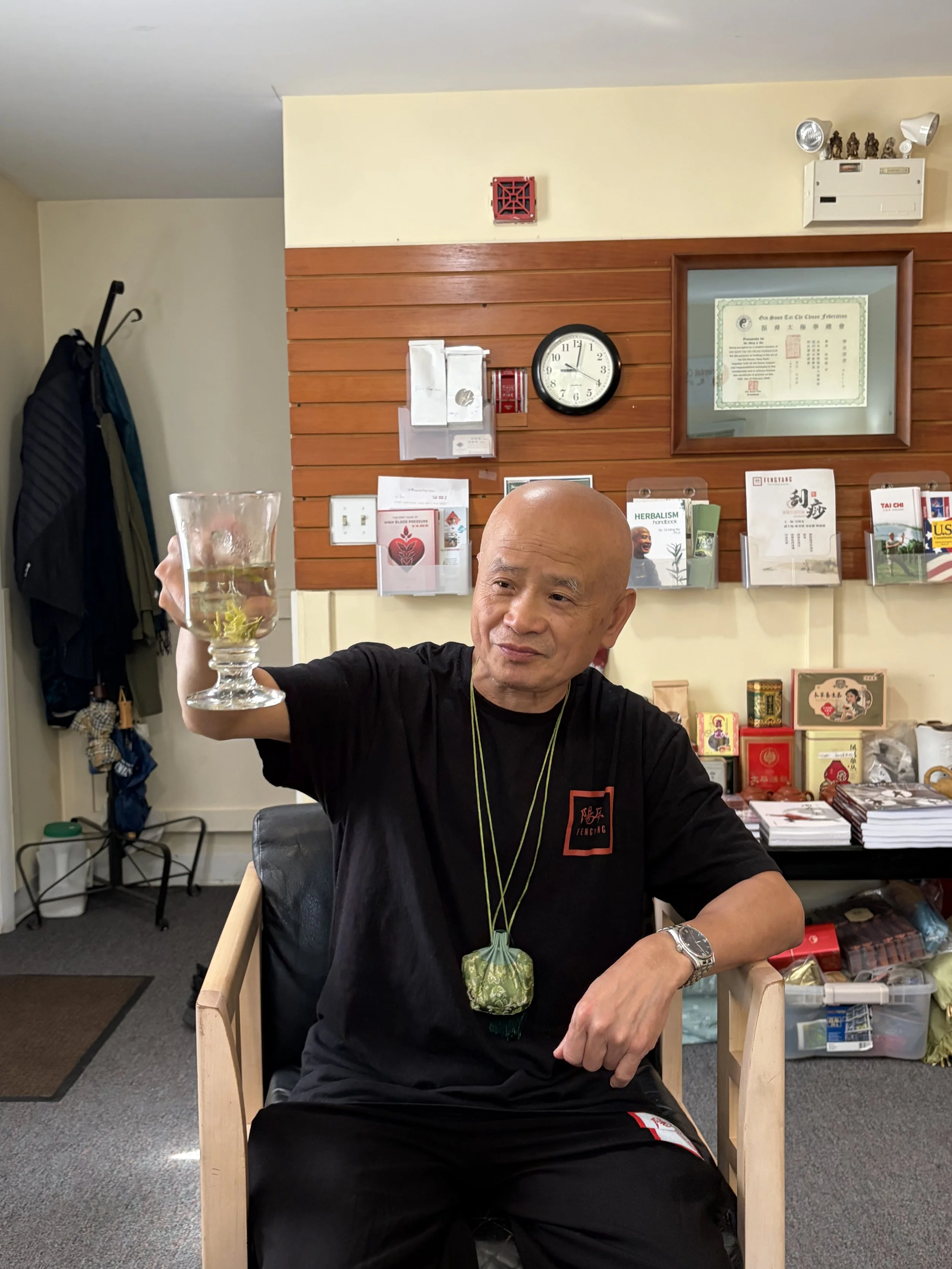
Dr. Wu having Longjing tea.
Photo Credit: Rebecca Emken
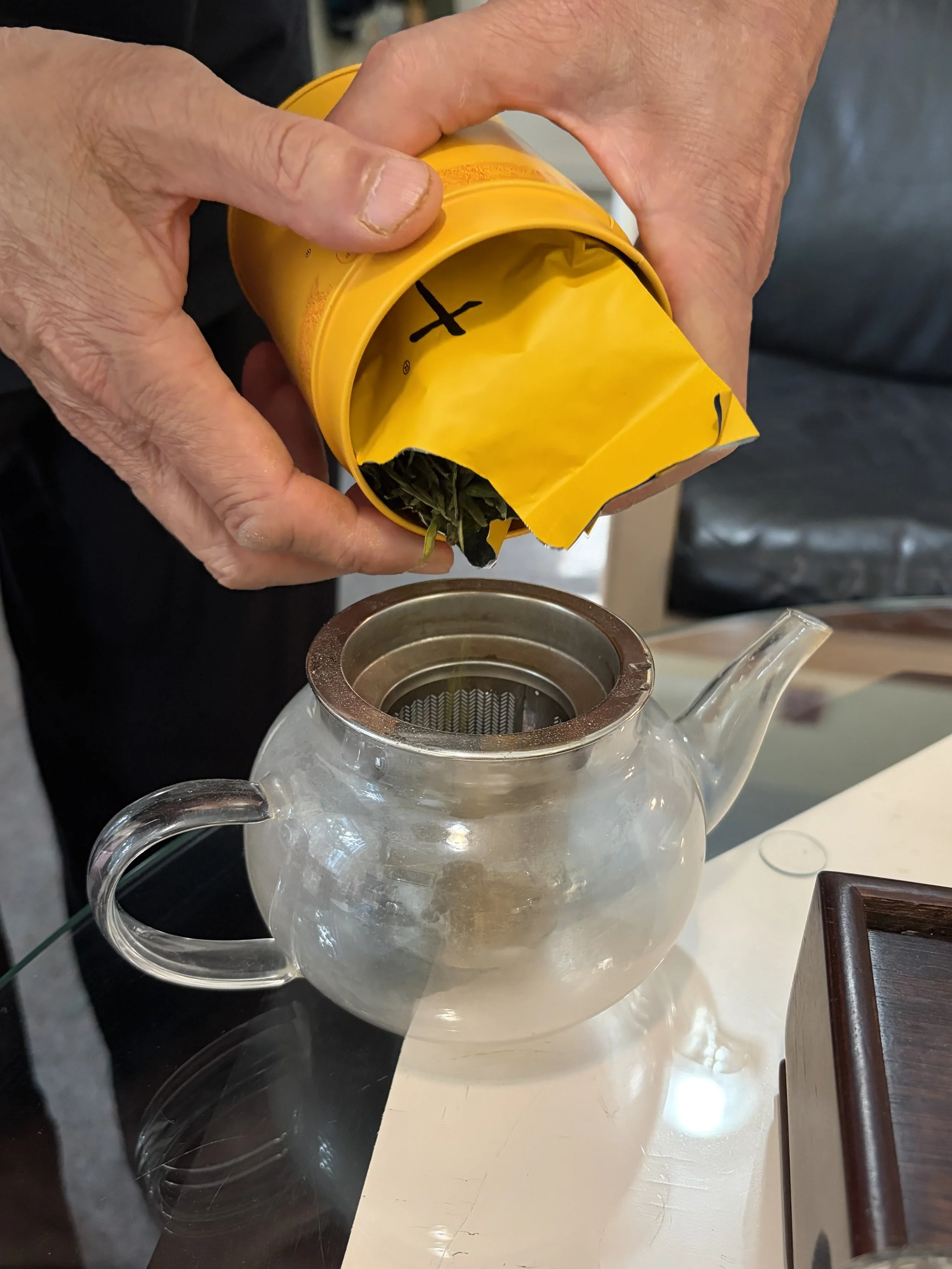
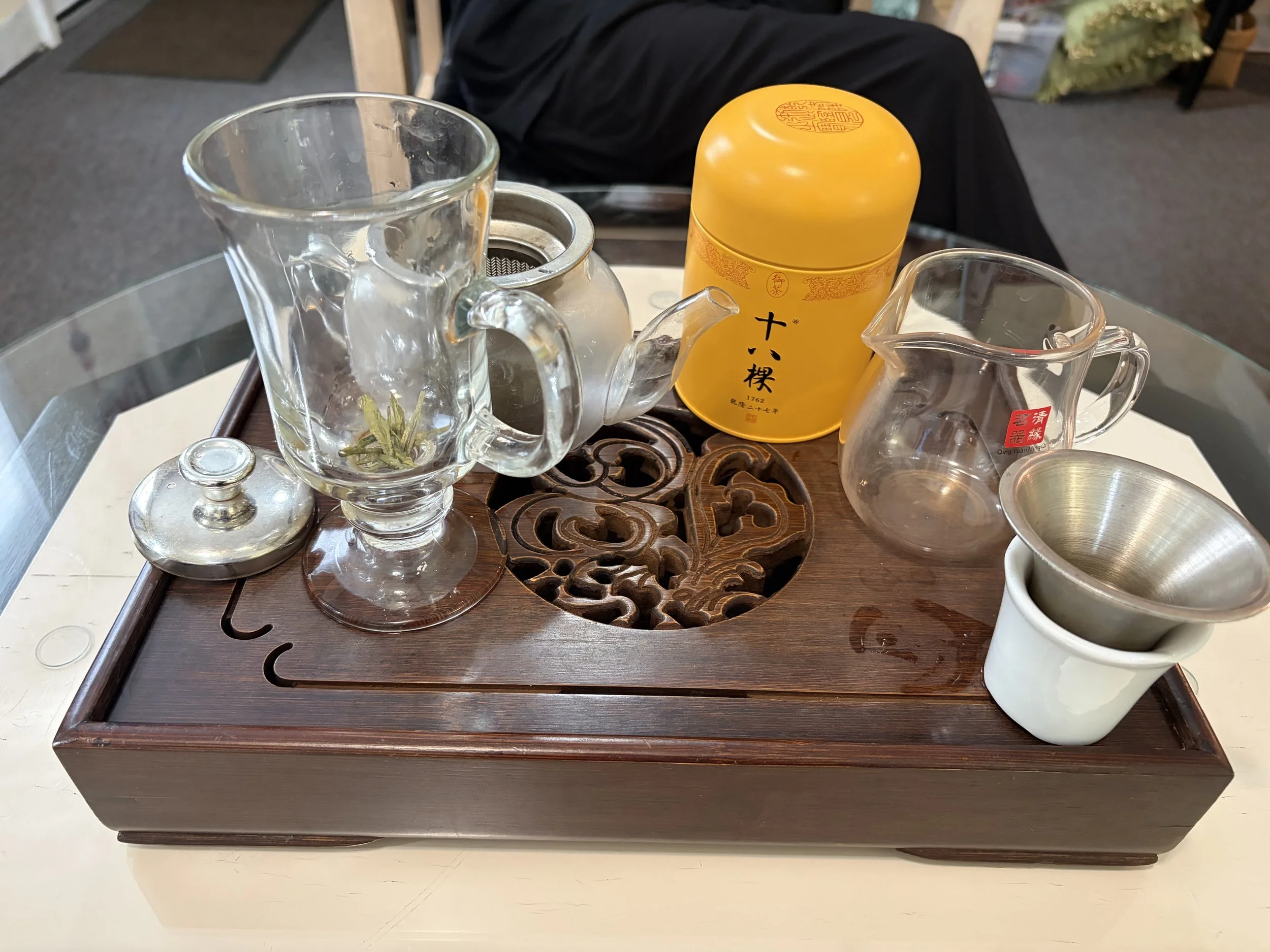
Preparing Longjing tea in a glass teapot.
Photo Credit: Rebecca Emken
Because we were having green tea, we brewed it in a glass teapot. I experimented with brewing the tea at 80°C and 90°C, and preferred its taste at 80°C (176°F). The tea was a pale green color with a fresh, mild, beany, and nutty flavor. It was also very smooth.
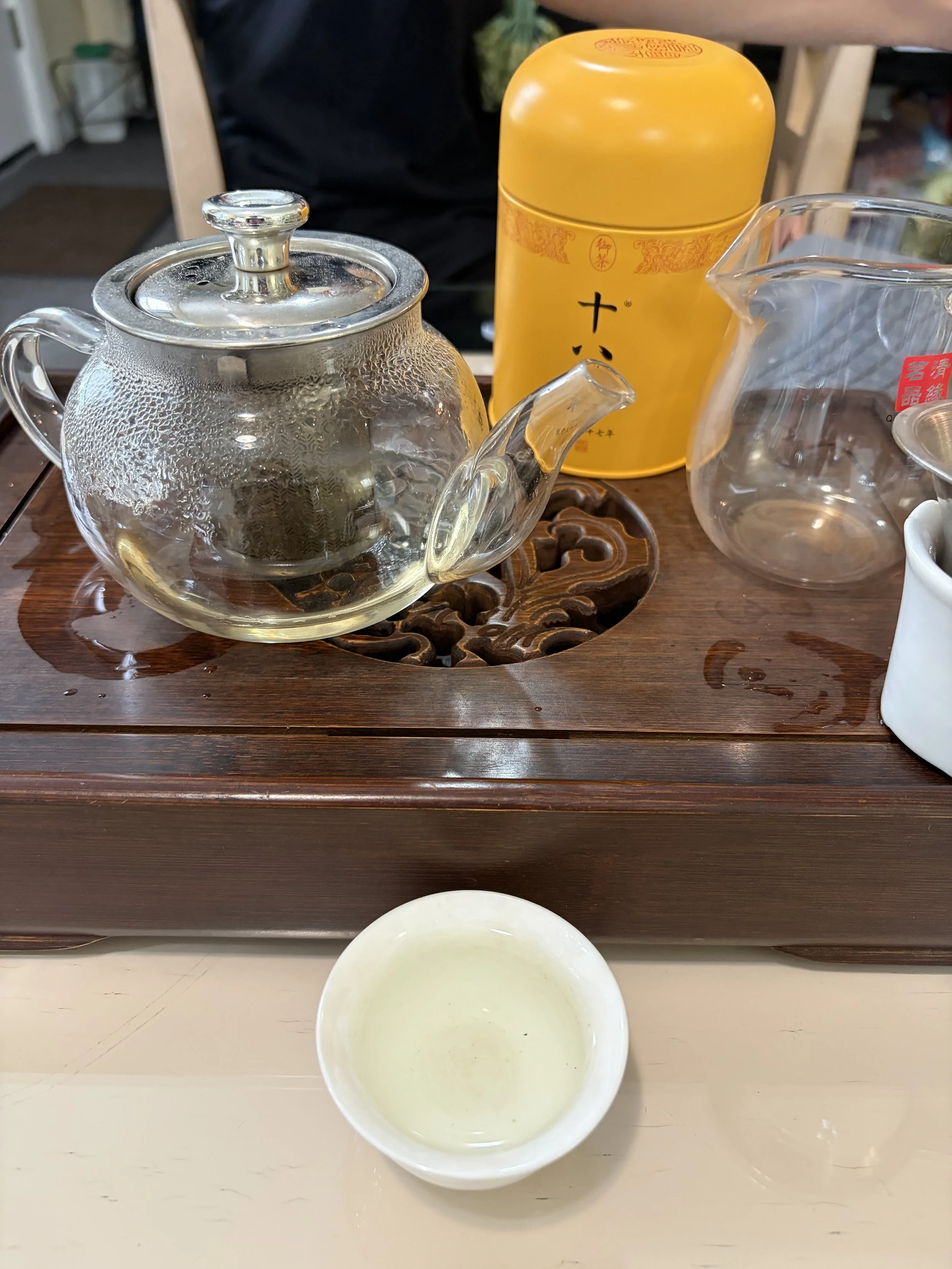
The pale color of Longjing tea in a teacup.
Photo Credit: Rebecca Emken
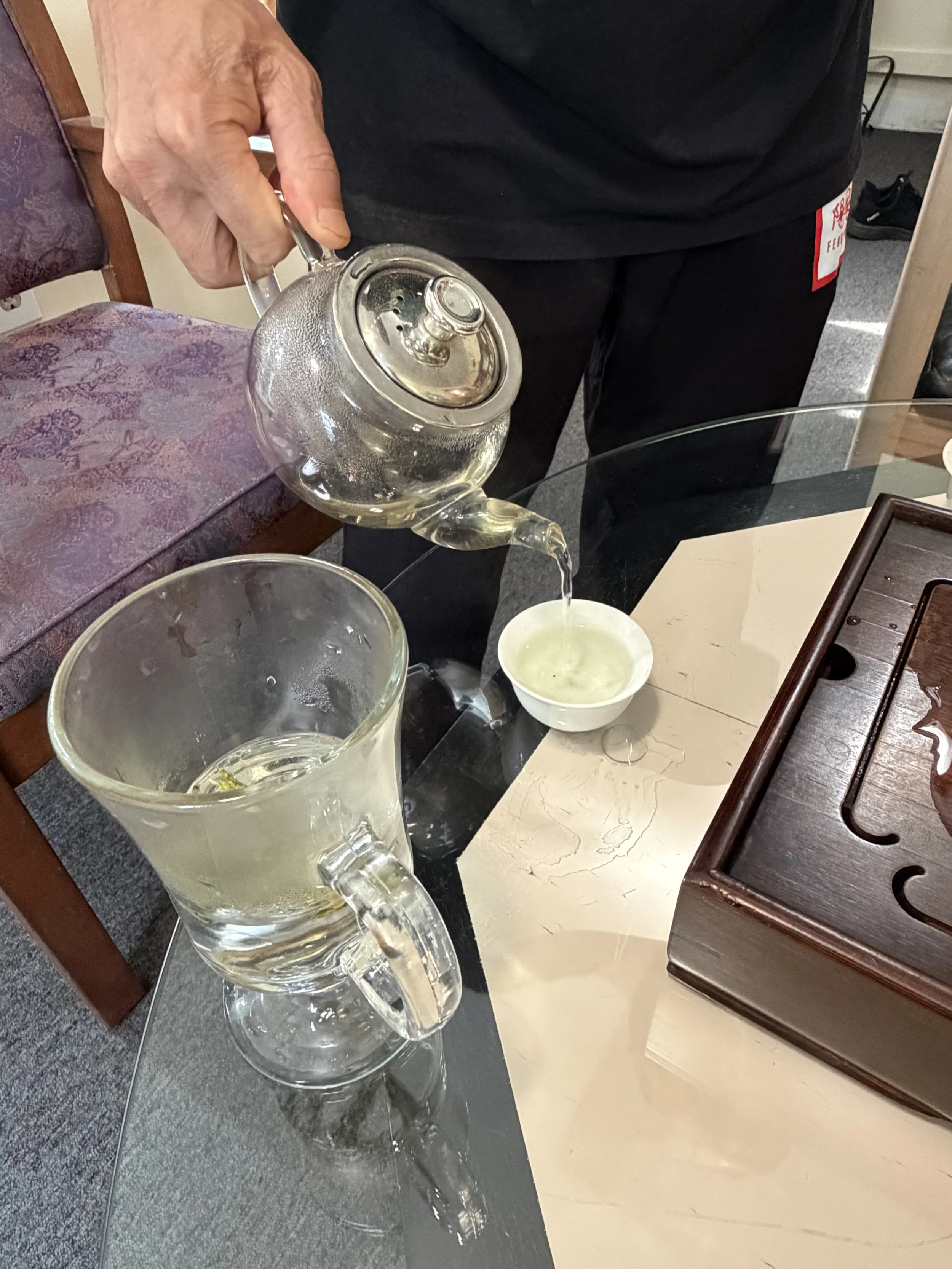
Serving Longjing tea out of a glass teapot.
Photo Credit: Rebecca Emken
Although the tea was premium quality, and I drank it during the hot summertime, I found that the green tea still didn’t fully agree with my body. Green tea is cooling in Chinese medicine, and since my body is already cold, I find that it doesn’t appreciate cooling teas as much. They feel "wrong" to drink in the wintertime, to the point that they even taste worse on my tongue, as my body tells me they aren’t the right teas for me. However, cooling teas taste much better to me during the hot summer. Even so, my throat still felt a little dry after drinking this tea. It was my body telling me, "Hey, I appreciate that this is premium quality, but it’s still cooling and not for you."
The Longjing tea that Yimin gifted Dr. Wu was deeply appreciated. The tea ceremony is always special, but Dr. Wu and I took extra time to slow down and truly enjoy this tea because it had been gifted with such care by Yimin. About a week later, I asked Dr. Wu if we could have the tea again, but by then it was already gone! The 50g of tea was thoroughly appreciated.
About the Author
Rebecca is a Fengyang Traditional Chinese Medicine practitioner. She is a disciple of Dr. Ming Wu, a master of Chinese medicine. She hosts tea ceremonies and provides tui na bodywork treatments at the Wu Healing Center in Maynard MA, and at Healing Body Solutions in Palmer MA.
Rebecca posts videos about tea, tea brewing, and tea culture on her YouTube Channel, RebeccaHealing.
You can reach Rebecca at rebecca.tuina.healing@gmail.com, or at 508-281-9068 (text preferred).